Thursday, July 25, 2019

Des Arc

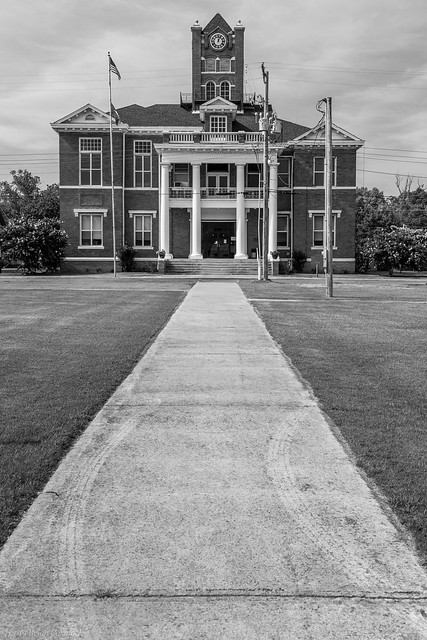
The Prairie County Courthouse in Des Arc has to be high on the list of prettiest courthouses in Arkansas. This is partly due to its location, which is perched on a bluff overlooking a curve in the White River. The courthouse was built in 1913, and features a mixture of Georgian Revival and Romano-Tuscan architectural styles. The front of the courthouse is marked by a two story portico and also a clock tower. This is one of two courthouses in Prairie County, the other one is located in De Valls Bluff.

Des Arc
I should note that the tire tracks were already there when I took this photo, and not caused by me driving around the grass in front of the courthouse.

Sunday, July 14, 2019

Crystal Bridges

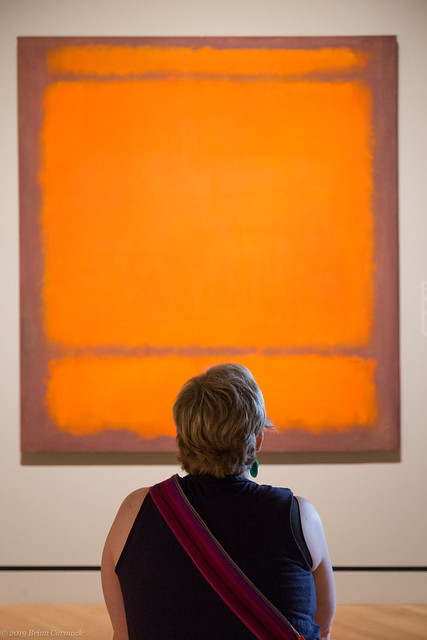
While in Fayetteville last weekend, we made another visit to the Crystal Bridges Museum of American Art in Bentonville. It had been a few years since our last visit, and there have been a few changes to the museum. One of the biggest is the addition of the Bachman-Wilson House, which was designed and built by Frank Lloyd Wright in 1954. The house originally stood by the Millstone River in New Jersey, but the house was under threat of flooding from the river and was put up for sale under the conditions that the new owners would move the house to safer ground. Crystal Bridges purchased the house, and carefully deconstructed it and moved it over 1,200 miles to its new home. It was reconstructed and made open for tours. We visited, but we had a restless toddler with us who was not interested in the detailed intricacies of the architecture so I missed some of the finer details of the home.

Bachman-Wilson House

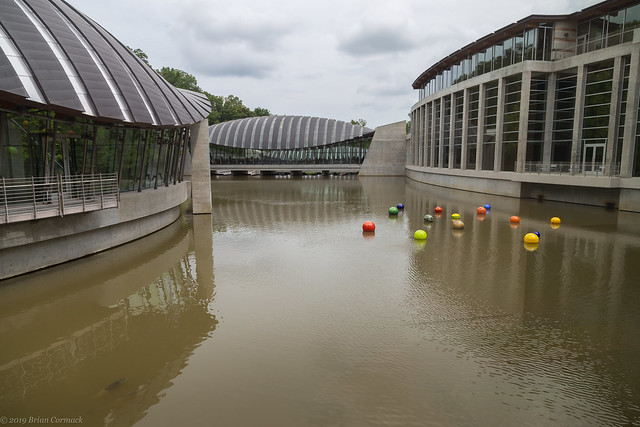
The museum opened in 2011, with eight linked pavilions that straddle two creek-fed ponds.

Crystal Bridges

The museum contains seven galleries, a library with over 60,000 items, art studios, a museum store, a gathering hall used for lectures and films, and also a restaurant named Eleven (which was apparently not named after the character from Stranger Things).

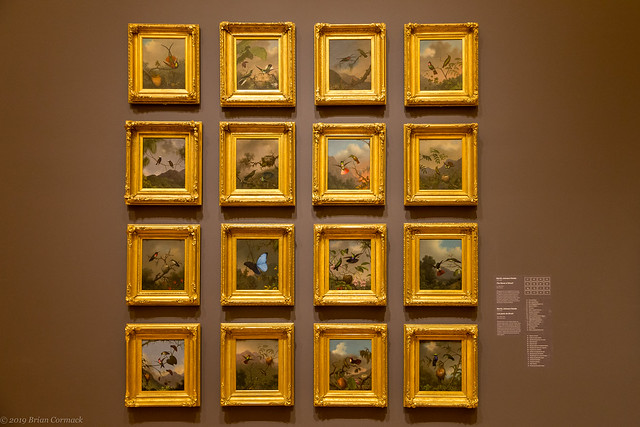
Framed

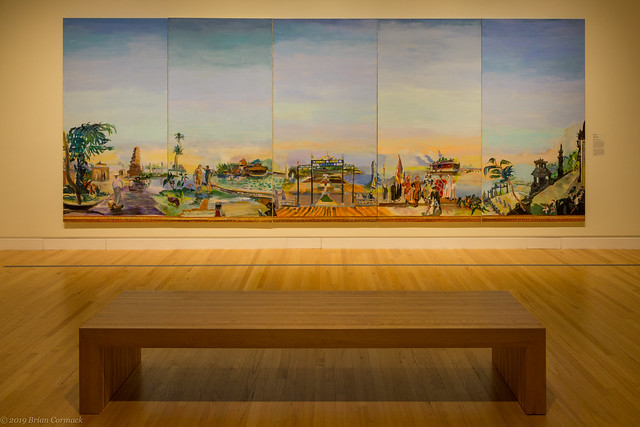
Artsy

Crystal Bridges

Crystal Bridges

Big Red Lens

Crystal Bridges

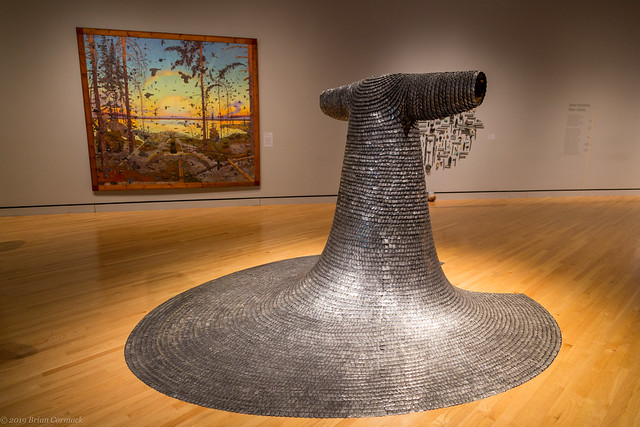
And one last shot, from the Modern Art section. This is a new piece called Some/One by Korean artist, Do Ho Suh. The sculpture is made up of thousands of military dog tags arranged as a mixture of a robe and body armor. It was a popular piece, and it was hard to get a shot of it without anyone around it.

Crystal Bridges

Crystal Bridges is a great museum, but my one criticism of it remains valid. There is hardly any photography on display there, which is a shame since photography is one of the most significant branches of art to have appeared in the last few centuries. If anyone from Crystal Bridges is reading this, I'd be happy to mention that all of my photos are for sale if they need any new additions to their galleries!

Thursday, July 11, 2019

4th of July

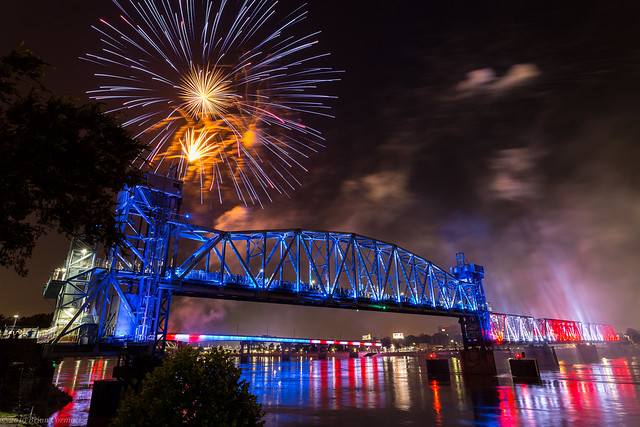
On Independence Day I joined the crowd of people in Riverfront Park so I could make an attempt at some firework photos. I wanted to try to get a shot of the fireworks over the Junction Bridge, so I got there early (almost three hours before the show started) so I could claim a spot in the park that had a decent view of the bridge. It was a long wait, but fortunately the weather that day was perfect after some storms had managed to push out the heat and humidity. We were even treated to a nice sunset too.

4th of July

I did spend some time before the show started to carefully pick out what composition would be best. And when it got dark, I tried to work out the best camera settings for capturing fireworks. And then finally at 9:30, the fireworks started. But that meant that suddenly a bunch of people all rushed forward to get the best view. Which apparently was right in front of my camera. The shot I had envisioned during the long wait now had to be hastily changed, since there were a bunch of people standing in the way blocking my view of the bridge. But I managed to point the camera through a gap in the crowd and was able to get a few pictures of the fireworks.

4th of July

And one more shot, looking more closely at all the people jammed onto the Junction Bridge watching the fireworks.

4th of July

Thursday, June 27, 2019

New Orleans - French Quarter

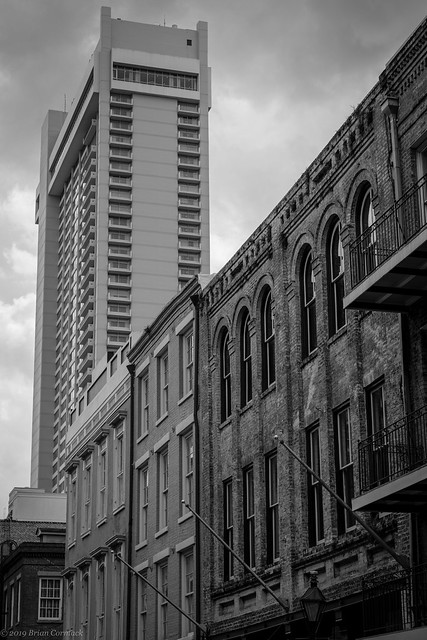
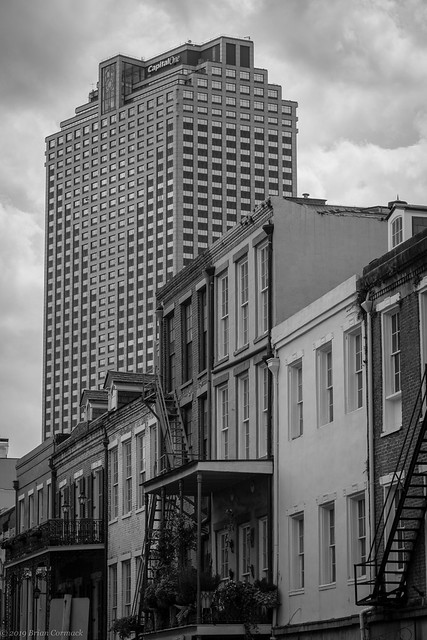
There are tons of things to see in the French Quarter – amazing restaurants, unique shops, vibrant music venues and of course a good number of drunk people stumbling along Bourbon Street holding hurricanes and Big Ass Beers. But one cool thing about the French Quarter is the architecture – especially the contrast between the old buildings of the Quarter and the newer skyscrapers nearby.

NOLA

French Quarter

Most of the buildings in the French Quarter actually date to the early 19th century, after a series of fires destroyed much of the city in 1788 and 1794.

French Quarter

One of the oldest surviving structures in the French Quarter is Lafitte’s Blacksmith Shop, which was built sometime in the 1770s. The building is said to have once belonged to Jean Lafitte, the legendary pirate. The building is now used as a bar, and it is the oldest building in the country that houses a bar.

IMG_5442 2

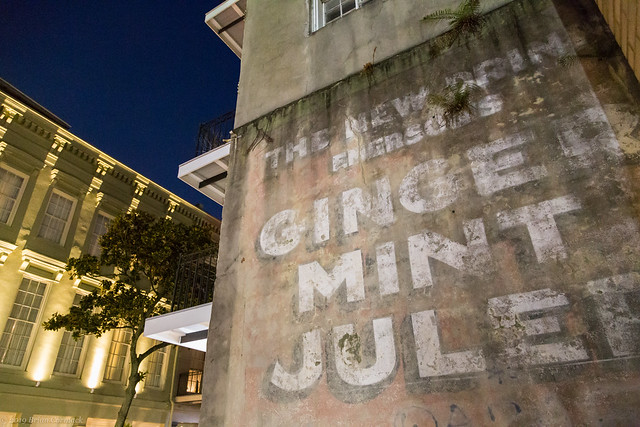
I had the camera with me one time when we went walking around at night, which was nice because it was a little bit less humid. Just across the street from our hotel was this old ghost sign advertising mint juleps (which just seemed very Southern).

The New Drink

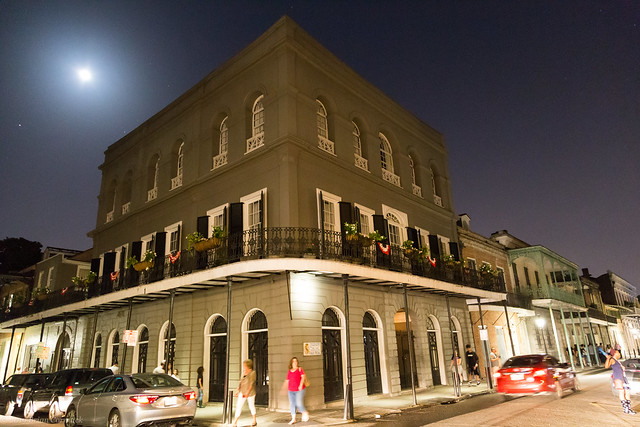
We walked over to Royal Street and went by the LaLaurie Mansion, which is said to be among the most haunted buildings in the city. The house was built by Madame Marie Delphine McCarty LaLaurie in 1832, and was well known for the fancy parties and balls that the LaLaurie’s hosted in the home. But after a fire in the house in 1834, it was discovered the Madame LuLaurie brutally torturned and mutilated her slaves. The LuLaurie family somehow managed to escape to France, and a mob burned most of the building down. The house was later rebuilt, and has had several uses over the years. But it is said that spirits haunt the house, and all who own it are cursed. Nicolas Cage bought the house in the early 2000s, and some believe that the house cursed him and his career. But one thing is for sure, if you do live there you would be cursed with having no privacy. When we walked by, there were about seven different ghost tours crowding the sidewalks around the house.

LaLaurie

From there we walked over and got a few drinks at a spot with this view looking down Bourbon Street.

Bourbon Street

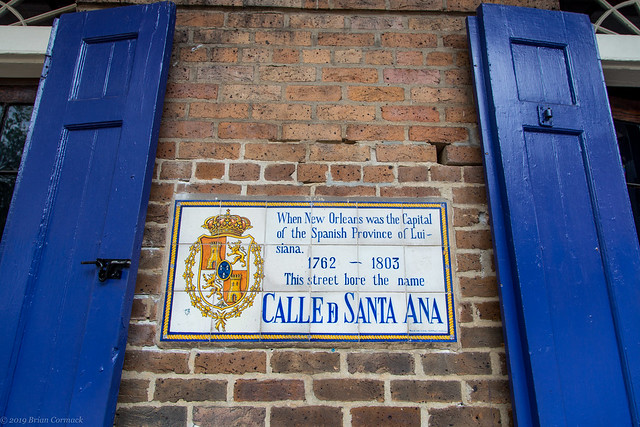
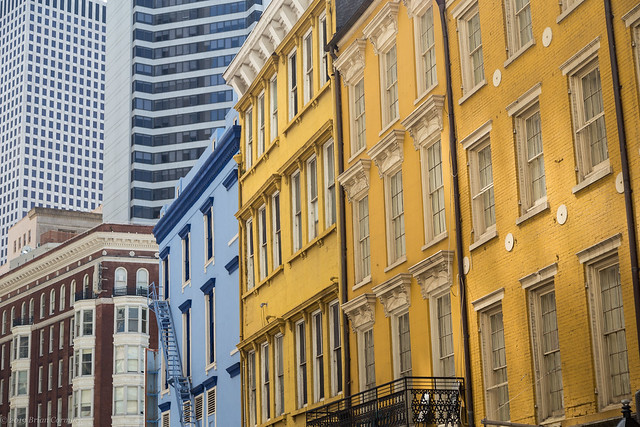
Back in the daylight, we walked towards Canal Street and passed by these buildings that were showing off some bright colors in the sunlight.

NOLA

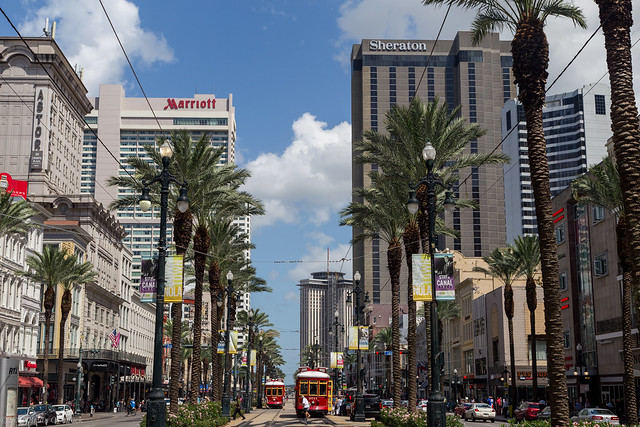
Later on we got brunch at a spot on Canal Street, which provided us with this view of the street below.

Canal Street

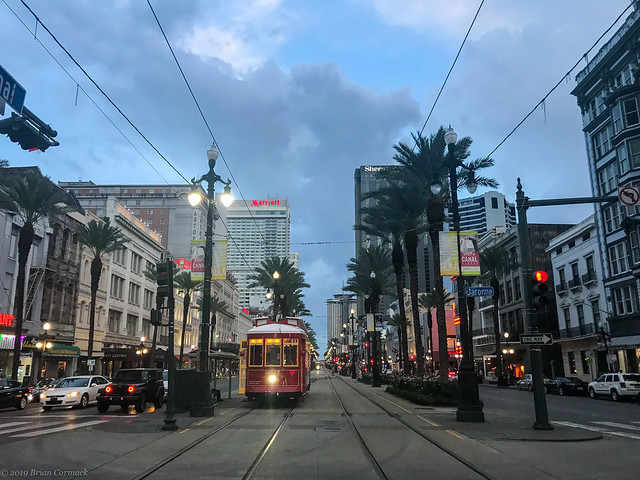
Canal Street is the dividing line between the French Quarter and the Central Business District, and the street is bisected by the tracks that were carrying trolleys filled with tourists.

Neutral Ground

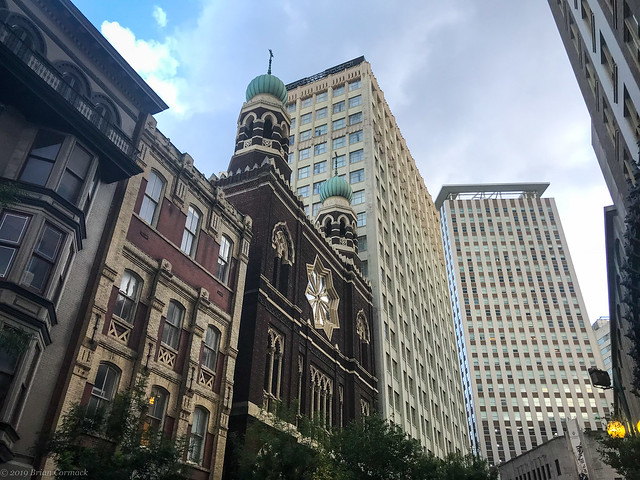
Later that evening we crossed Canal Street again while walking to a restaurant for dinner. Along the way we passed by this old church, the Immaculate Conception Church. The church was built in 1930, but is actually almost identical to a church that had been built here in 1857. Nearby construction had caused problems with the church's foundation, and the building was completely dissembled and reconstructed in the same spot (I know this isn't a great picture - I had left my camera in the hotel when we went to get dinner and had to get this with my cellphone).

New Orleans

And another shot, as we crossed Canal Street. The trolley was parked - it wasn't about to run us over while I tried to get any pictures.

Neutral Ground

We ended the night with a stop at the famous Carousel Bar at the Hotel Monteleone. The bar was installed in 1949 and rotates at a rate of one revolution every 15 minutes. I took out the cellphone and did a time-lapse as the bar spun around, showing off the busy bartenders rushing around making and serving drinks. We didn't linger too long at the bar since we had to be up very early the next morning to fly back home.

Monday, June 24, 2019

New Orleans - St. Louis Cemetery #1

Sitting right outside the French Quarter is St. Louis Cemetery #1, which was established in 1789 and is the oldest cemetery in New Orleans. The cemetery has been called “The City of the Dead,” and contains over 700 tombs and is thought to hold the remains of over 100,000 people. The cemetery is a unique place, with the tombs and vaults all sitting above ground. When you first walk in, you pass by a huge wall that is filled with vaults where people have been buried for centuries. The lower level of the wall is partially buried - showing how the land has sunk over the years.

St. Louis Cemetery

The tombs and graves were built above ground for a few reasons. Above-ground graves were common in Spain and France, where the early settlers of New Orleans were from. But it was also practical, since the city sits right at or below sea level and the water table wouldn’t allow deep graves (or else during heavy rains or flooding the dearly departed would just depart out of the ground and float away).

St. Louis Cemetery

Because of its age, the cemetery is the final resting place for some notable residents of New Orleans. But one of the most popular spots in the cemetery is a tomb set aside for someone who is still alive and well – Nicolas Cage. The actor constructed a pyramid-shaped tomb, inscribed with the Latin phrase “Omnia Ab Uno” which translates to “Everything From One.” There is a tradition already of people leaving lipstick kisses on the empty tomb, which our tour guide strongly stated was considered vandalism and was frowned upon.

Omnia Ab Uno

The tour guide spent a good chunk of time here and made fun of Cage and his career. She said that he built the tomb after consulting with a Voodoo priestess who told him to build it in this spot, with this design and with that inscription. She then added “apparently it didn’t work, have you seen his career lately?” Which I thought was a little rude.


I guess she didn’t know that he had a role in Spiderman: Into The Spiderverse? That movie was awesome. Not only was Nic Cage in National Treasure, he IS a national treasure. For what it’s worth, the tour guides are probably thrilled that he decided to move in since it gives them something to talk about.

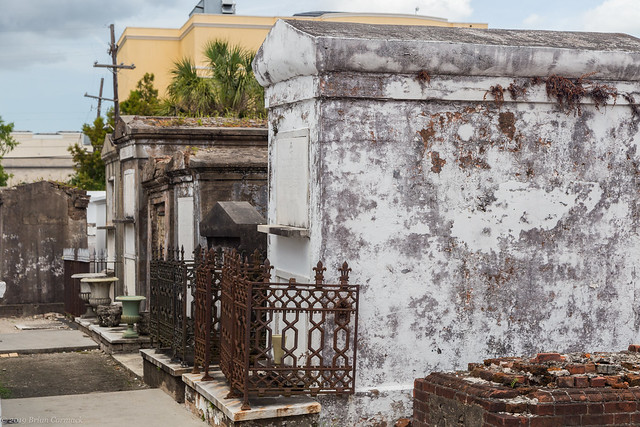
Our tour guide then escorted us through the the narrow aisles of the cemetery, which seemed like tiny streets running through the labyrinth of tombs. Some of the vaults were surrounded by black iron fences, almost like they had little front yards.
St Louis Cemetery #1

Considering that so many people are buried there, the cemetery is remarkably small. Most of the tombs contain generations of families. When someone dies, they are interred in the tombs and the door is sealed shut. Then the heat and humidity turns the tomb into an oven, effectively cremating the body. After a year and a day, the door is opened and the remains are pushed to the back of the vault with a long pole leaving the tomb available for another person to be buried there (which is where we get the phrase “I wouldn’t touch that with a ten foot pole”).

St. Louis Cemetery #1

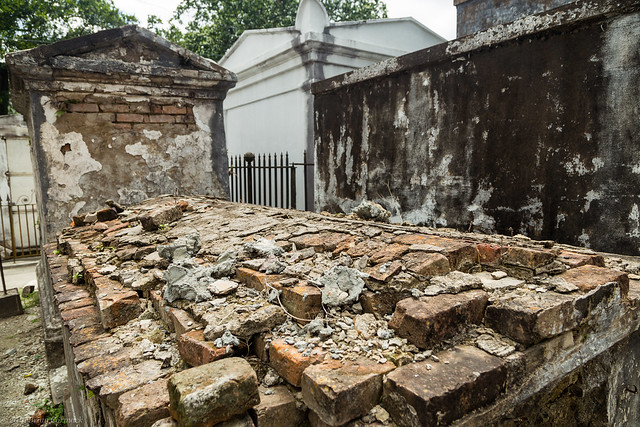
Back in the olden days, sometimes people would be accidentally buried who were actually still alive, so bells were placed on the tombs, with a string attached to the finger of the new arrival. If they were to wake up and realize that there had been some sort of huge mistake, all they had to do was ring the bell. This is also, apparently, where we get the phrase “Dead Ringer” and also “Saved by the Bell.”
Saved By The Bell

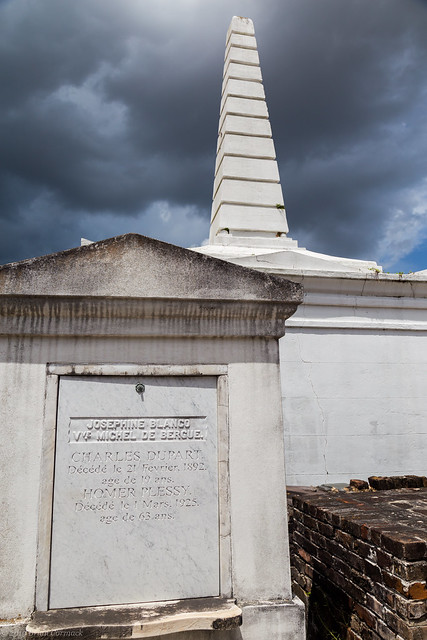
One of the notable people buried in St. Louis Cemetery is Homer Plessy, who was a civil rights pioneer and a plaintiff in the Plessy v. Ferguson Supreme Court case.
St Louis Cemetery #1

And a bouquet of flowers left for Jean-Bernard Xavier Philippe de Marigny de Mandeville, who was described as a "French-Creole American nobleman, playboy, planter, politician, duelist, writer, horse breeder, land developer, and President of the Louisiana State Senate between 1822 and 1823." At one point he was among the richest men in the country, but he lost his wealth shortly before he died. He is well-known here because he introduced the game of Craps to America.

St Louis Cemetery #1

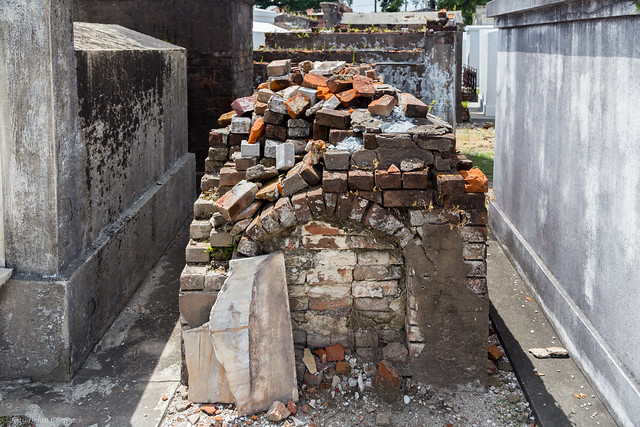
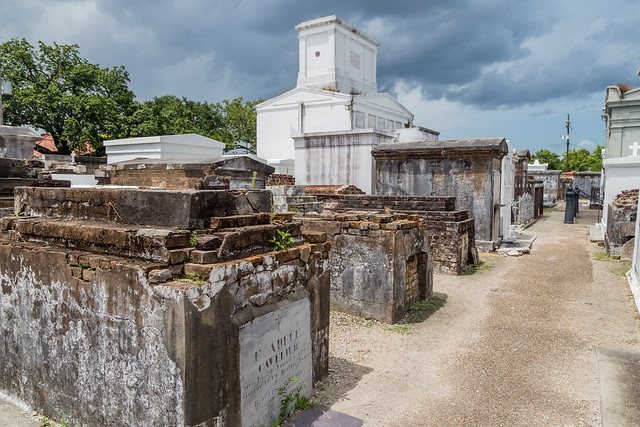
The tombs in the cemetery range from low humble brick vaults to ornate granite structures. The cemetery is run by the Catholic Diocese, but they don't do any maintenance on many of the tombs since they are considered to be private property. So many have fallen into disrepair after centuries of abuse from the weather, decay and vandalizing tourists. Many tombs have no one left to care for them, which is why many appear to be deteriorating away.
Untitled

Untitled

Untitled

Some wildflowers and weeds somehow found a place to grow amongst the chunks of brick and mortar on the top of this old vault.

Untitled

Some ominous looking storm clouds gathered in the sky above us during our tour, which kinda seemed appropriate to the spookiness of the cemetery.
Untitled

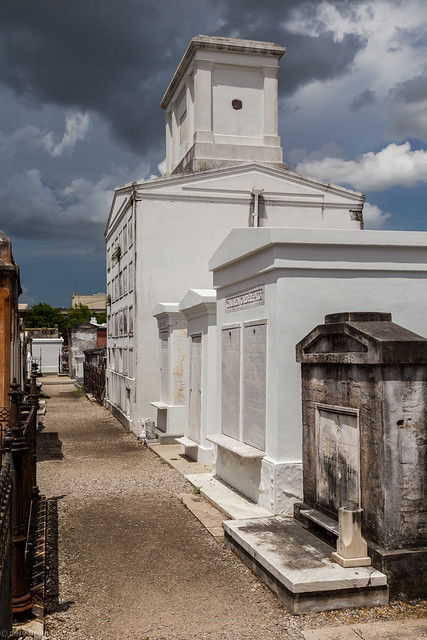
But it never did rain on us while we were there, but it was incredibly warm and muggy that afternoon.
Untitled

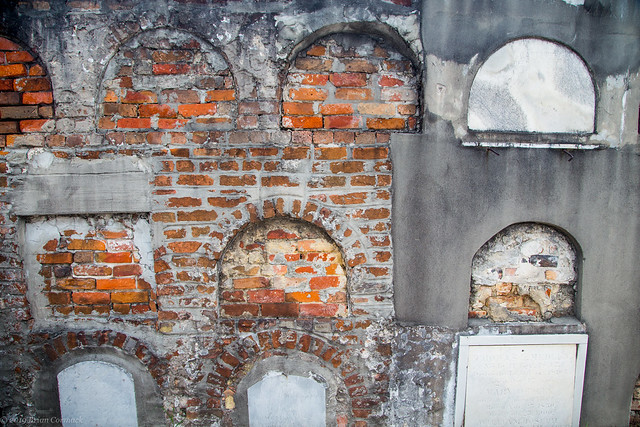
At the back of the cemetery is this old wall vault, which has been partially fixed up with some newer concrete.
Untitled

Among those buried at the cemetery is Marie Laveau, who was commonly known as the Voodoo Queen. There are actually a few different tombs that are thought to be the actual burial spot for Laveau, and people still leave trinkets and gifts at any vault that could be associated with her. This tomb shows marks from people who used to write XXX on the outside of the tomb because they thought it would mean that she would grant their wishes. Our tour guide again reminded us that doing so would be vandalism.

XXX

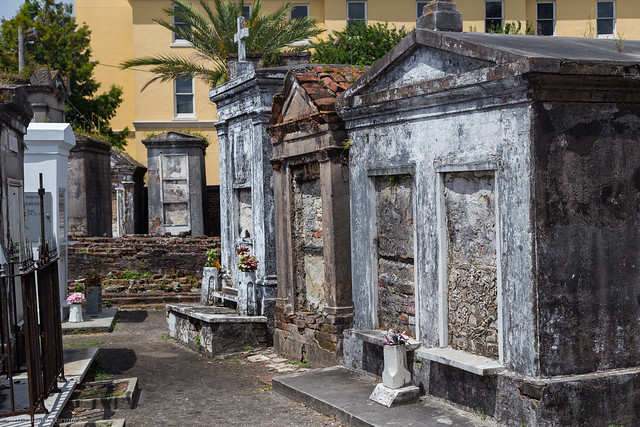
Vandalism like this is why the cemetery is mostly closed to the general public now. A few years back the Catholic Diocese limited access, so now most people can only enter while being part of a tour group.
Untitled

Photography is allowed, but any video or filming has been forbidden since the 1960s. That is because in 1965, parts of the movie Easy Rider were filmed in the cemetery without permission. Dennis Hopper and Peter Fonda were shown cavorting with prostitutes and doing acid, with one of them standing on the statue of the ornate Italian Benevolent Society Tomb. After the movie was released, the Catholic Diocese wasn't all that pleased. And after watching clips of the movie, I can see why (I'd link it here but it is NSFW). The top of the Italian Benevolent Society Tomb can be seen in this shot, which was free of any wayward tourists doing acid by the statues. I managed to get this shot before our tour guide ended the tour and escorted us out of the cemetery.

Dead To Rights