Friday, March 6, 2020

Oregon: Cannon Beach

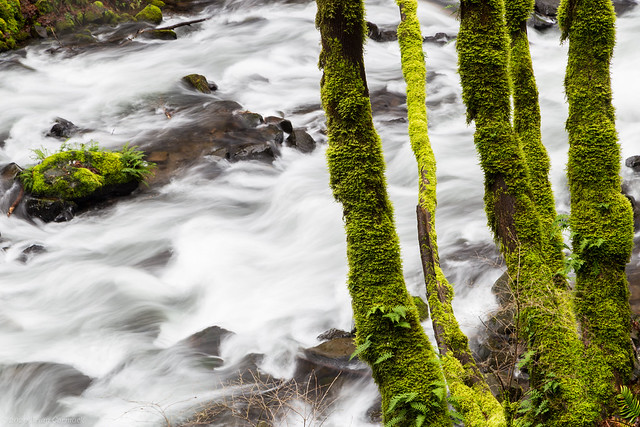
The next day we headed out from Portland and drove west towards the coast. Along the way we stopped at a little rest stop, which was built alongside this scenic little creek. One of my favorite things about this area is how there is always moss coating the trees.

Abridged

The first place we wanted to visit, Ecola State Park, was unfortunately closed due to a landslide. So we headed on to Cannon Beach, a quaint little town right on the ocean. The beach is beautiful, and was busy with people (and seagulls) even though it was a little chilly outside. Cannon Beach is actually named after a cannon. In 1846, a cannon from a Navy ship washed up on the shore nearby. It was from a shipwreck, along a notorious stretch of water dubbed the "Graveyard of the Pacific."

The Birds

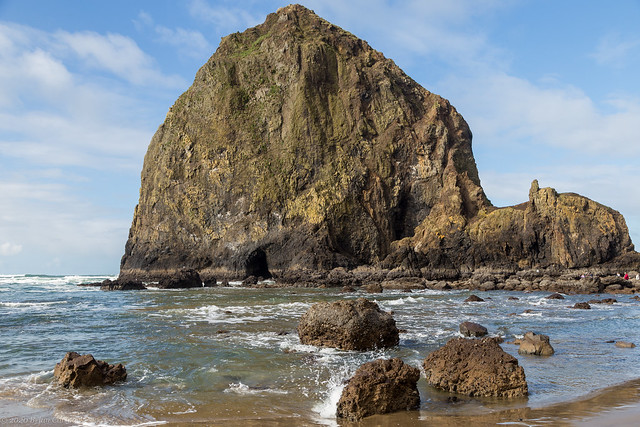
The beach is home to the iconic Haystack Rock, which is one of those places that you see in a bunch of pictures but it is breathtaking to see in person. The massive sea stack looms over the beach, looking much larger than it does in photos.

Haystack Rock

The rock is 235 feet tall, and some claim that it is third tallest intertidal structure in the world. During low tide, the rock is home to animals like starfish, sea anemone and crabs. In the summer, terns and puffins nest on the rock.
Haystack Rock

Little Rock

If it looks familiar, it's because Haystack Rock and Cannon Beach have appeared in lots of movies, including Kindergarten Cop and The Goonies.


Haystack Rock is made of basalt, and was formed by lava flows that poured out from the Blue Mountains and Columbia Basin about 15-16 million years ago. Next to Haystack Rock are some smaller rock pillars, which are called "The Needles."
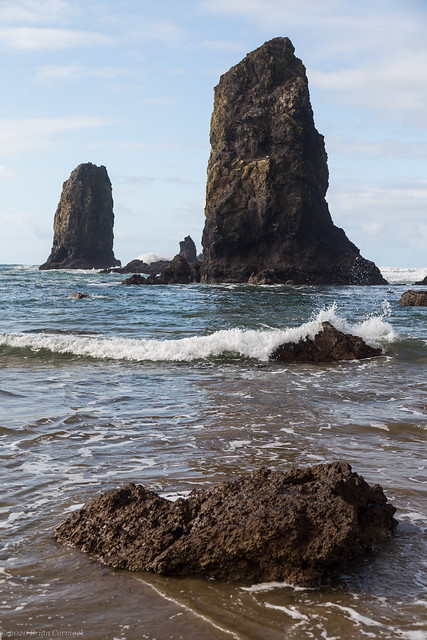
Needles

And one last shot from Cannon Beach, as the sky was reflected in the sand below.
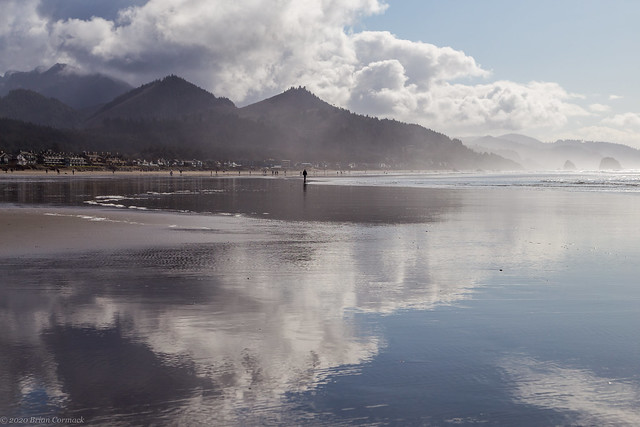
Beaches

Wednesday, March 4, 2020

Oregon: Multnomah Falls

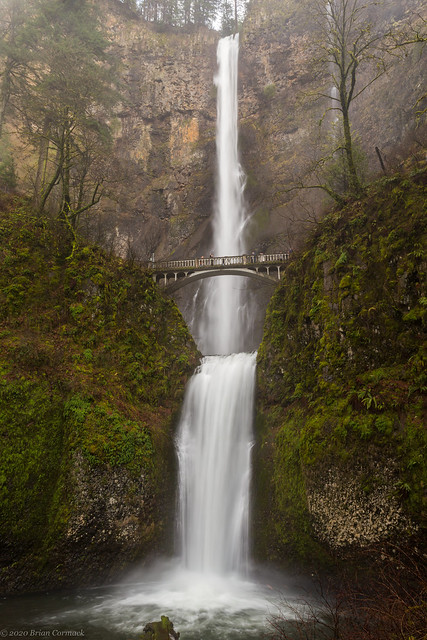
Towards the end of the day we were finally able to make a stop at the mighty and majestic Multnomah Falls. There are over 90 waterfalls just on the Oregon side of the Columbia River Gorge, and Multnomah ranks as the tallest and most popular. It also easily ranks as one of the most iconic waterfalls in the country. If you do a google image search for waterfalls, chances are you'll find several pictures of Multnomah Falls in the search results.

Multnomah

The falls drop in two steps. The upper falls plunge 542 feet, and the lower falls drop 69 feet (with a 9 foot elevation drop between them), creating a waterfall that is 620 feet tall total. Multnomah is the tallest waterfall in Oregon, and is credited as being the second-tallest year-round waterfall in the US. It creates a pretty stunning view to see in person.

Multnomah

A picturesque stone bridge crossing between the falls was constructed in 1915. On our last visit here in 2014, the bridge was temporarily closed after a falling boulder smashed through part of the bridge.

Multnomah

Since it is such a beautiful spot, it's no surprise that this is an insanely popular place. Over 2.5 million people visit the falls every year, making it the most-visited natural recreation area in the Pacific Northwest. It was pretty crowded when we were there, but I joined the masses and made the short but steep walk up the hill to the bridge between the falls. This is the view looking back down at the base of the falls.

Multnomah

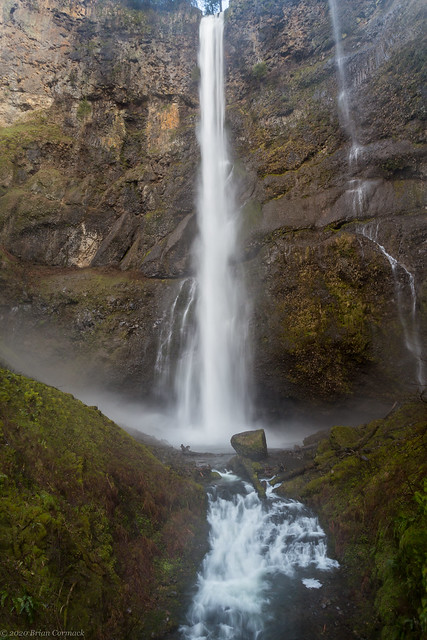
And the view looking at the upper falls, as mist and spray coated the camera with water.

Multnomah

Near the base of the falls is the Multnomah Falls Lodge, which was built in 1925. The lodge and the the falls just barely escaped the flames of the massive Eagle Creek wildfire.

Multnomah

Monday, March 2, 2020

Oregon: Horsetail Falls & Gorton Creek

We drove further into the Columbia River Gorge and attempted to stop at Multnomah Falls, but it was packed with people so we drove on. The next stop was Horsetail Falls, which was also busy but at least we found a place to park. The falls are 176 feet tall and they produce significant amounts of spray. So much spray that it was almost impossible to get good pictures of the falls without the camera getting completely soaked. So I retreated further back from the falls and got a shot from the bridge, which like most things here was coated with moss.

Horsetail Falls

Horsetail Falls

As we drove further through the Columbua River Gorge we began seeing more evidence of the devastating Eagle Creek Fire, which was caused by a careless teenager playing with fireworks. The fire took three months to contain, and cost nearly $40 million to extinguish. It also completely devastated many places in the gorge, causing irreparable damage. Many areas are still closed to hiking, with no clear timeline as to when people will be allowed back in. It's another reminder of how one foolish decision can have such drastic and negative consequences.

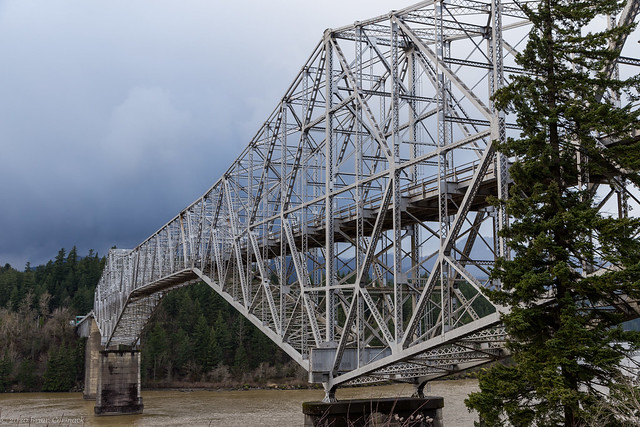
We continued on and drove through the town of Cascade Locks and stopped at the Bridge of the Gods. The bridge opened in 1926 and gets its dramatic name from an old geologic feature on the Columbia River that was also called the Bridge of the Gods. According to legend, a landslide sometime in the 1400s sent massive amounts of debris into the river which caused the formation of a natural dam that was 200 feet high and 3.5 miles long. The river eventually broke through the dam, which resulted in the creation of the Cascades Rapids (which were submerged underwater in 1938 when a modern dam was built nearby).

Bridge Of The Gods

From there it was a quick drive to Wyeth State Park and to a short hike along the scenic Gorton Creek. After dealing with the crowds on a busy holiday weekend it was a refreshing break to make a hike in a spot where there weren't any other people (besides the nosy Oregon state police officer who gave me a warning for parking in the wrong place).

Gorton Hears A Who

Gorton Ramsay

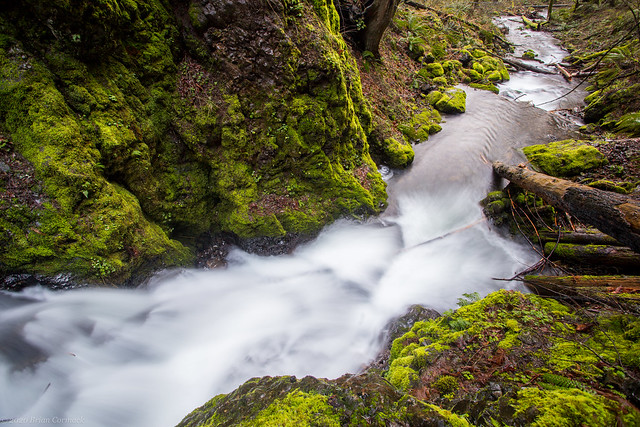
There were a few places where you could see evidence of the recent fire along the creek, but fortunately it didn't look like there was much damage here. The creek was beautiful, with colorful moss coating the rocks in the creek.

Mossterpiece Theatre

Mickey Moss

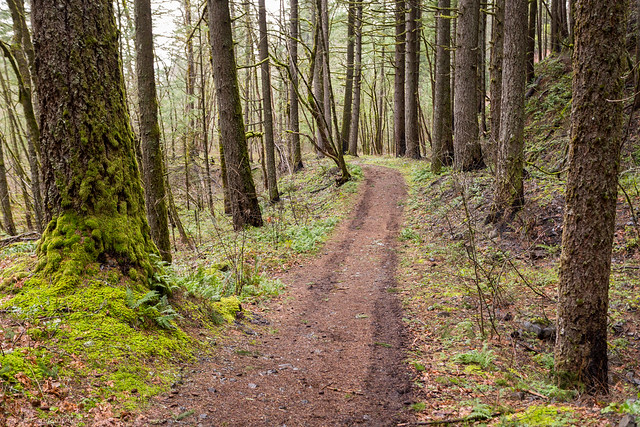
The trail headed up the hill along the creek, and it must look gorgeous here in the Spring.

Mossing Link

It was raining when I made it to Emerald Falls, which is about 10 feet tall (It's definitely not the tallest waterfall in the Columbia River Gorge, but it was a pretty little spot).

Green New Deal

And one last shot from here, of the creek has it flows by moss-covered rocks below Emerald Falls.

Emerald Falls

Friday, February 28, 2020

Oregon: Latourell & Bridal Veil Falls

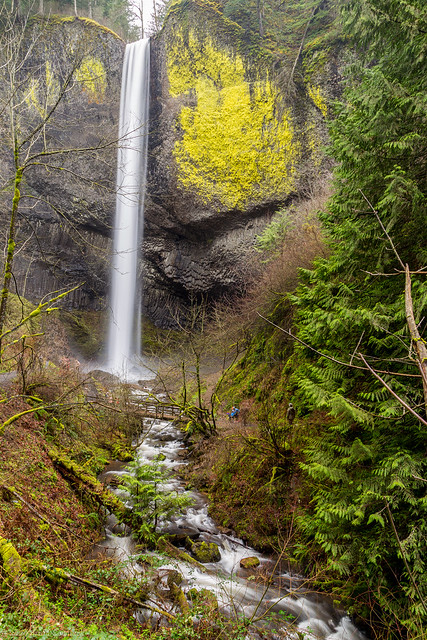
The first waterfall you see as you drive into the Columbia River Gorge is Latourell Falls, and it makes quite an introduction (I guess you could say it’s Gorge-ous?). The falls plunge 224 feet over a massive wall of black basalt that has a large patch of bright yellow lichen growing on it.

Latourell Falls

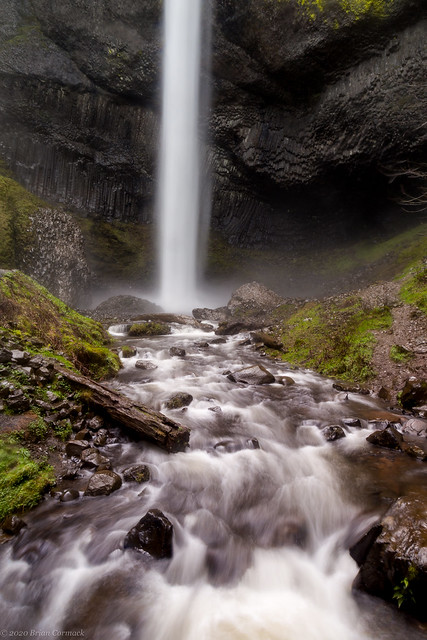
It’s an easy walk to the falls, and since there we were there on a weekend there were quite a few people standing around taking selfies and pictures. This is the view looking up at the falls while trying to avoid getting too much spray from the falls on the lens.

Latourell Falls

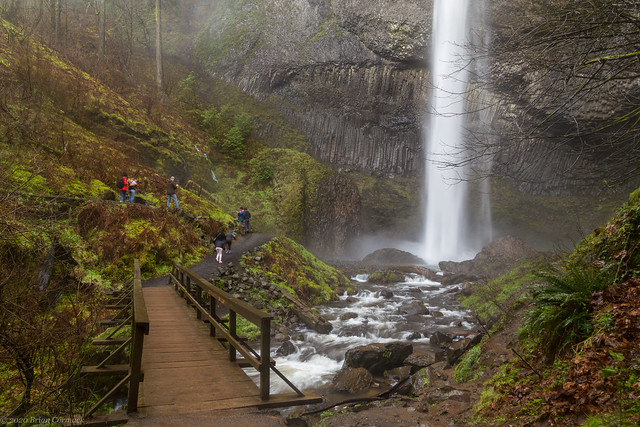
And looking back at the bridge over the creek below the falls.

Latourell

From there we headed back onto the Historic Columbia River Highway, a stretch of road constructed between 1913 and 1922 that was the first planned scenic roadway in the country. The next stop was Bridal Veil Falls, which is reached by a short but slightly steep trail that drops down the hillside and crosses Bridal Veil creek on a bridge.

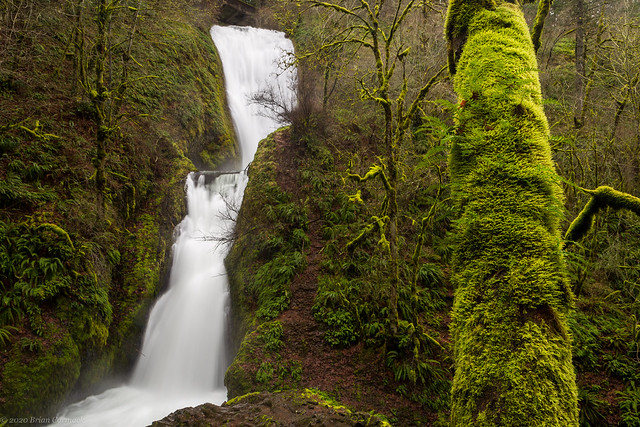
Bridal Veil

Even though it was winter, the area below the falls was green with moss and ferns.

Bridal Veil

The creek plunges over two tiers creating a waterfall that is about 118 feet tall. At the very top of the falls you can see part of a bridge for the Columbia River Highway that was constructed in 1914.

Bridezilla

For a few decades these falls didn't really run, the water was diverted away to a nearby mill. You can see traces of the mill complex along the trail.

Of Moss And Men

One thing that I love about this area is how green it is, and how much moss covers everything (like rocks, concrete and trees).

Mossing Ingredient

And one last shot before heading up the hill, looking back up the creek toward the falls:

Under The Veil

Wednesday, February 26, 2020

Oregon: Vista House

We recently went on a quick trip to the Pacific Northwest, spending a few days in and around Portland, Oregon. It’s a beautiful area, and one of my favorite cities to visit. Both the coast and massive waterfalls can be reached via short drives, and Portland itself is home to tons of breweries and great restaurants. It was also good timing for a visit, since we just found out that Caroline is pregnant and we won’t be able to do much traveling soon.

So we left Jonah in the loving care of his Grandmama and we flew off to Portland, arriving at night but with enough time to get a great dinner at Laurelhurst Market. The next day we got breakfast at Fried Egg I’m In Love (amazing, btw), and then made our way into the Columbia River Gorge. We arrived at an overlook when I realized I had made a devastating mistake....I left the tripod behind in Portland.

There And Back Again

We were about to enter the Columbia River Gorge, which is home to numerous and spectacular waterfalls. So a tripod was a bit necessary, but would require driving back to Portland. Thankfully Caroline was ok with us making a quick return trip (luckily traffic wasn’t too bad) so I could retrieve the tripod that was still sitting innocently in the suitcase.

Soon enough, we were back and with a tripod in hand. We stopped first at Vista House, which has a commanding view atop a bluff 733 feet above the Columbia River. The stone Art Nouveau building was constructed in 1918 and was built as a centerpiece along the Historic Columbia River Highway. The observatory was proposed as being a place “from which the view both up and down the Columbia could be viewed in silent communion with the infinite.” And also a place to buy postcards and use the potty.

Vista House

The inside has a domed rotunda and lots of marble and bronze and stained glass windows. It’s unfortunate that we don’t make buildings like this anymore.

Vista House

And the view is amazing as well. The Columbia River passes below, ringed with the tall mountains of the Columbia River Gorge. The Columbia River is the largest river in the Pacific Northwest, and the seventh longest river in the US (it’s about 200 miles shorter than the Arkansas River, for comparison). This is the view from Vista House, looking east.

Viewfinding

A few hours later we passed back by Vista House after spending the rest of the day in the Columbia River Gorge. We just happened to have gotten there right around sunset, when golden light was flowing across the canyon.

Curious Gorge

Lit Up

And the view looking west, towards Portland.

At The End Of The Day

And then one last shot of the Gorge after sunset, before heading back into the city (I didn't manage to forget the tripod again).

Gorge Washington