Tuesday, August 15, 2023

Hot Springs

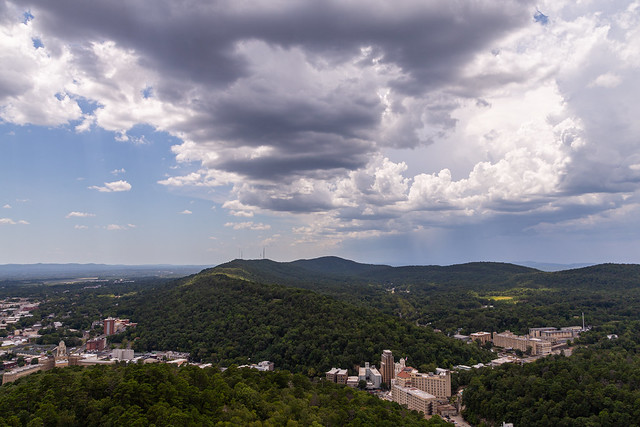
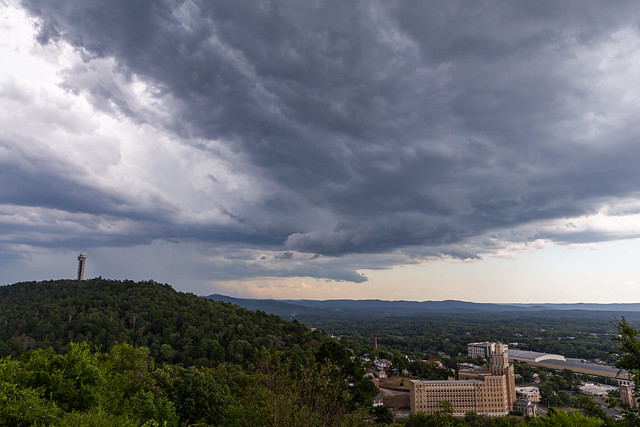
Recently I took Jonah on a quick trip to Hot Springs to celebrate the end of summer and the start of the new school year. We first went by the Mid-America Science Museum, which is a fun little place for kids. Then we headed over to the Hot Springs Mountain Tower. The tower sits on the top of a hill in the National Park, and provides some nice views of the city and the nearby mountains.

IMG_6243

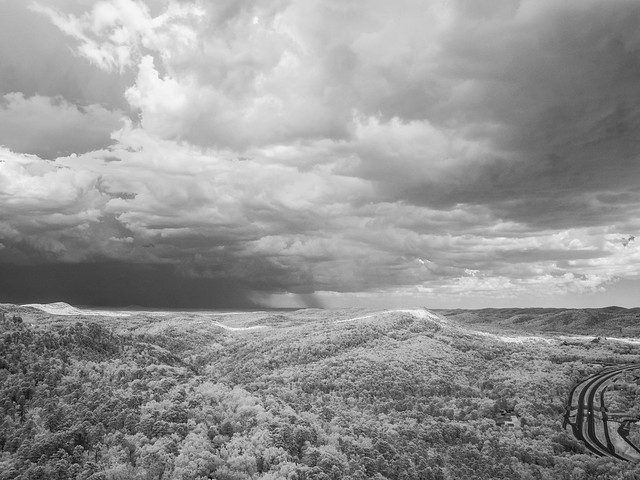
It had been about 100 degrees when we made it to the Science Museum. But at the top of the tower it was actually quite comfortable, thanks to some cooling winds coming in from an approaching thunderstorm.

IMG_6247

The tower stands 216 feet tall, and was built in 1983. It replaced two previous towers that had been built on the mountain, in 1877 and 1906.

P8050242

P8050241

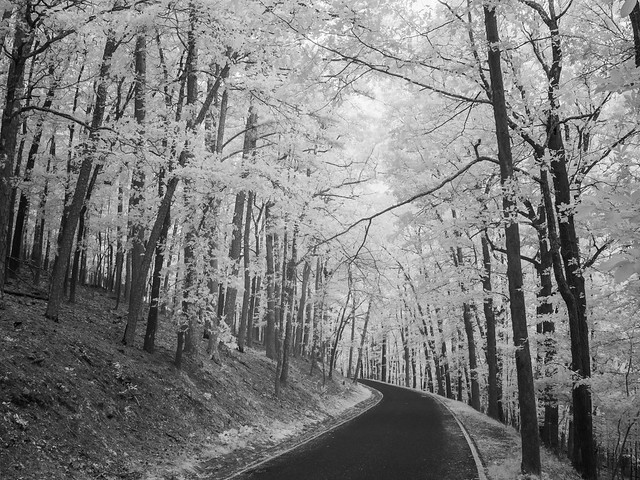
We headed back to the car and followed the curvy road as it ran along the top of the mountains...

P8050250

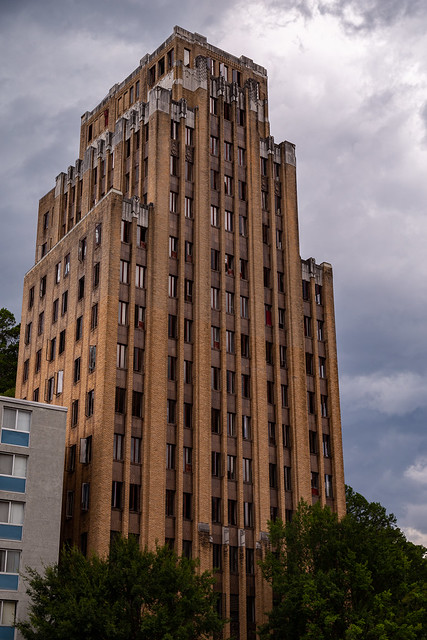
We dropped down into the city, which was busy with summer tourists. I pulled over and got a few quick pictures of my favorite building in Hot Springs - the Medical Arts Building.

IMG_6261

The art deco skyscraper was built in 1929 and was the tallest building in the state. It had been almost entirely abandoned for decades, but is now in the process of being converted into a hotel.

P8050267

Just down Central Avenue is the old Army-Navy Hospital, which was built in 1933. It sadly has been empty and vacant since 2019, and already you can see broken windows on the front of its imposing facade. I hope a new use can be found for this historic structure, and that it doesn't meet the same fate as the Majestic Hotel.

IMG_6312

And then we made one last stop in Hot Springs, at one of the mountain overlooks. It provides a great view of the city and the old Army-Navy Hospital, along with the Tower. The massive storm was moving in, and it started raining while we were up there. I hurried back to the car and started driving home (perfect timing since we drove through pouring rain the entire way back to Little Rock!).

IMG_6281

Tuesday, August 8, 2023

Helena

Helena was once one of the most vibrant and important cities in Arkansas, but now it feels neglected and forgotten. It was incorporated in 1833, along a spot where Crowley's Ridge met the Mississippi River. The town quickly became a vital spot along the River during the steamboat era. In 1883, Mark Twain wrote that "Helena occupies one of the prettiest situations on the Mississippi."

Several Civil War battles were fought in and around Helena. And in the 1930s, Helena became known as "the blues capital of the Delta," and was the home to such musical luminaries as Robert Johnson, Robert Lee McCollum, Roosevelt Sykes, and Sonny Boy Williamson. But modern economic realities of the Delta have been rough on the city.

I don't know why Helena feels so cut off from the rest of the state. Maybe it's because its location? It is on the Mississippi River, but far from any interstates or other big cities. Our state government often has to be reminded that the Delta exists, especially for places like Helena. The city has been under a boil order since the end of June due to issues with its aging water infrastructure. The state of Arkansas, which currently has a billion dollar surplus, offered the city a paltry $100,000 loan.

There are lots of neat old buildings in Helena, but many have been left empty and abandoned. And sadly, many of those were severely damaged by a storm in 2020. But the buildings that remain paint an interesting picture about what Helena was once like, and the history it still has to share.

IMG_5974

P7060070

One building here used to house Bullock's Cafe, which I was wish was still open because the food there must have been delicious. A friend I follow on Twitter (Terry Buckalew - @tmabuckalew - who you should definitely follow if you are interested in the Blues) reports that Bullock's had amazing food, and the owner Cora Bullock would pull you in the back and you could pick your food right off the stove. It was famous for awhile, and was in a few travel magazines and news stories.

IMG_6045

P7060127

IMG_6036

There is a picture of Cora at work in the kitchen on this photoblog from 2007.

IMG_6020

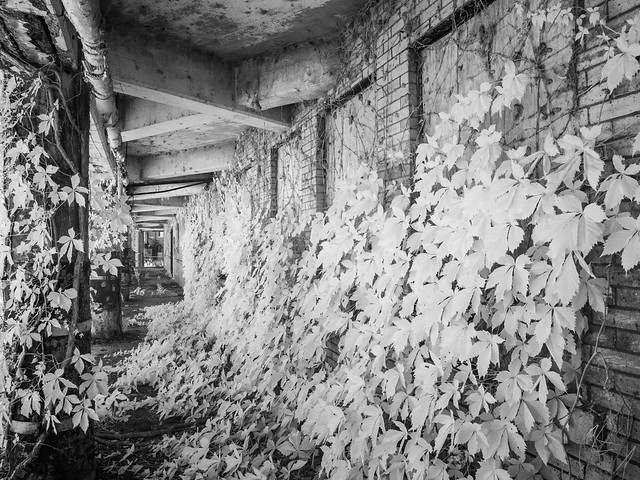
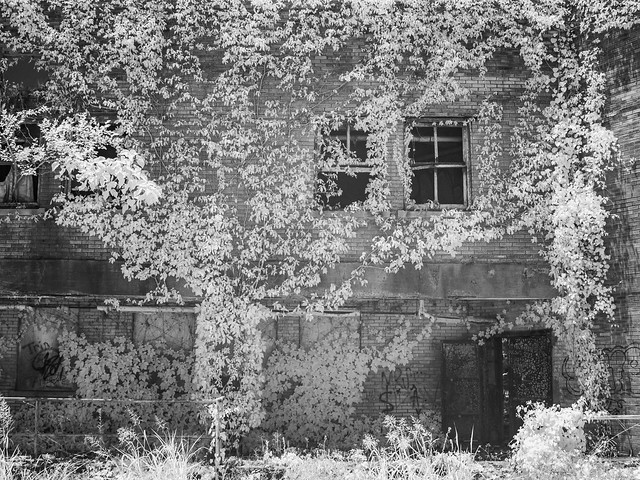
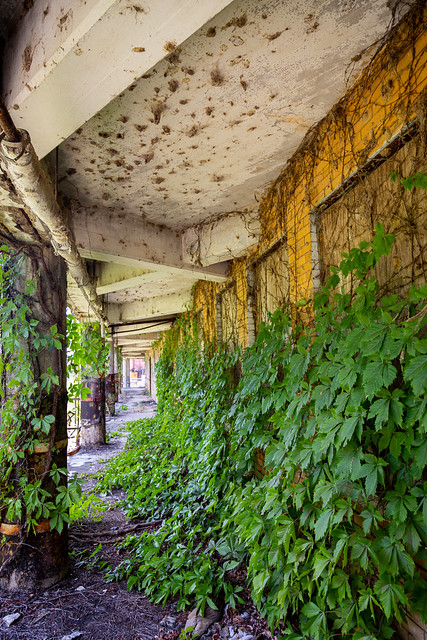
This old building sits a few blocks away, along the Mississippi River levee. It has been abandoned for some time now, with the gutted interior now covered in layers of graffiti and random debris. The outside is home to these invasive vines, looking to take over the concrete walkway.
IMG_6064

IMG_6079

P7060133

P7060141-2

This cracked and faded paint was on one of the rusty metal doors leading into the building.

IMG_6062

P7060150

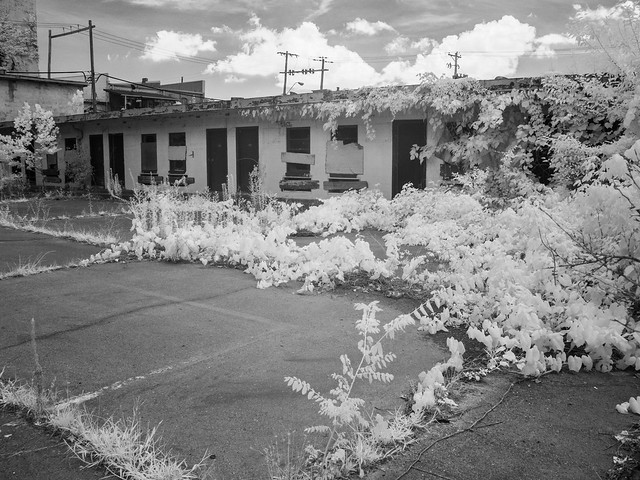
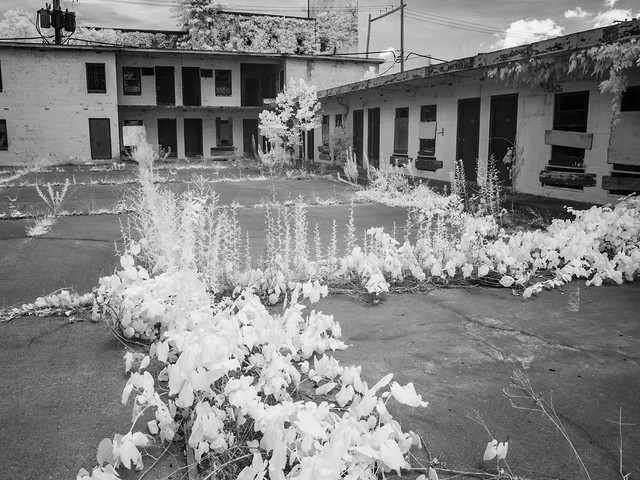
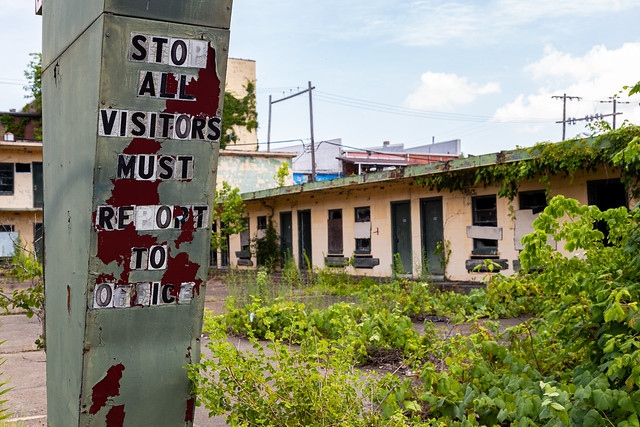
A few blocks away is an old motel, the Downtown Inn. It has been closed for several years, with tall weeds sprouting in the former parking lot.
IMG_6097

P7060152

P7060153

P7060156

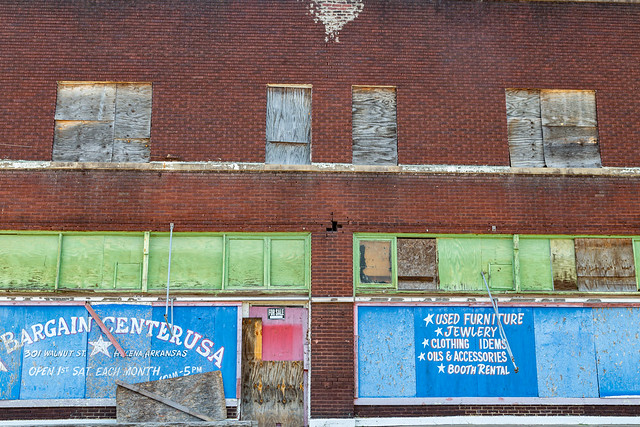
And a few more shots from around downtown Helena:
IMG_6102

IMG_6105

IMG_6109

IMG_6113

P7060193

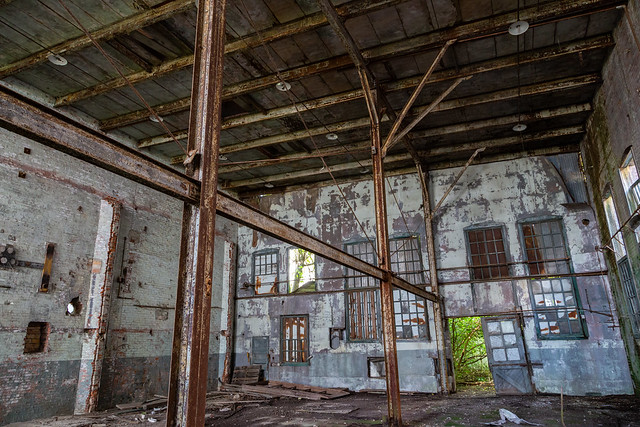
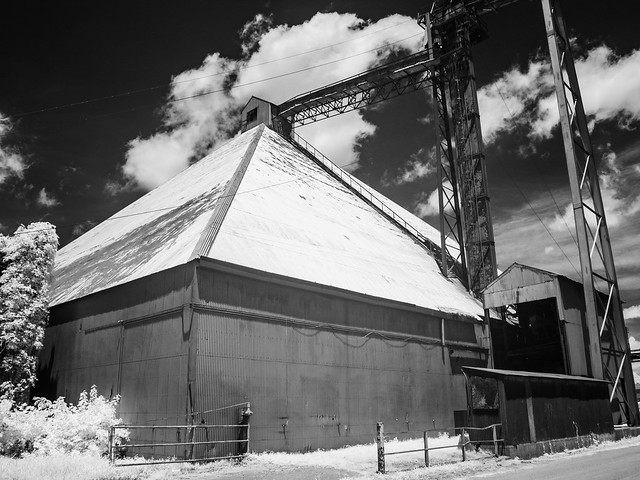
I drove over to the industrial area along the river that looks like its home to buildings that process grain (I guess, I really have no idea?). There is an old building here, that may have once been a factory. It sits empty and abandoned, the only inhabitants are mice (judging from the numerous pieces of poop on the ground).
IMG_6137

IMG_6140-2

IMG_6148-2

In one part of the building, trees were seemingly growing right on the concrete floor. They were pretty tall, so it seems like they've been growing there for quite some time.

IMG_6127

P7060160

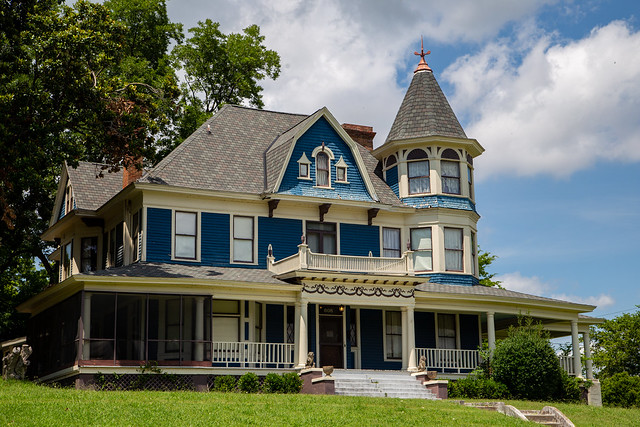
After that I needed to start driving back towards home. But I got one last shot at this neat old Victorian house. They definitely don't make them like this anymore:
IMG_6190

Friday, August 4, 2023

The Kudzu Of Helena

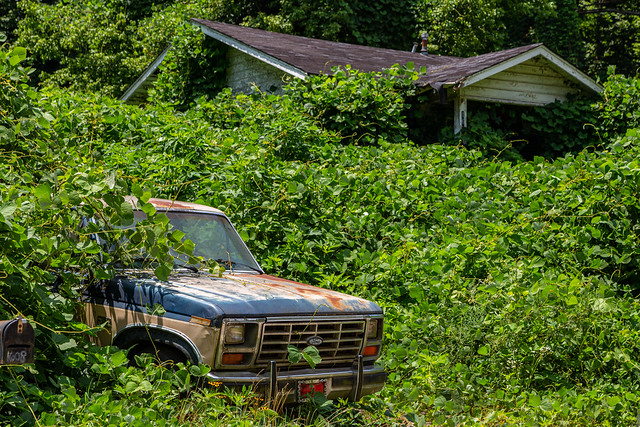
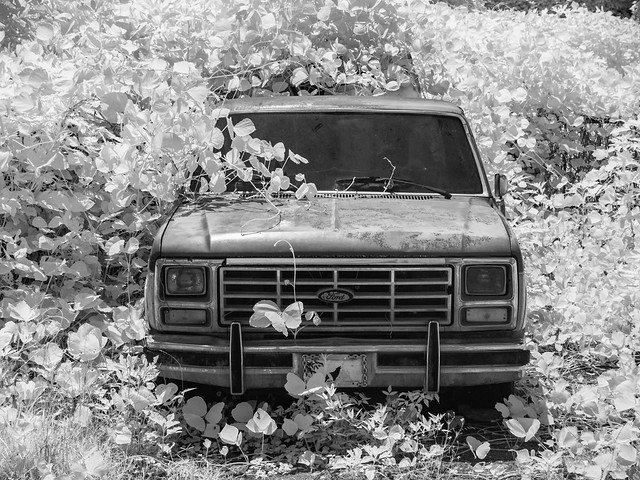
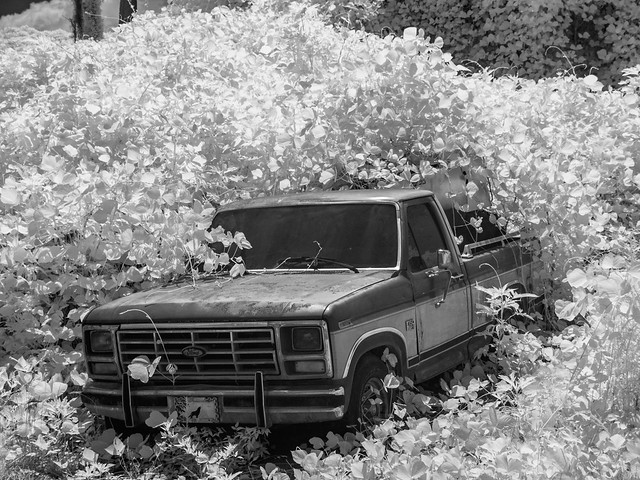
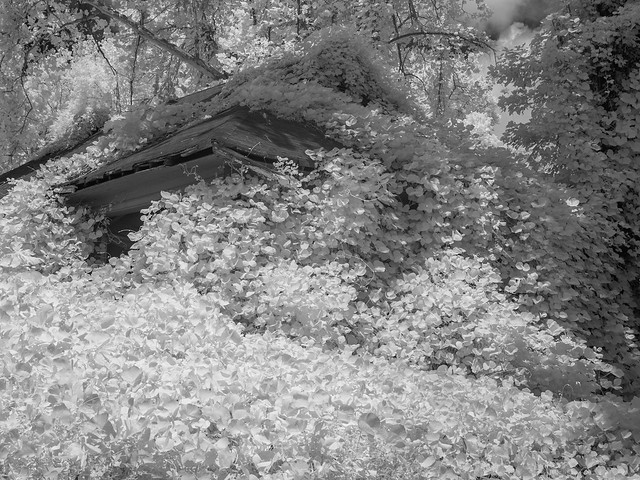
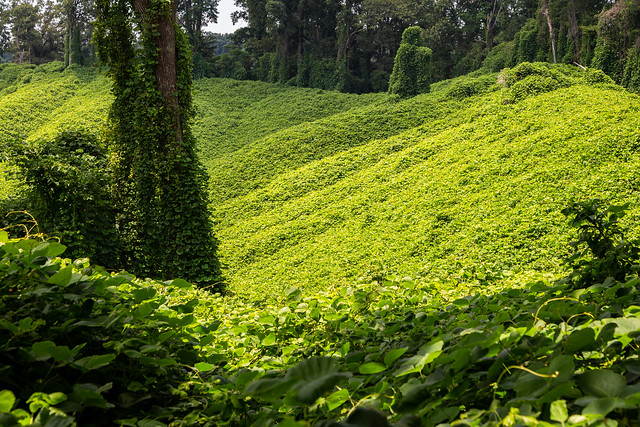
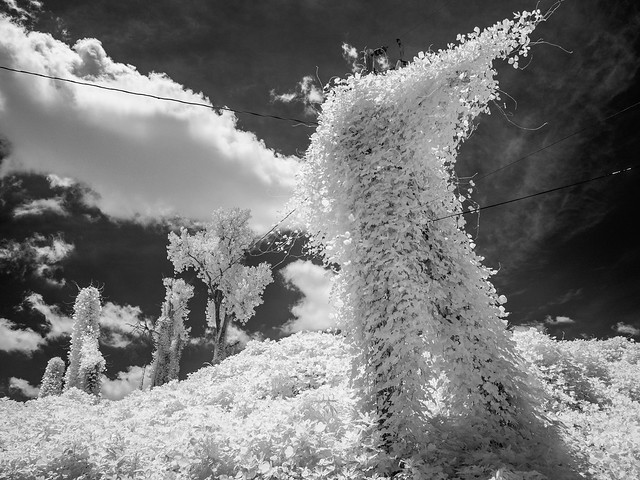
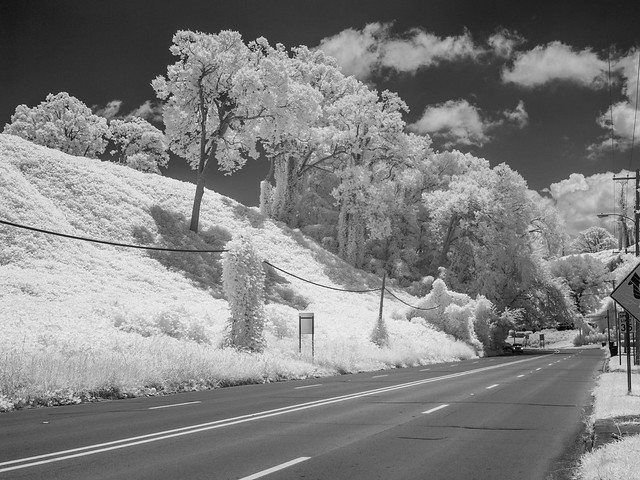
There are a lot of notable features about Helena-West Helena. The city's deep history, its connections to the Blues, or its place along the massive Mississippi River. But one of the most striking things to see as you drive through Helena is the kudzu. The aggressively invasive vine has managed to take over several hillsides in the city, and continues to spread. There were several homes that seem to have been abandoned, which were slowly being subsumed by kudzu.

IMG_5955

P7060017

P7060020

Kudzu is native to Japan and China, and was first introduced to the US as part of an exhibit at the 1876 World's Fair in Philadelphia. It became popular because of its attractive flowers and foliage, and because it grew quickly. In the 1930s, the US government paid farmers in the South to actually plant kudzu as a way to prevent topsoil erosion and to provide food for livestock. Unfortunately things got a little out of hand. Kudzu flourished, and kept on growing. Now it's believed to cover up to seven million acres of land in just the South, and has been seen as far north as Canada.

IMG_5983

Kudzu can grow at a rate of about a foot a day. It's been called the "vine that ate the South."

P7060041

P7060044

Crowley's Ridge is susceptible to erosion, and kudzu was planted in abundance there. Helena sits at the bottom edge of Crowley's Ridge, and several of the hills have been covered with thick strands of kudzu for decades. This was taken from a neighborhood, with houses sitting right against the thick vines. I'd hate to think of how much work it is to combat the kudzu assault.

IMG_5971

P7060026-2

P7060058

P7060068

P7060073

And one last shot of the kudzu, taken before I lingered too long and was covered up by the vines....

P7060203-Edit

Tuesday, August 1, 2023

Helena - Centennial Baptist Church

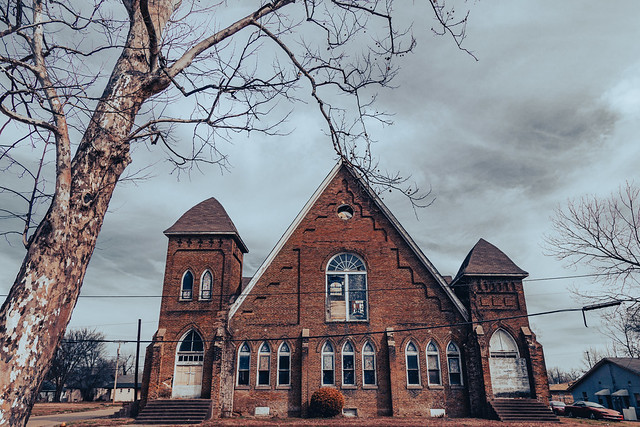
The Centennial Baptist Church, or what remains of it, was built in the historic city of Helena in 1905. The Gothic Revival church was the home base of Reverend Dr. Elias Camp Morris, who was the president of the National Baptist Convention. That group became the largest Black organization in the country, and the Rev. Dr. Morris became "one of the most influential persons in the history of African-American religion in the country" at the time. The church was designed by Henry James Price, and it is the only known example in Arkansas of a Black church designed by a Black architect.

The church was so significant that was deemed a National Historic Landmark. There are only 17 National Historic Landmarks in Arkansas, and the church is included with other places like Bathhouse Row, the Old State House and Little Rock Central High. This is a view of the church, taken during a visit to Helena in 2017:

IMG_9216-3

The last church service was held in 1998, and the decades after saw the building suffer serious deterioration. It sat empty, with bricks falling from the facade and pigeons making nests among the pews. In 2020, a massive storm hit Helena. Straight-line winds hit the church, shaving off the front wall and ripping off the roof. This is a view of the church, taken during a visit to Helena a few weeks ago:

IMG_5997

P7060075

The church is surrounded by a high fence, so it was hard to get pictures. But I lifted the camera overhead and tried my best. Remarkably, several of the brick towers are still standing. They have been joined by a spreading congregation of vines, which cover parts of the ruins like a shroud.

IMG_5999

P7060083

P7060081

Untitled

There have been vague mentions in a few news articles about trying to preserve, or perhaps rebuild the church. Although the biggest question would be who would pay for it. Despite the state sitting on a massive billion dollar surplus, and pretending to care about heritage and history (at least when it comes to confederate statues), the Centennial Baptist Church seems to have been forgotten. I do hope that something can be done to save the church, it and the city of Helena deserve it.

P7060094