Sunday, October 29, 2017

Windsor Ruins, MS

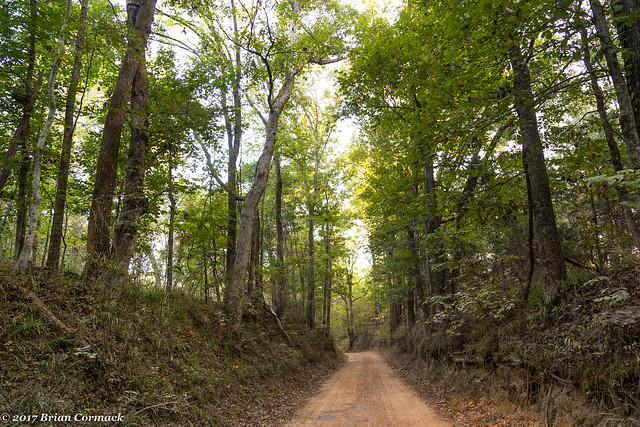
From Rodney, I made the short drive over to the Windsor Ruins. Since Rodney is a ghost town in the middle of nowhere, this meant driving through a few miles of bumpy and dusty dirt roads.

IMG_7731-2

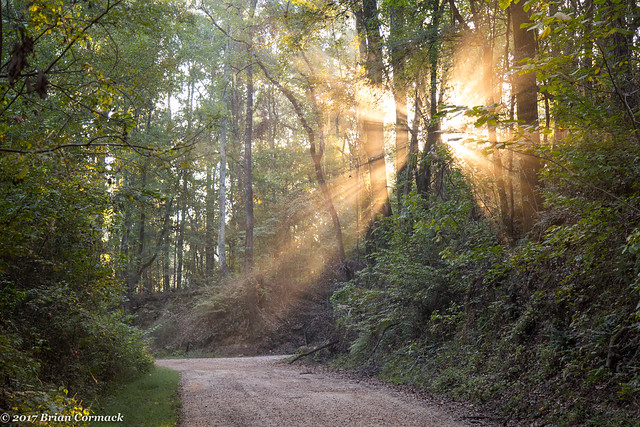
At one point, the rising sun burst though the trees covering the road. The light was shining through the dust that had been kicked up by passing cars.

IMG_7751-2

The road then ran right into the middle of Alcorn State University, which I though was oddly busy for an early Saturday morning (when I was in college, I definitely would not be up and awake at 8:00 AM). There were already tons of students out walking around, and then lots of people strolling through campus. It would turn out that it was Homecoming Weekend, and there was a football game and parade that day. Streets through campus were beginning to be shut down for the parade, and I managed to sneak through without getting in the way of the game.

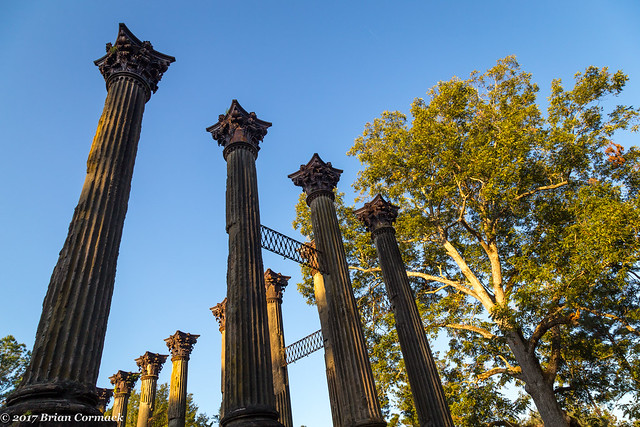
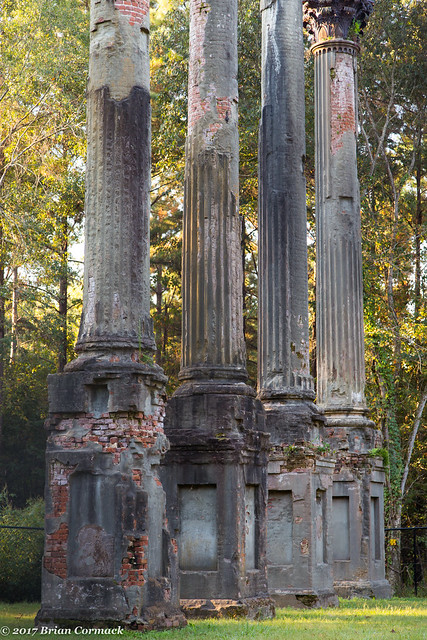
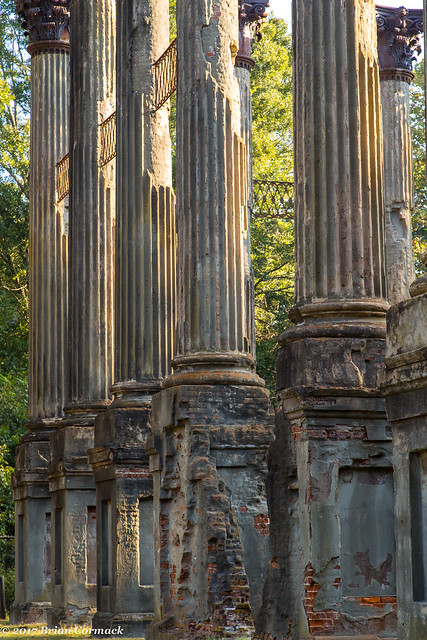
I drove a few miles down the road to the Windsor Ruins, which are 23 columns that are the only remnants of a massive mansion that stood here from 1861 to 1890.

IMG_7789-2

Windsor Mansion was built on a plantation that is just four miles from the Mississippi River. The mansion was huge, and contained 25 rooms and also 25 fireplaces. The roof had an observatory, which was used by both sides during the Civil War. The house probably only survived the war because it was used to watch the river and because of its use as an hospital. After the war, Mark Twain used the observatory to watch the river, and mentioned the elegance of the home in his book Life On The Mississippi.

IMG_7813-2

After surviving the Civil War, the mansion would end up being destroyed by a fire caused by a cigarette dropped by a houseguest in 1890. The home burned, leaving behind only the columns and the iron steps (which are now part of a building at Alcorn State). The columns have stood for over a century since, but they are weakening and in danger of collapse. A fence was recently installed around the columns, which prevents people from getting too close to the ruins (and also makes getting pictures a little difficult).

IMG_7904-3

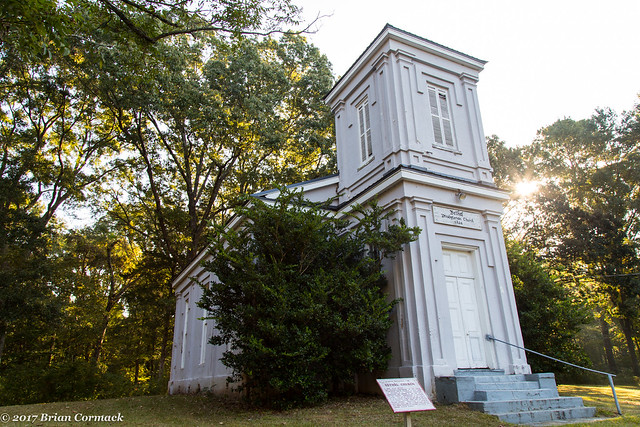
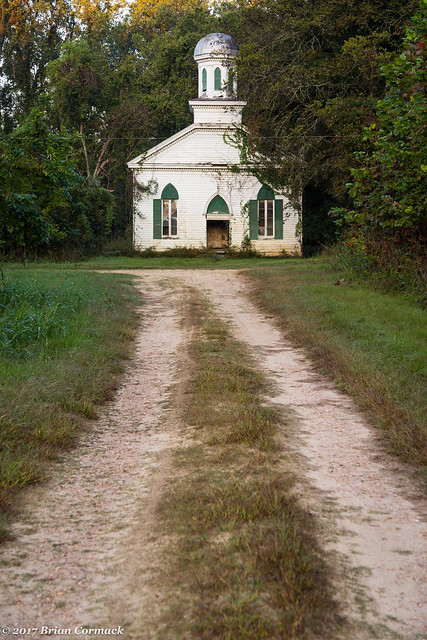
I tried to get a few pictures and then made the drive back to our hotel in Natchez. Along the way I got a picture of this old church, which was built in 1824. After that we then headed further south, towards New Orleans.

IMG_7927-2

Thursday, October 26, 2017

Rodney, MS

Last week we took a vacation down to the Gulf of Mexico, staying a few days in New Orleans and then a few days in Pensacola Beach. Since we were traveling with a 20 month old toddler, we thought it would be wiser to break up the drive into segments in order to limit the amount of time he would be stuck in a car seat. So the first day we drove south, passing into Louisiana and then stopping for the night in Natchez, Mississippi. Early the next morning I woke up before sunrise and snuck out to get a few pictures in the deep woods outside of Natchez. After driving down the Natchez Trace for a bit, and then some bumpy and extremely dusty dirt roads, I ended up at the first stop – the town of Rodney, Mississippi.

Rodney was founded way back in 1812, and very nearly became the capitol of Mississippi (the city lost out on only three votes). The town was situated along the Mississippi River, and was a bustling town during the 1800s. But while a few people still live in the area, Rodney is nothing more than a ghost town now. Only a few old buildings remain, barely offering a glimpse of the town’s past life.

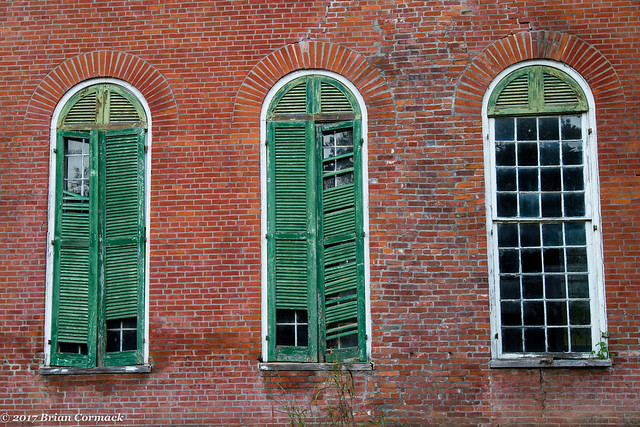
One of the most prominent buildings that still stands in Rodney is the Presbyterian Church, which was constructed in 1832. In 1864, the church was the setting of a small Civil War skirmish. Union troops from a gunship that was stationed in Rodney attended a church service here, which was rudely interrupted by Confederate troops who took them hostage. The gunship (which was sitting in the Mississippi River) then proceeded to shell the church. A cannonball sits in the facade in the church, which isn't from that time but it was placed in a spot later on that received damage from the battle.

IMG_7585-2

IMG_7559-2

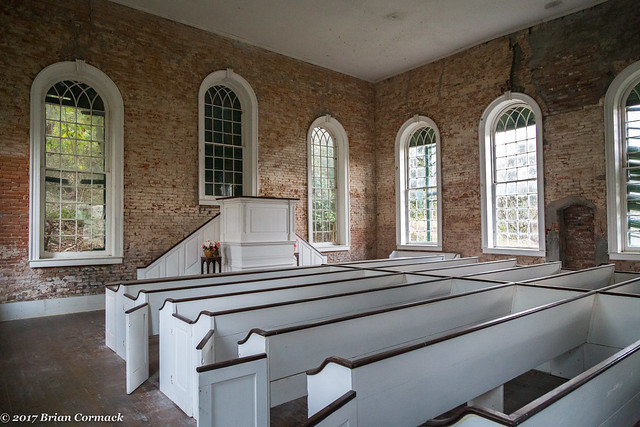
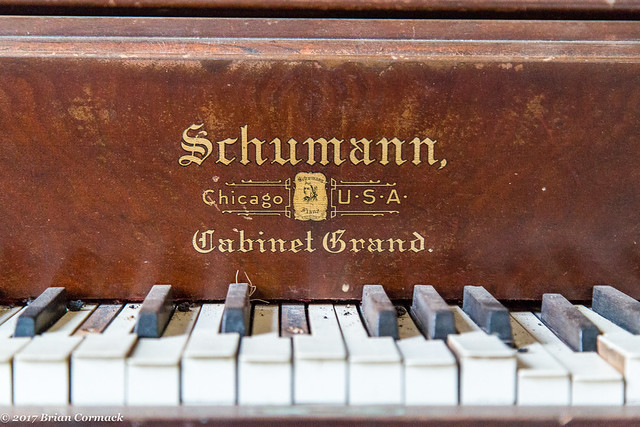
And the interior of the church, which was in remarkably good condition. Clearly people still look after and take care of the church, even if it hasn't had any services here for decades.

IMG_7573-2

IMG_7575-2

Besides the Civil War, there were several other calamities that struck Rodney. There were two yellow fever outbreaks, followed by two destructive fires that burned most of the town. But in 1870, a sandbar formed in the Mississippi River which caused it to divert two miles to the west. The port town lost its river access, and then a few years later the town was bypassed by the railroad. Most of the population left, leaving behind the scattered old buildings that sit like forgotten tombs.

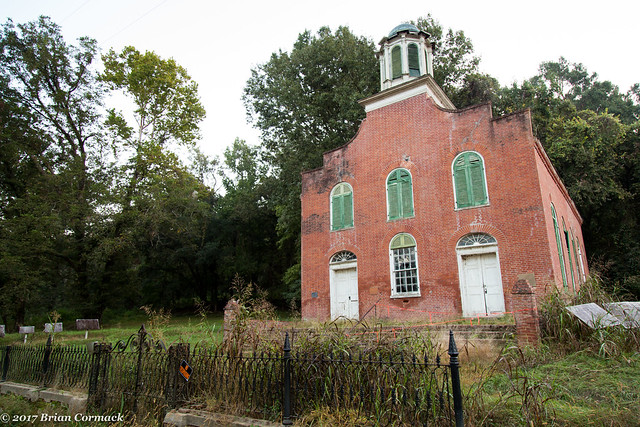
Just down the road is another old church, the Rodney Baptist Church which was built in 1850. But as I got closer I was a little annoyed to see that someone had parked their car right in the front of the church building. I tried to take a few pictures, but the car was right in the way and I'm not that skilled in Photoshop where I could remove it without it looking really bad. I looked around and there wasn't anyone else in sight, but maybe whoever parked there was inside the church looking around? I walked into the church and said "hello" a few times, just in case there was someone there. But then I jumped a little when someone responded back with their own "hello!"

The voice belonged to someone who was inside a tent that was set up in the sanctuary of the church. It was still pretty early and I apologized for waking him up. And I wouldn't normally do this, but I then asked if they wouldn't mind moving their car. I had driven several hours from out of state, and I hated that all the shots would be ruined by the car there. Luckily they didn't seem to mind, and they moved the car out of the way. They explained that they were in from Texas and had wanted to camp out in a ghost town on Friday the 13th. I felt a little bad for waking them up, but they seemed cool with moving the car for a few minutes. Also they said they were glad that I wasn't a crazy person who approached them while they were sleeping and tried to kill them. Good thing Rodney is a little bit safer than Camp Crystal Lake.

I hurried and got a few shots of the church, which has stood for over 150 years. The church was heavily damaged by floods a few years back, but hopefully it will keep standing for many more years.

IMG_7645-2

I got a few more pictures before driving back on the bumpy dirt roads towards another old relic of the past. More on that soon!

IMG_7706-2

Thursday, October 12, 2017

Hot Springs

Hot Springs has to be one of the most architecturally diverse cities in the state. For being a fairly small city, the sheer number of historic buildings here is staggering (though not as many as it could be, too many have been torn down). But it is also one of those places that you can always find something interesting to get pictures of, so I eagerly headed down there a few weeks back with the camera.

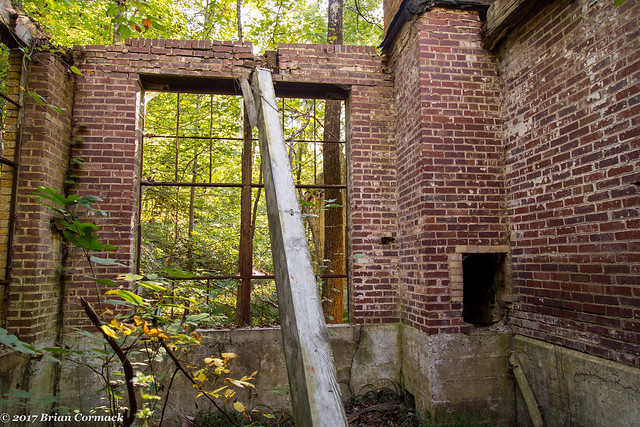
Just outside of the city is the old Chewaukla Bottling Factory, which was built in the 1930s but closed in the 1980s. It is abandoned and falling apart, sitting nearly hidden in the woods.
Chewbacca

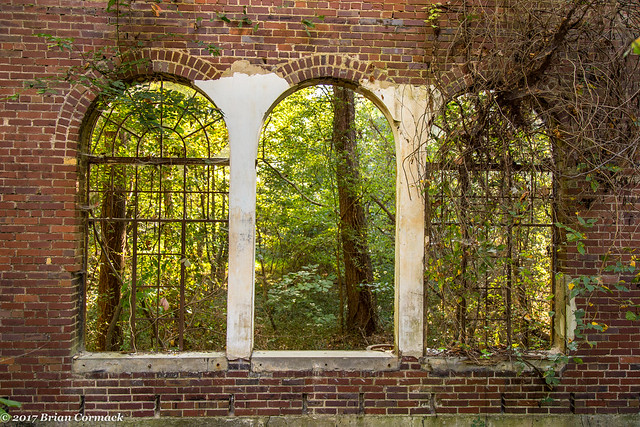
The ruins are built around five springs, which have been popular for centuries (legend has it that Native American tribes had medicinal cabins here. The name Chewaukla means "sleepy water"). Sometime in the 1930s, this brick building and some smaller gazebos were built to help lure in tourists to taste the waters.
Chewbacca

Chewaukla

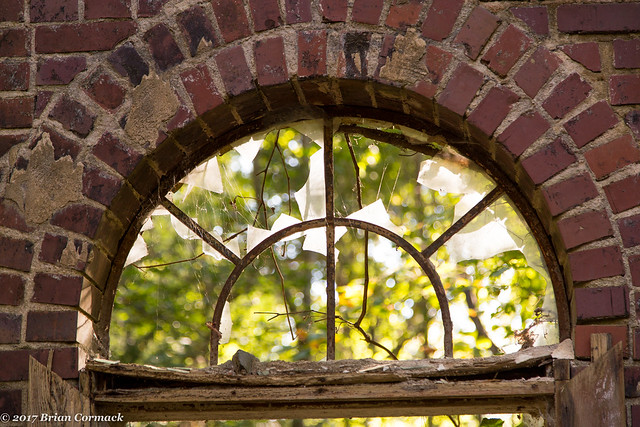
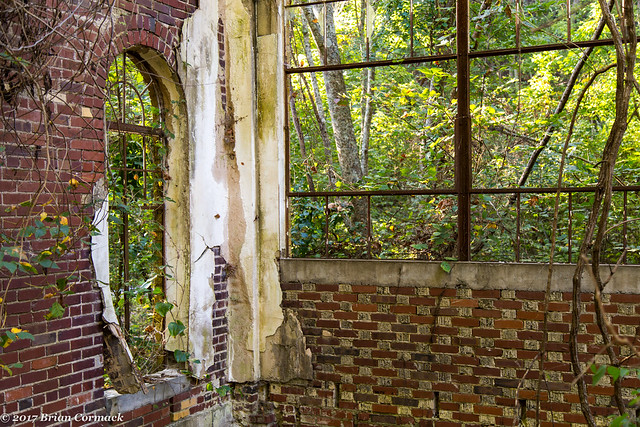
The building has now been abandoned for several decades, the brick walls are crumbling and the roof is long gone.
Chewaukla

Just down the road is the old Whitely Mill, which was built in 1921 and was used to power electricity for a nearby house.
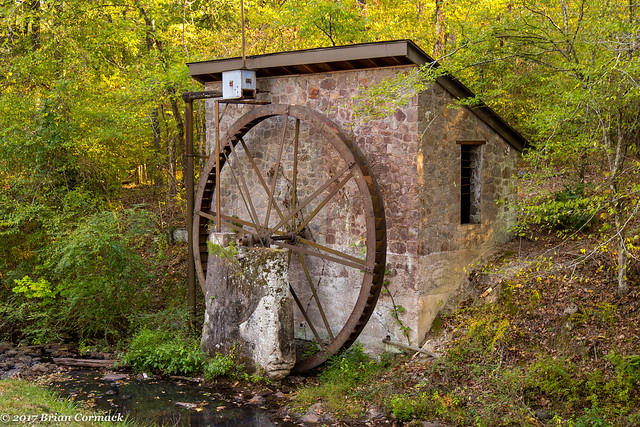
Hot Springs

From there I headed into downtown Hot Springs and stopped by the old Knickerbocker Hotel. The hotel was built sometime around 1900, and catered exclusively to Jewish tourists and residents. But it too also eventually shut down and the building is abandoned (though it has been listed for sale recently).
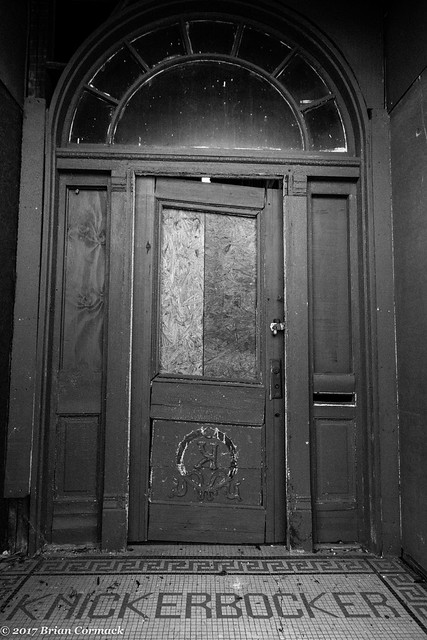
Knickerbocker Hotel

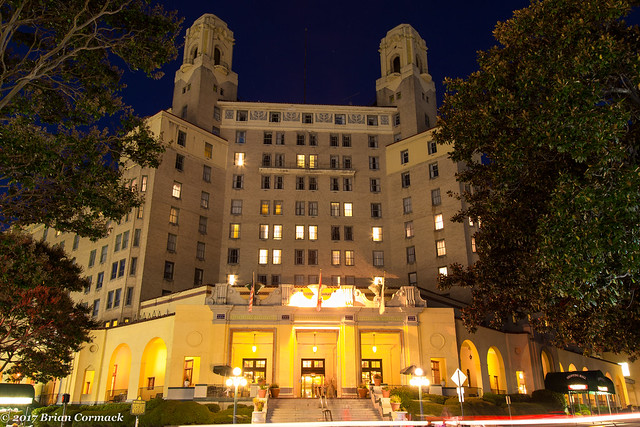
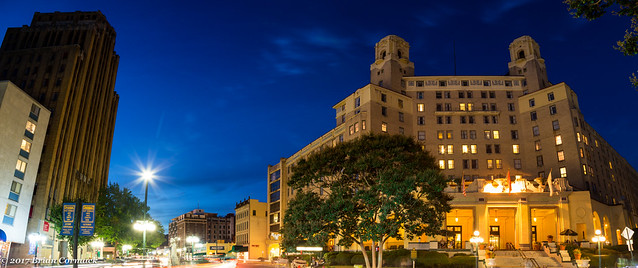
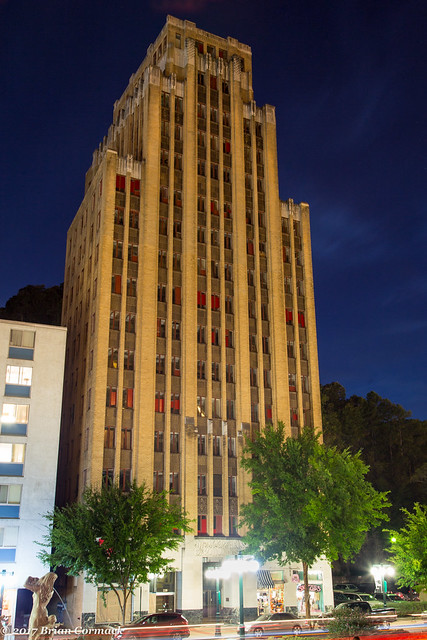
From there I visited the wonderful Superior Bathhouse Brewery to sample a few drinks, and then headed out at dusk to get a few more pictures. This is looking down Central Avenue towards the Medical Arts Building and the Arlington Hotel. The Medical Arts Building is one of my favorite buildings in Hot Springs, it was built in 1930 but has been mostly abandoned now since the 1990s. On the right is the Arlington Hotel, which was built in 1924 and is still the largest hotel in the state (though it is starting to show its age, but a new owner has come in and promised to bring the hotel back to her former glory).
Hot Springs

And a closer view of the Arlington:

Arlington Hotel

And another view of the old Medical Arts Building. While I was taking this, someone walked by and asked if I was trying to take pictures of ghosts.
IMG_7441-2

I headed along Bathhouse Row in the National Park and stopped to get a shot of this view of Central Avenue. Here is the old Thompson Building, which was built in 1913 by the same architect who also designed the Arlington Hotel, the Ozark Bathhouse, the Arkansas State Capitol and Little Rock Central High. The upper floors of the building had been vacant for decades until they were recently converted into a hotel which opened earlier this year.
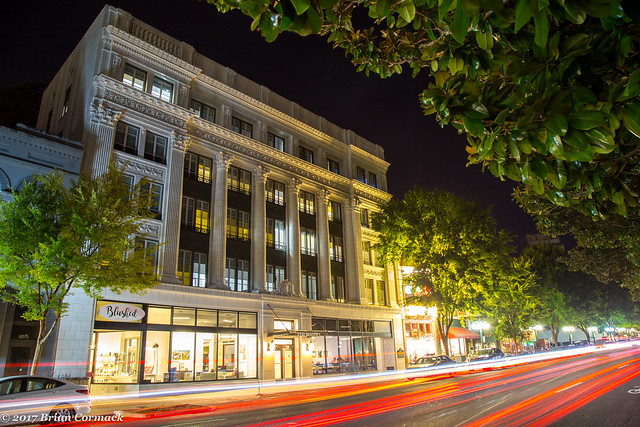
IMG_7445-2

Further down Bathhouse Row is the Buckstaff Bathhouse, which was built in 1912. Of the eight bathhouses along Bathhouse Row, the Buckstaff is the only that has remained in operation since it opened. All the others eventually closed when people stopped taking medicinal baths (and after the state made the city shut down the illegal casinos that used to operate across the street).
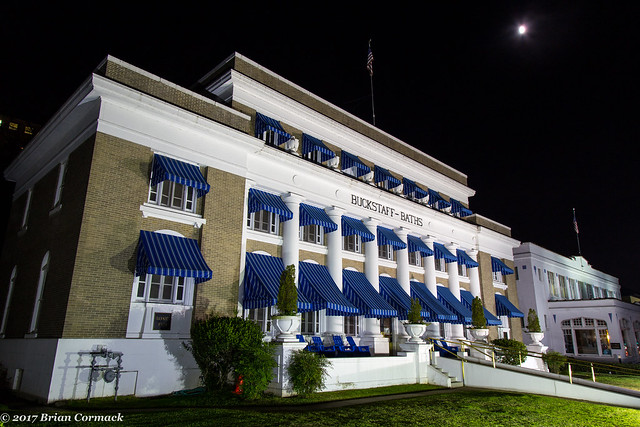
IMG_7455-2

At the end of Bathhouse Row is this small fountain, which sits in front of the National Park Service's Administration Building (which was built in 1936). Looming in the background is the old Army and Navy Hospital, which was built in the 1930s.
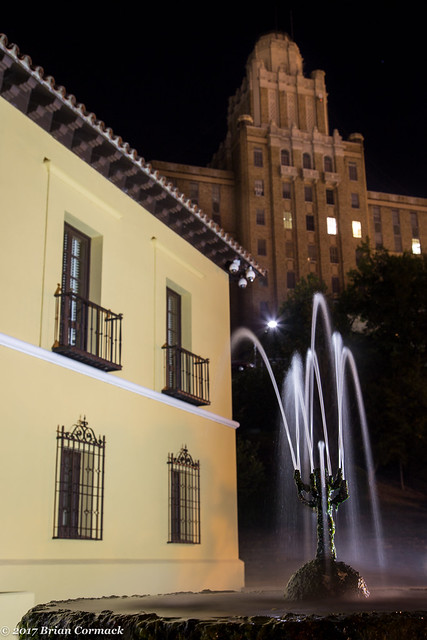
IMG_7464-2

Hot Springs is a neat city, and I've always enjoyed my time while visiting there. But for all of its charms, Hot Springs can be a frustrating place. It has such a great amount of history, but then so many buildings downtown are abandoned and empty. And I hate to say it, but there is a certain bit of trashiness there that can sometimes bubble up to the surface like spring water. This sadly became apparent when I was out taking pictures that night along Central Avenue. As I was standing by the camera and tripod, someone in a car driving by yelled out a particularly nasty slur at me (I don't want to repeat it here, but it begins with an f and is seven letters long). Which was really just more disappointing than anything. I'm sure whoever did it was only trying to think of something crazy to yell at tourists that night, and I was just an easy target. But for a city that is trying so hard to attract tourists and redevelop its downtown, it's a shame that things like this happen.

Anyways, this is the shot I was trying to get while people were yelling things. It's a view of the Ozark Bathhouse (built in 1922 and now a fancy spa), and the tall magnolia trees that line the sidewalk. After that I decided it was time to head back to the car and get back home to Little Rock.
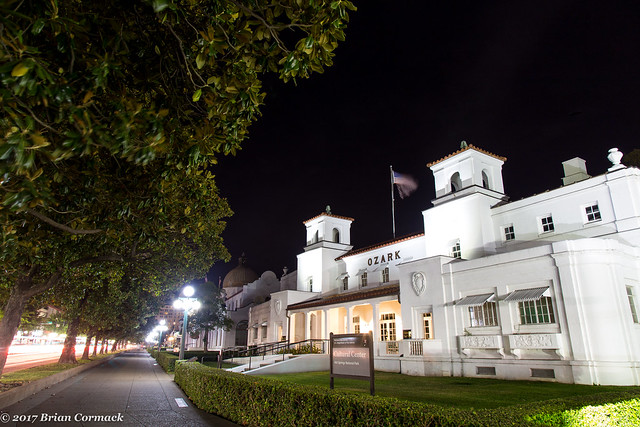
IMG_7470

Thursday, September 14, 2017

In The Delta

Last weekend, I took another drive through the Delta region of eastern Arkansas. While the Delta lacks the tall bluffs and mountains of the Ozarks and Ouachitas, I think that it's a really photogenic area (and one that I've been working on a photo project on for awhile). There is a lot of history here, and miles and miles of verdant fields that produce healthy crops of rice, soybeans, cotton and mosquitoes.

But it is also a region that has been struggling with a stagnant economy and decades of population loss. Perhaps the best example of this is the city of Pine Bluff.

Pine Bluff

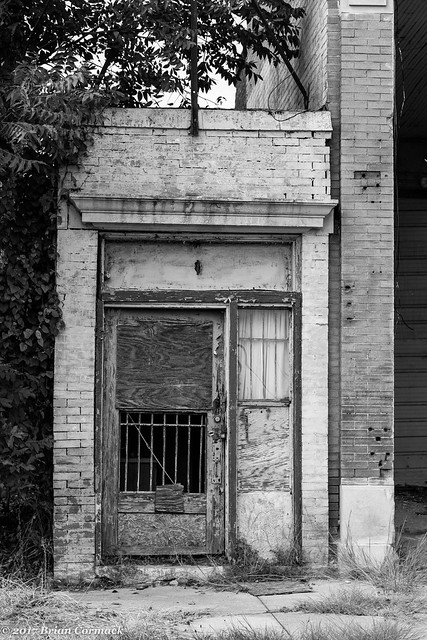
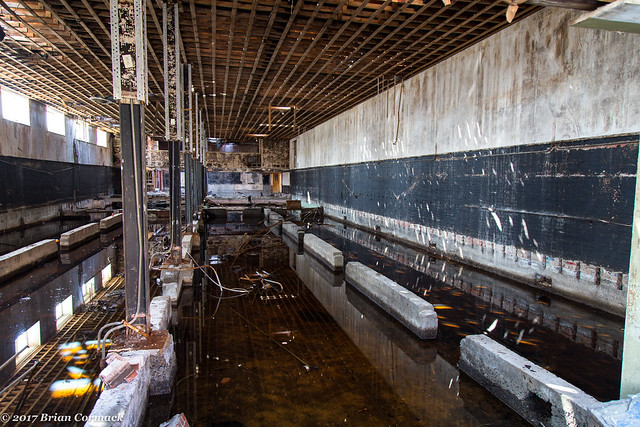
Nearly all of the buildings along Main Street are empty and boarded up, and several have collapsed in recent years. Downtown Pine Bluff was quiet when I drove through, which granted it was a Sunday afternoon but there didn’t look to be another soul around for miles. This old building, which sits right by the train tracks that bisect the town, sits gutted and empty except for water that has flooded the area where the floor used to be. A sign on the broken door said that this used to be a dance studio.

IMG_7096-2

But I did drive by a bright spot in Pine Bluff’s future – the old Pines Hotel. The hotel was recently sold, and actually it was cleaned up and studies are being conducted to see how it can be saved. Hopefully it will be brought back, and then help provide a spark that could bring new life to this part of town.

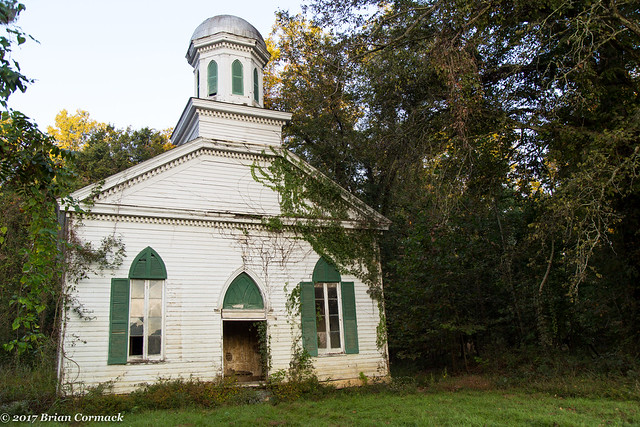
I left Pine Bluff and headed south and stopped by this old church, which appears to not have been used much in the past few years (although someone does mow the grass still).

IMG_7104-3

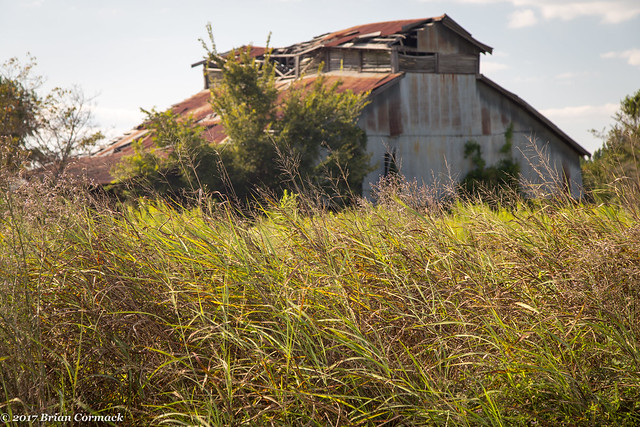
This old barn was nearby, sitting along a dusty dirt road and baking in the afternoon sun.

IMG_7122-2

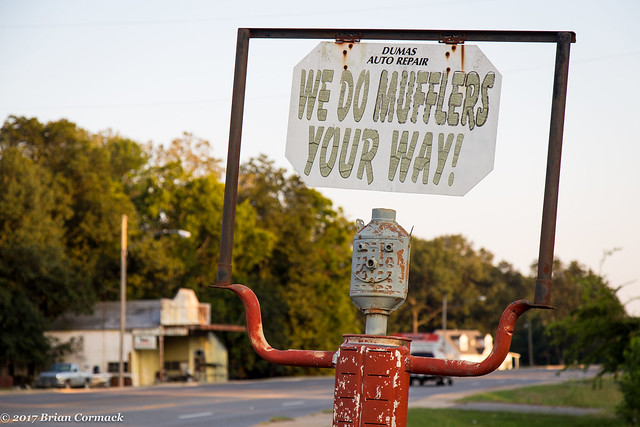
I had some troubles taking pictures in the harsh afternoon light, and also in reaching a few places that I had wanted to get pictures of. One place had "no trespassing" signs posted at it, the other ended up being on private property. Since I really didn't want to be shot by anyone that day, I headed off to find something else to point the camera at. I ended up finding this little muffler man, trying to lure business along Hwy. 65 in Dumas.

IMG_7189-2

It was starting to get a little late in the day, and the sun was starting to drift closer to the horizon. This was taken at a field along Hwy. 65 as a freight train rushed by on the tracks directly behind me.

IMG_7197-3

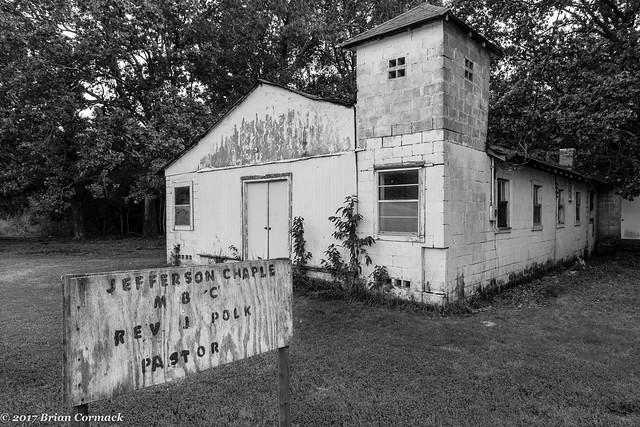
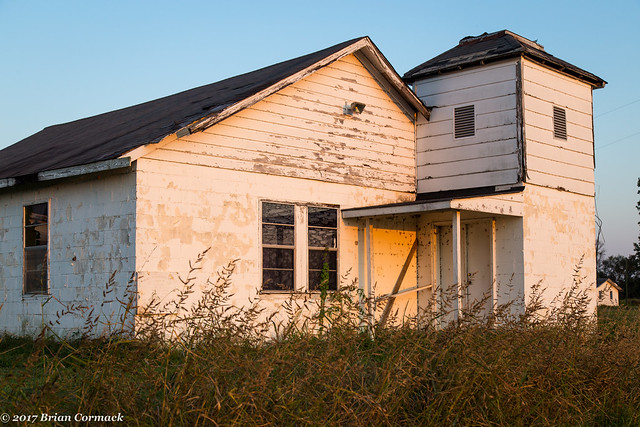
Further up the road I passed by another old church, which sat in the golden light from the sun. It also doesn't look like it's seen many services lately, although there was a healthy congregation of wasps guarding their nests along the side of the building.

IMG_7211-2

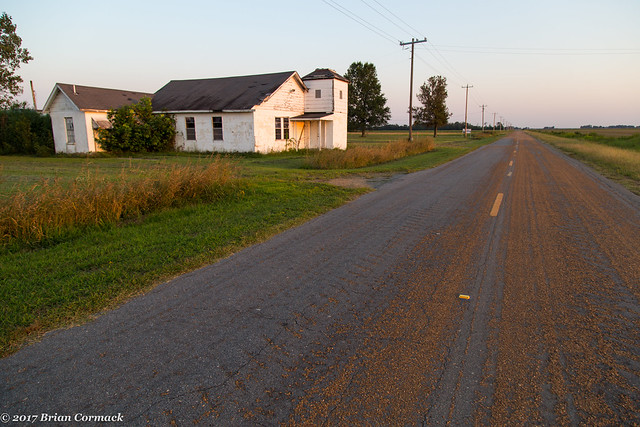
And another view of the church, and the lonely country road that it sits along.

IMG_7217-2

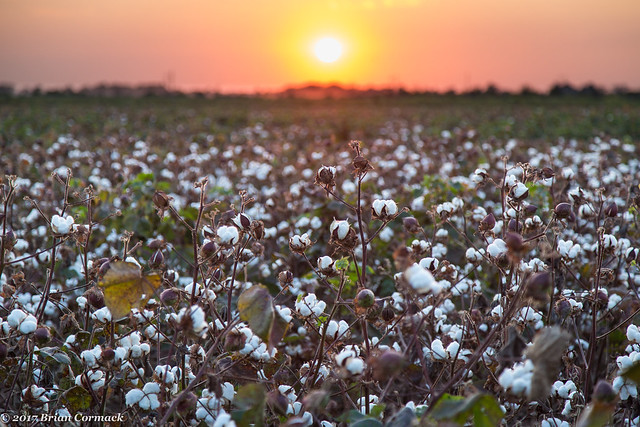
Just down the road, the cotton fields were starting to bloom.

IMG_7238-3

I made one last stop, at an old abandoned house that actually sits in the shadow of the Varner prison unit. I couldn't find any information about the house, which has a roof that has collapsed over the front porch. But there is a small family cemetery that sits nearby, with old graves baring the Varner name. So this might be the old home for the Maple Grove plantation, which the state of Arkansas purchased in 1902 so that it could have land for the nearby Cummins prison. It was a bit eerie to be there, the old house and cemetery overlook the prison that is home to the state's Death Row inmates. I wonder what the people who are buried there would think of their once grand house, now abandoned and collapsing? That their farmlands were sold to a prison system that would house violent criminals, and also the place where those same prisoners were put to death?

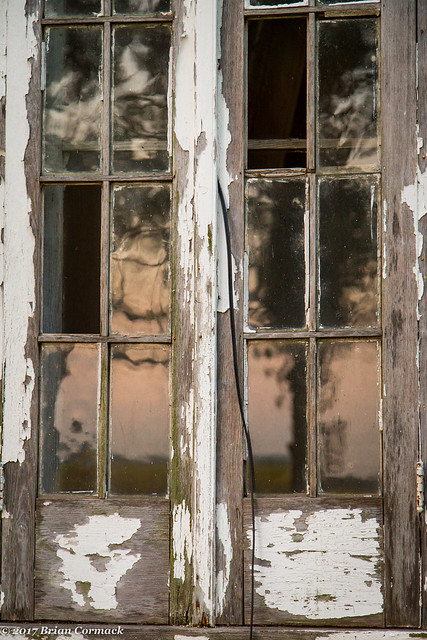
I assume the Arkansas Department of Corrections is in charge of the property. The grass around the house and cemetery looked to have been freshly mowed, and the graves were in good condition. The only sounds were the chirping of crickets, and the dull rumble of traffic along the distant Hwy. 65. It was starting to get dark, and the windows in the old house were reflecting the last bit of light from the setting sun.

IMG_7254-4

Tuesday, September 12, 2017

Benton

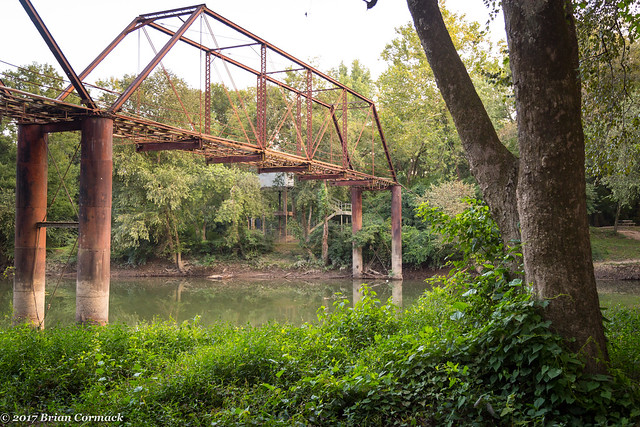
The Old River Bridge in Benton is aptly named, since it is pretty old. The span over the Saline River was built in 1891, and it's one of the oldest bridges in the state. It was used until 1974, when the wooden platform was damaged by a big truck carrying concrete blocks. After that it was decommissioned, and has quietly sat unused for decades along a lonely stretch of river.

But there are plans to repair and renovate the bridge. The span will be a part of a proposed pedestrian and bicycle trail that will link the Little Rock Central High School National Historic Site and Hot Springs National Park. The plans include taking the bridge down, then conducting extensive repairs and then replacing it back in its original spot. Right now the three counties along the proposed trail are trying to secure funding.

In 1996, the bridge was featured in the film Slingblade, where Billy Bob Thornton's character was seen standing on the bridge before a pivotal scene. Wait that movie came out in 1996, that's over 20 years ago!!!?! Now I'm feeling old.

IMG_6850-2

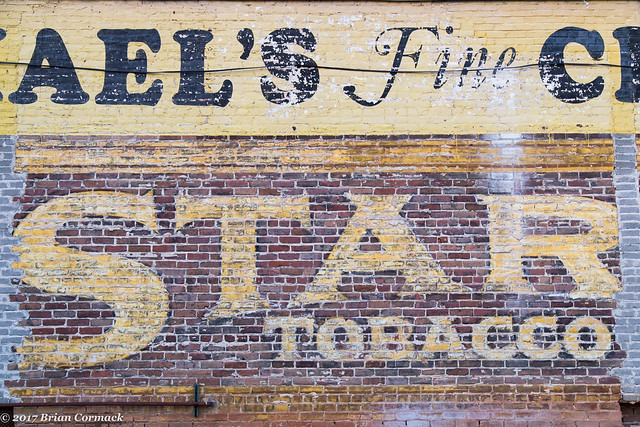
On the way back home, I drove through Benton and stopped to get a few pictures of this old ghost sign that was promoting cigars. The building is right by the old courthouse.

IMG_6874-2