Thursday, November 13, 2014

Elkmont

The next day, we headed back into the park and visited Elkmont. You may have heard of Elkmont, since it was recently the center of a weird little news story that went viral last month. A hiker posted a video on Youtube, where he awkwardly stated that he “discovered an abandoned neighborhood” in the middle of the Great Smoky Mountains National Park. The video got picked up by a hiking website, then by the Huffington Post. Soon news sites were spreading the story of a mysterious town, long abandoned and unknown being found like it was the lost city of Atlantis.

Yahoo News poetically stated that the hiker “followed an unmarked gravel road through thick forest up a hill to where a staircase covered in grass leads to the front of the site.” Which makes one imagine Indiana Jones using a machete to clear a path to Elkmont through thick jungle. A lucky hiker finding a “town that time forgot,” right smack dab in the country’s most popular national park? How amazing!

Elkmont is a neat collection of abandoned buildings, but it was hardly forgotten, lost or stashed away in secret. The largest campground in the national park is at Elkmont. The town is close to the Sugarlands Visitor Center, and along the busy road that leads to Cades Cove. Thousands of people visit the old cabins at Elkmont every year, and you can actually drive right up to them. If the people who mindlessly spread the news story had made a quick Google search, they could have found thousands of pictures of Elkmont.

Like this one!
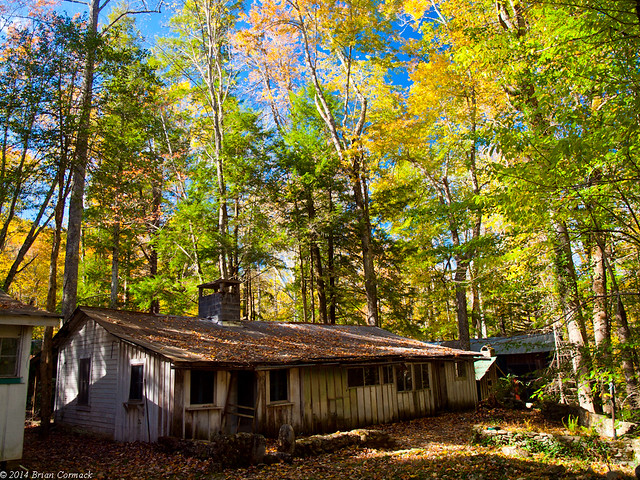
PA225279-2

We parked and went to have a look at the buildings. Elkmont got its start in 1908 by the Little River Lumber Company, who established a base there. A few years later, they began selling plots of land to hunters and fisherman from Knoxville. The Appalachian Club and the Wonderland Park Hotel would soon open, attracting more visitors. By the 1920's, Elkmont was the top vacation spot for Knoxville’s rich and famous.
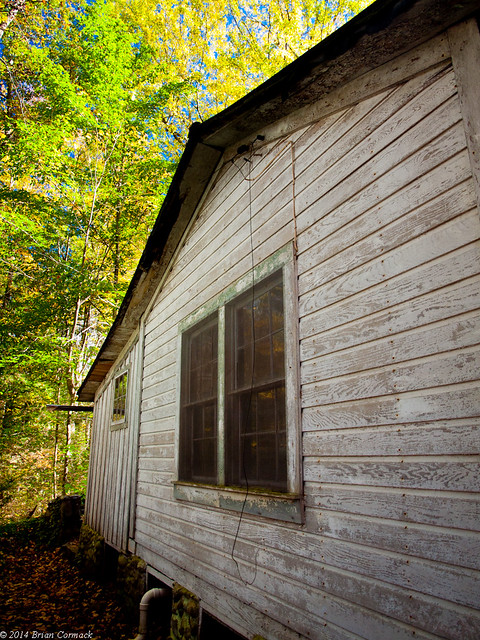
PA225182-2

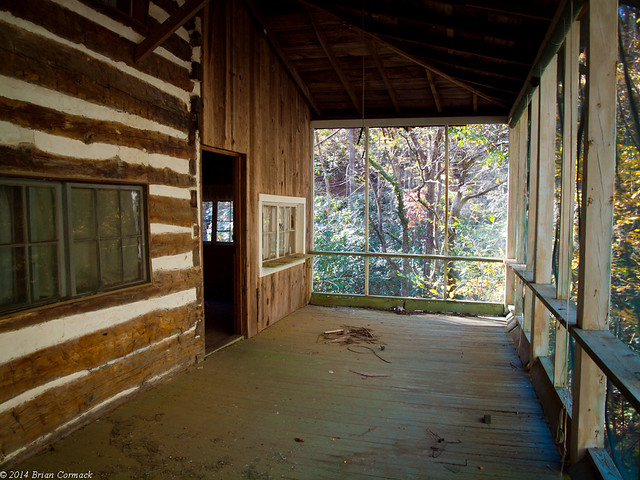
Several large cabins and cottages were constructed, many of which are still standing today.
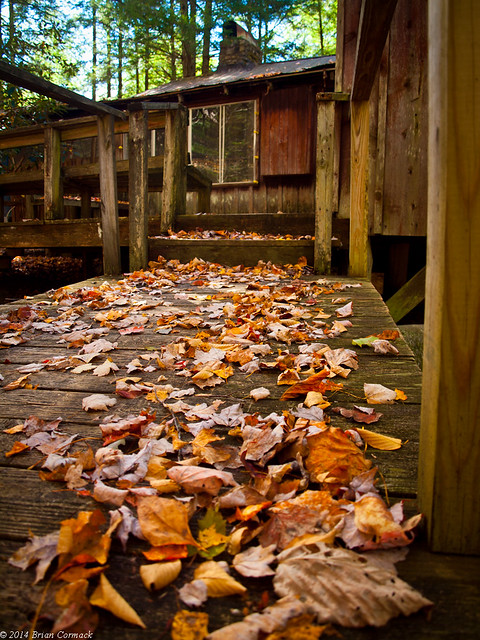
PA225341-2

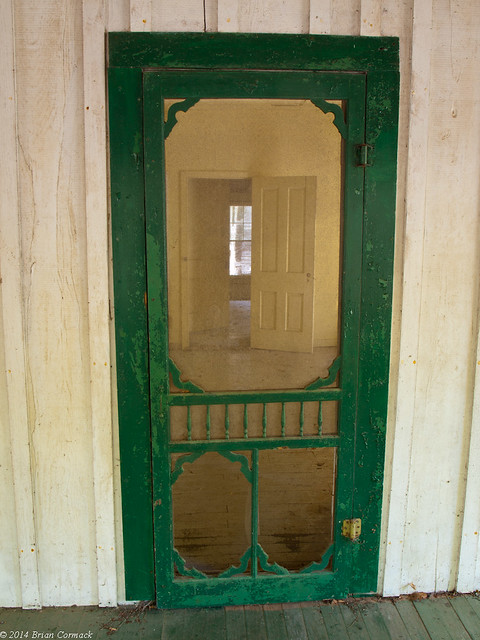
When the National Park was created in 1933, the cottage owners were granted lifetime leases. Those leases were coverted into twenty years leases, but the National Park Service refused to renew them in 1992. The park wanted to tear down all of the old buildings, and let the land return to nature.
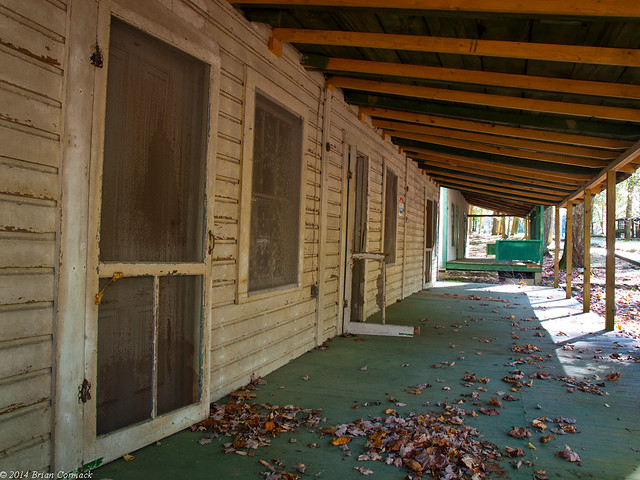
PA225202-2

PA225237-2

PA225265-2

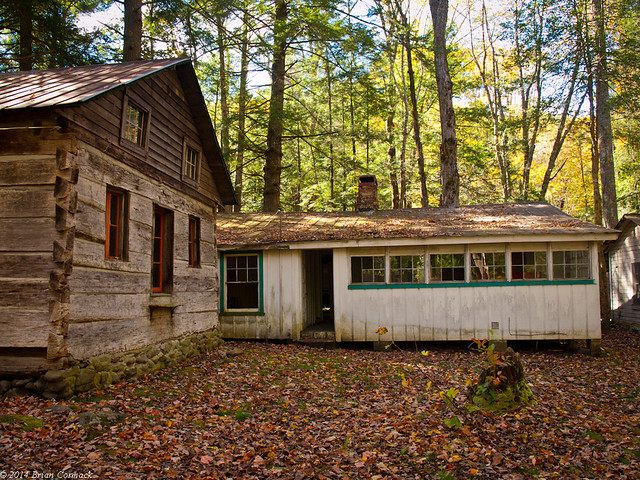
In 1994, the Wonderland Hotel and several of the cottages were placed on the National Register of Historic Places. This resulted in a debate about the fate of the Elkmont buildings. Save them for their historic value or remove them and give the land back to the forest?
PA225300-2

PA225308-2

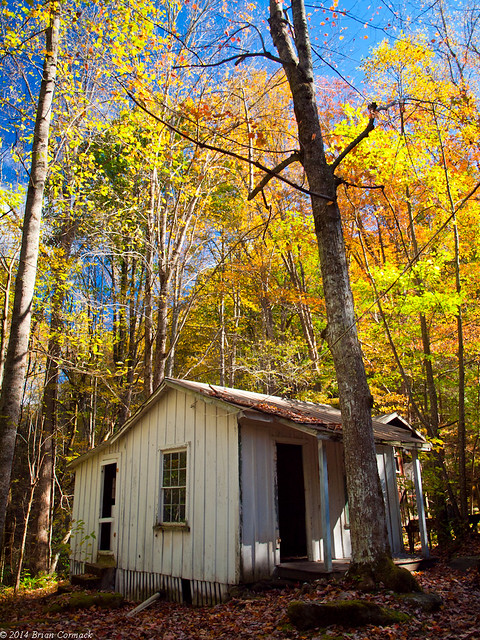
In 2005, the Wonderland Hotel collapsed. But the National Park Service decided to go ahead and preserve the Appalacian Club and 18 of the most notable and historic buildings. The rest will be removed, unless gravity and the weather don’t complete the job first.
PA225401-2

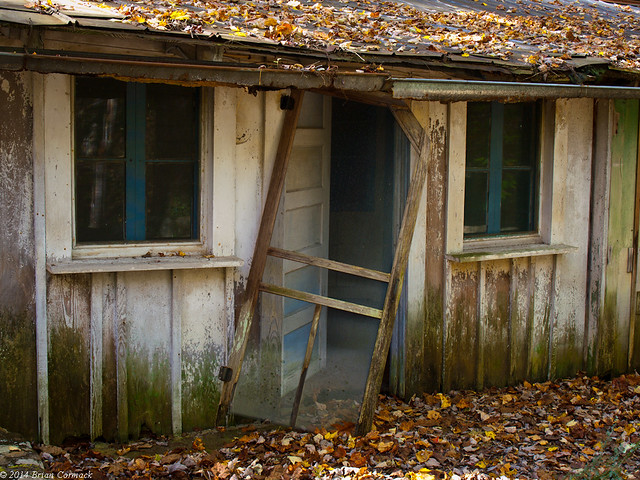
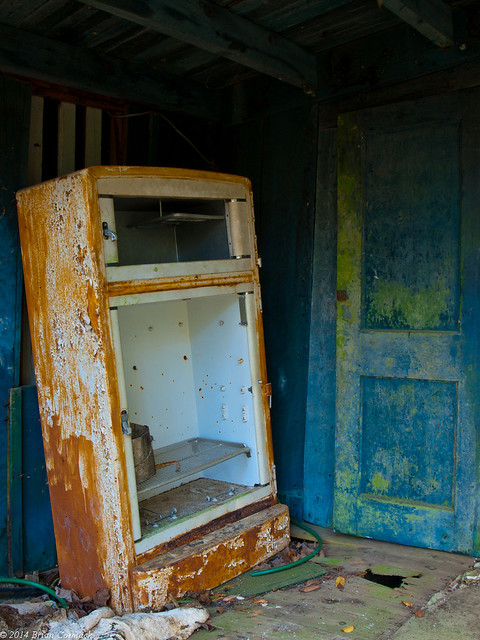
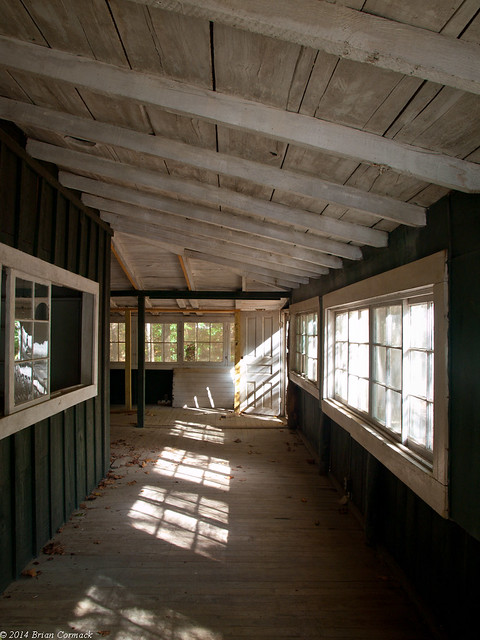
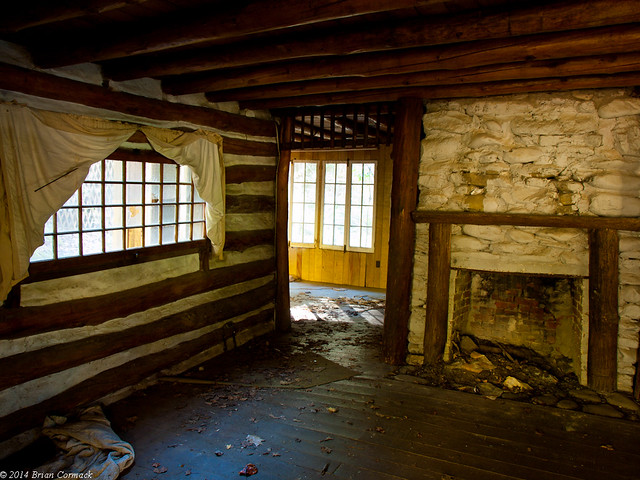
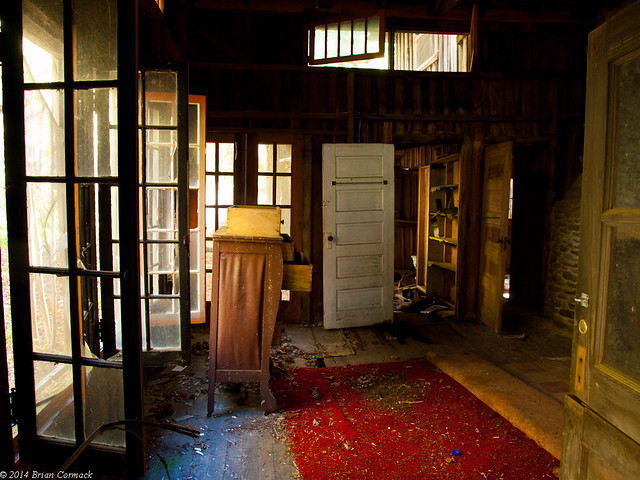
It is a little creepy at some of the buildings, this probably wasn’t the best place to visit right before Halloween. Some buildings would still be in decent shape, while others were trashed out. Foundations had sunk in a few buildings, dropping the floor a few feet. Doors had rotten off their hinges, and daylight streamed through holes in the walls and ceilings. All of it with the little hint of sadness that haunts old abandoned places like this.
PA225447-2

PA225483-2

PA225535-2

PA225542-2

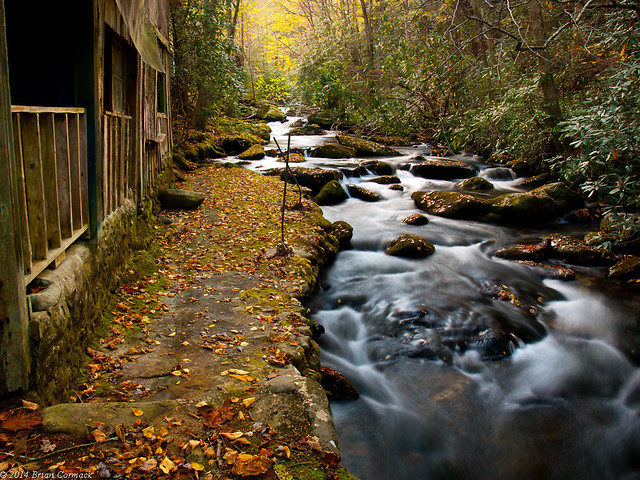
Several old buildings sit along Jakes Creek, which must have been prime real estate when these were built. Some of them have already collapsed, others were closed off with tape.
PA225556-2

It reminded me a lot of the old ghost towns along Route 66. Once grand relics of another era, that are being slowly worn down by time. We spent a few hours here, and still didn't see all of the buildings there. Guess we'll have to go back and "discover" them next time!

Tuesday, November 11, 2014

Mingus Mill

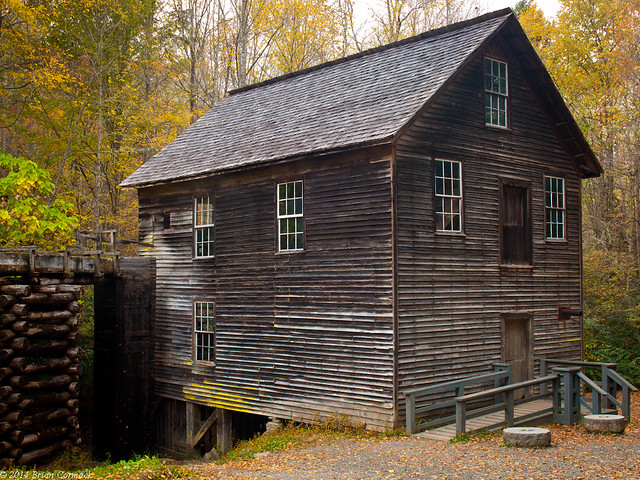
Our next stop was Mingus Mill, which sits in the Oconaluftee Valley in the North Carolina portion of the national park.  The mill was at the top of my list of places to visit in the Smokies, and I was eager to see it in person.  Mingus Mill is an old mill, built over three months in 1886.  It only cost $600 to build, and operated until the National Park took it over in 1934.  It was restored in 1937, but closed during World War II.  The mill reopened in 1968, and you can still go inside to see how it works and buy grain and corn and whatnot.

PA215009-2

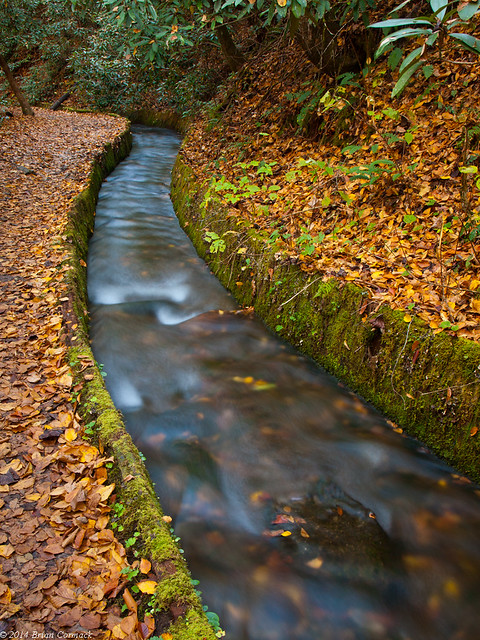
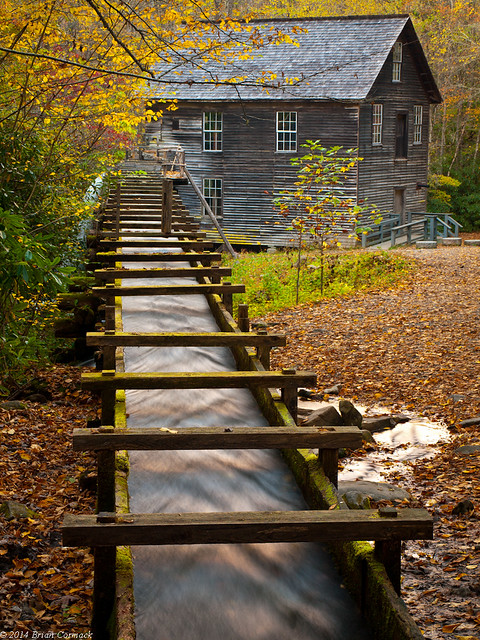
What makes the mill unique is that it uses a turbine, and not a water wheel. Water from the creek is diverted, and then travels along a moss-coated canal.

PA214924-2

The water is then channeled into a 200 foot long wooden flume that carries it to the mill like an aqueduct. Closer to the mill, excess water pours off in a waterfall. It’s a really neat spot, and we spent a long time there taking pictures.

PA214989-9

Thursday, November 6, 2014

Oconaluftee River

The next day, we slowly made our way through Gatlinburg and headed back into the park. We drove on the Newfound Gap road, which runs right into the heart of the Smokies. The twisty road actually gains 2,000 feet in elevation as it climbs to Newfound Gap, a 5,048 foot tall mountain that sits on the border between Tennessee and North Carolina. It’s a popular overlook, with good views of the mountains that stretch off into the distance (it was too sunny, so my pictures from there didn’t turn out). The Appalachian Trail passes by here too, and we hiked on it for a bit. Although we didn’t make a big dent on it (it was only 1,972 miles to Maine!).

We drove deeper into North Carolina, and made a stop at this small waterfall. It was right by the road, but only a few other people stopped to take pictures. It was a nice change after the scrum of people at Cades Cove the day before.

PA214851-2

PA214841-2

PA214847-2

The road runs alongside the Oconaluftee River, a very scenic mountain stream. Ocanluftee gets its name from a Cherokee village called Egwanulti that once existed somewhere along the river. It was the only permanent Cherokee settlement in what is now the national park, but it’s believed the village was destroyed during the Revolutionary War.

PA214875-2

The river is quite scenic, and has some class II-III rapids that are popular with floaters. I also saw a lot of people fly-fishing along the river.

PA214881-2

The Great Smoky Mountains National Park protects one of the most diverse ecosystems in North America. An average of 85 inches of rain falls here a year. This feeds over 2,100 miles of streams and rivers in the park, and provides habitat for over 1,600 flowering plants, 100 native tree species and over 100 native shrub species.

PA214887-4

Tuesday, November 4, 2014

Little River

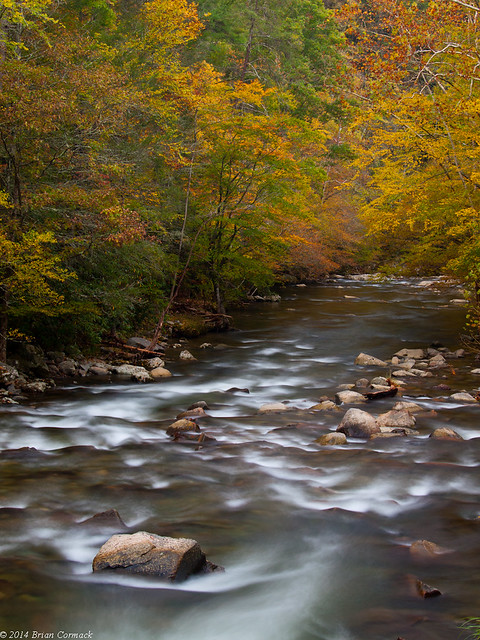
From Cades Cove, we headed back towards Gatlinburg. The route follows a spectacular stretch of road - the Laurel Creek Road and the Little River Gorge Road. For most of the way, the road runs alongside a stream that eventually changes into a boulder filled river.

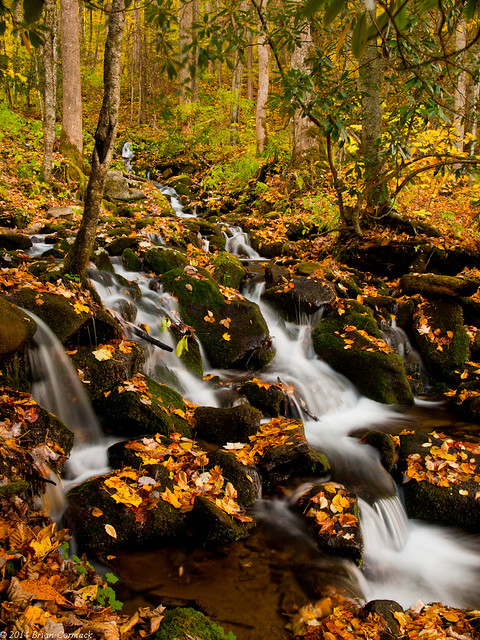
The sun had dropped below the mountains, and I was tempted to stop every couple of feet on the creek. This is along the West Prong of the Little River.

PA204658-2

And just further down the road, there are the Laurel Creek Cascades.

PA204669-3

The Little River gets its start along the slopes of Clingmans Dome, which at 6,643 feet is the tallest peak in the Smokies. The creek drops down into the Little River Gorge, one of the highlights of the drive.

PA204687-4

PA204699-2

PA204724-2

I stopped a lot of times along the river. Thankfully I have a very patient wife.

PA204732-2

PA204733-2

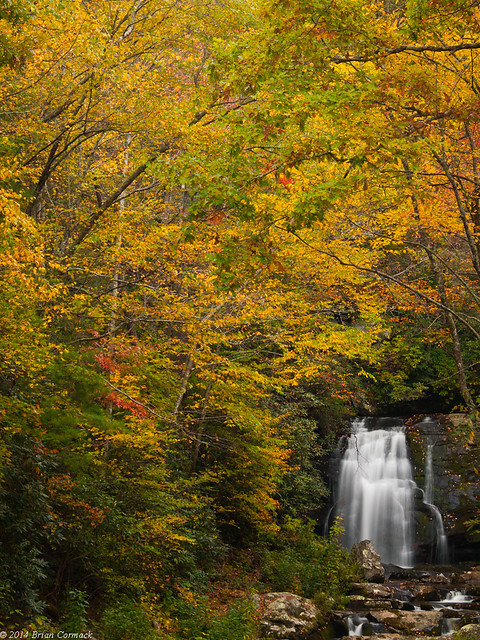
We also saw Meigs Falls, which I especially liked since you could easily see it from the road.

PA204745-2

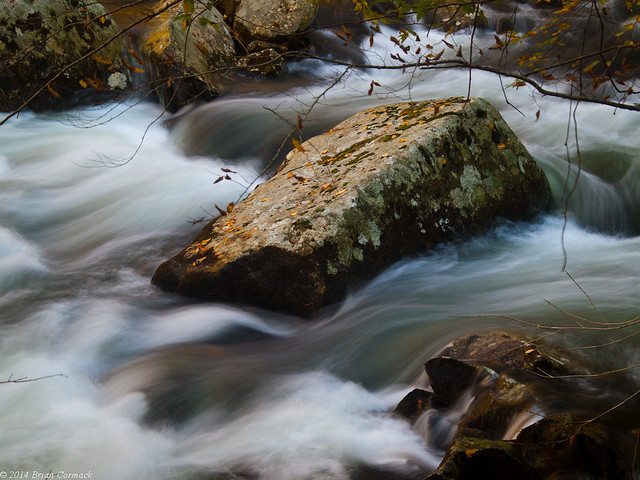
And one last shot of the Little River, near Meigs Falls.

PA204747-2

It was getting too dark for pictures, so we made it back to the cabin in order to begin figuring out where in the Smokies we'd go the next day...

Sunday, November 2, 2014

Cades Cove

From Nashville, we headed east towards the Smoky Mountains. Which meant we got to drive through the towns of Pigeon Forge and Gatlinburg. Now if you’ve never been here, these two towns are definitely unique. I can think of several words to describe Pigeon Forge, but the kindest one would probably be “tacky.”

What must have once been a quiet mountain town has morphed and mutated into a sprawling jumble of t-shirt shops, As-Seen-On-TV stores, gem shops, amusement parks and go-kart tracks. You can attend the Hatfield & McCoy Dinner Show, or visit countless beef jerky stores and Old-Timey photo places. You can even visit the Titanic or see King Kong climbing a fake skyscraper (because when I think of Appalachia, I immediately think of the Titanic and King Kong).

We stayed in a cabin outside of Gatlinburg, which is also filled with cheesy tourist traps. There are so many Ripley’s Believe Or Not places here (like a museum/odditorium, an aquarium, a haunted adventure, and a Marvelous Mirror Maze and Candy Factory) that you’d think this was a Ripley’s company town. But Gatlinburg is more compact, so it manages to retain a bit more charm than Pigeon Forge (once you get past the traffic and crowds).

Gatlinburg is also the gateway to the National Park. In fact, the town runs right up against the border to the park. So when you’re driving south on Hwy. 441 you are immediately taken from the rows of stores selling candy and fried food and deposited directly into the woods. It’s a sudden transition, and results in a bit of culture shock when you enter or leave the park.

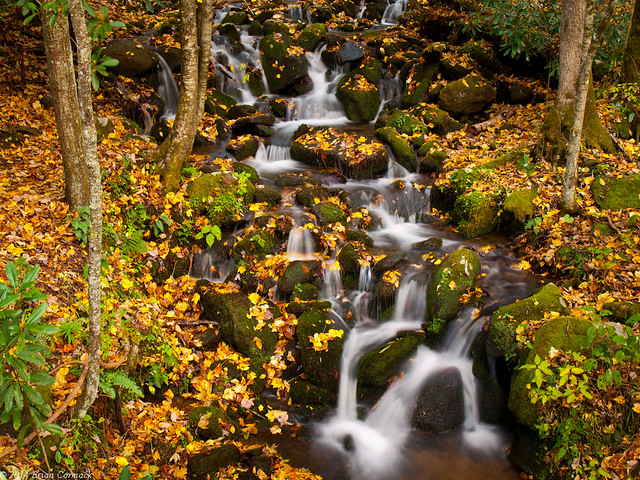
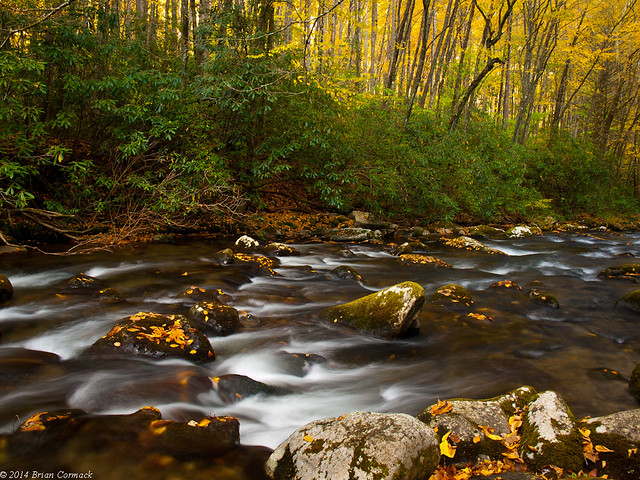
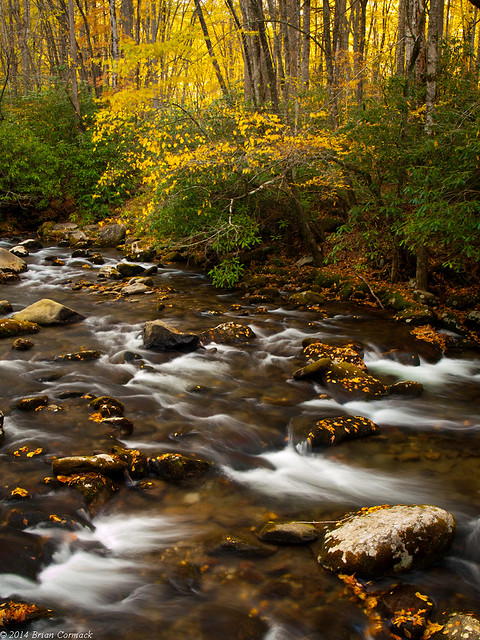
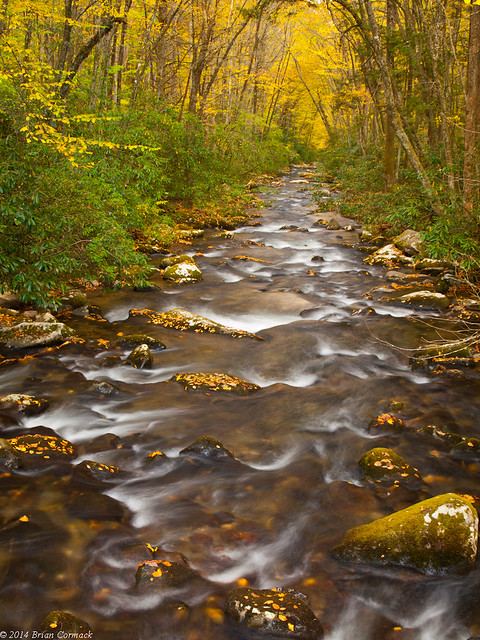
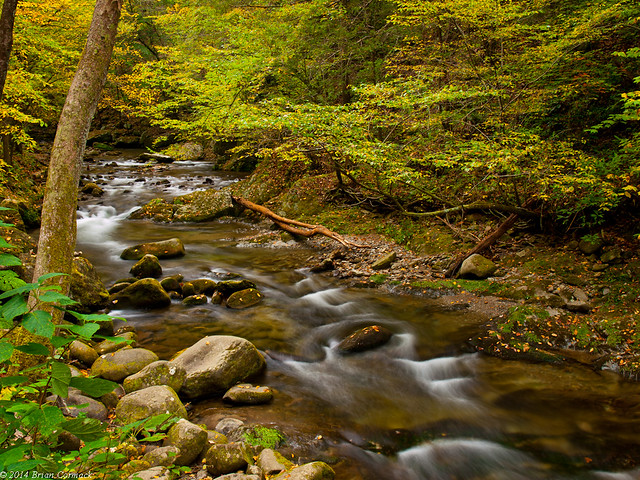
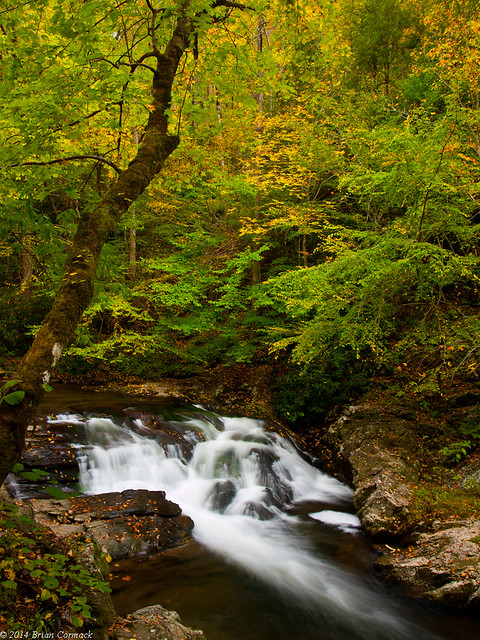
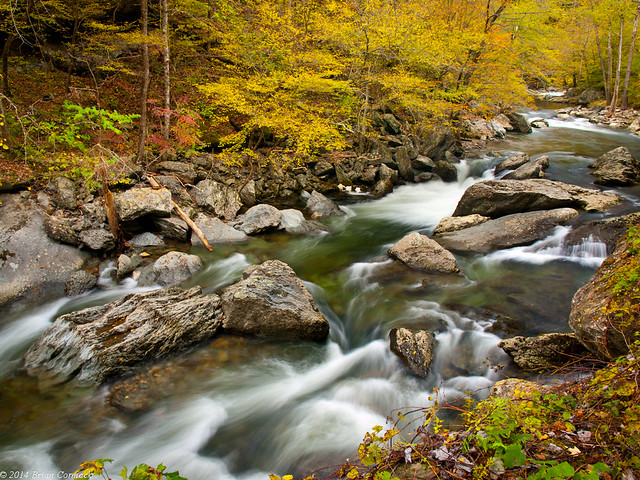
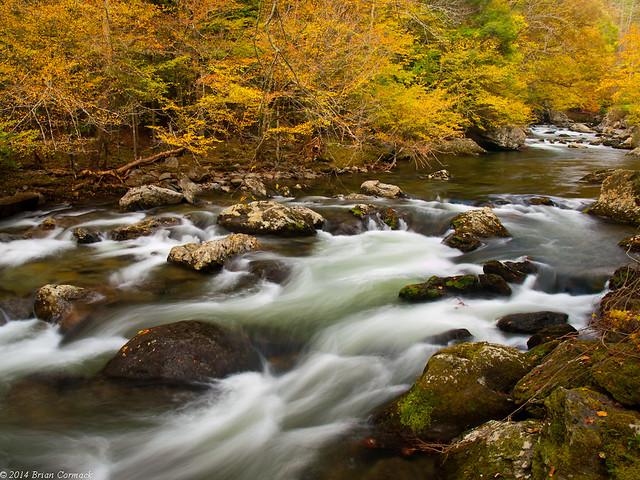
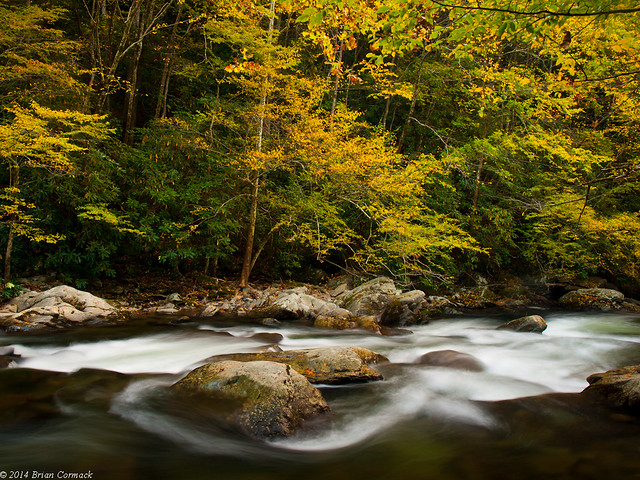
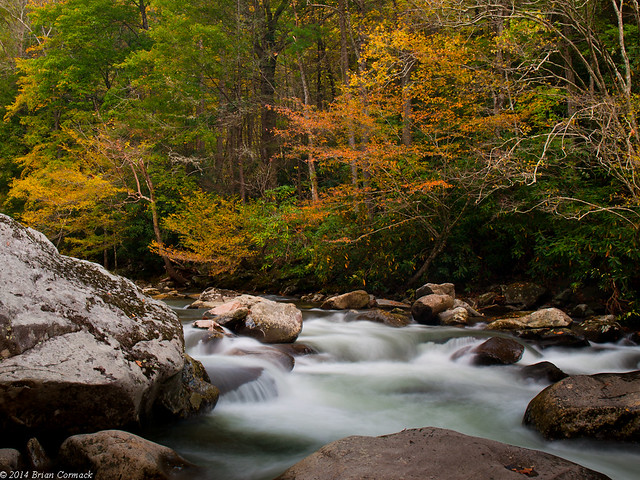
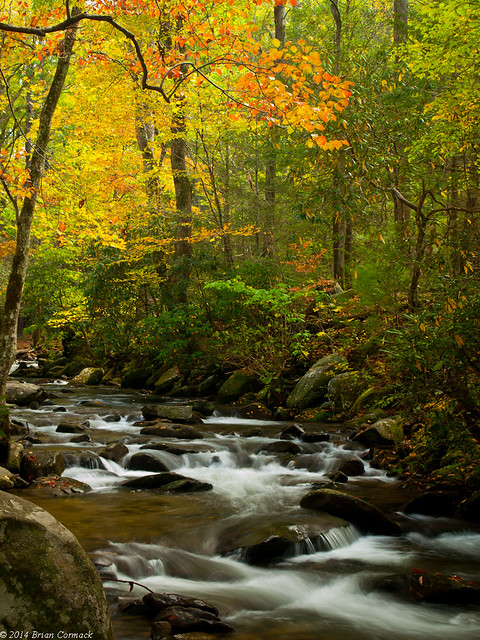
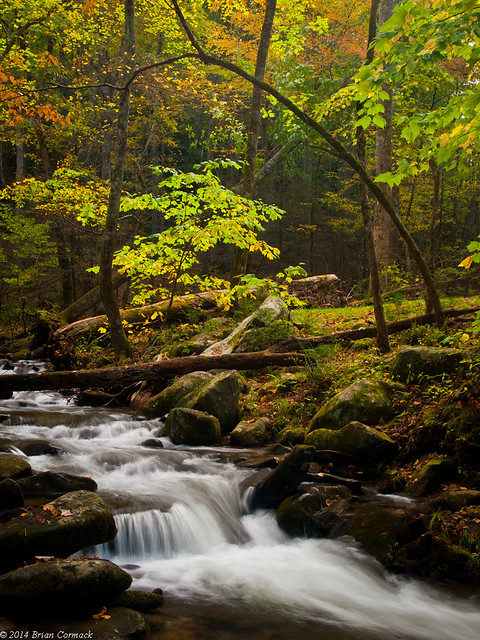
On our first day in the Smokies, we sat in traffic and Gatlinburg and then entered the park. It was a warm autumn day, and we headed towards Cades Cove. I stopped several times at this stream that ran parallel to the road, which tumbled and played around several large boulders. Even though it was bright and sunny, several places were shaded by the mountains and I was able to get a few pictures.

The Rock

Cades Cove definitely has to be one of the most popular places in the National Park, and at times it seemed as crowded as Gatlinburg. The Cove features an eleven mile driving tour that visits several old cabins and churches, and runs past fields and forests. Before starting the drive, we stopped for lunch in the picnic area. A small stream ran beside the picnic tables.

Cades Cove

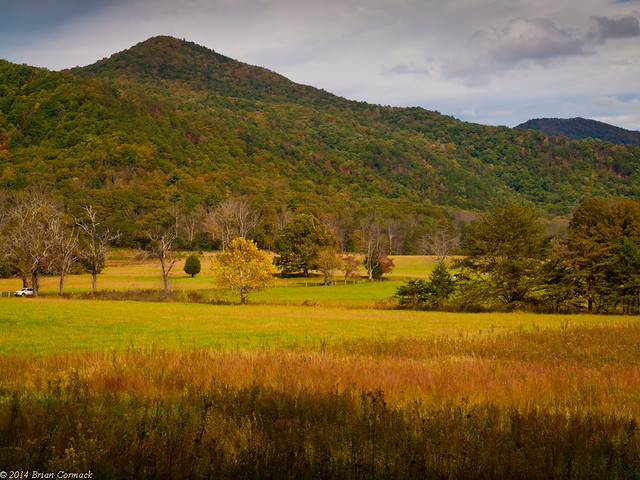
The fall colors were beginning to really show the week we were there.

PA204326-3

Cades Cove is the Boxley Valley of the Smokies, except no one lives here anymore (besides black bears). When the plans for the park were announced, the residents of Cades Cove were vehemently opposed to it. After the park acquired Cades Cove, most of the more developed buildings in the valley were demolished. This left behind the older and more primitive buildings, which were believed to better represent what the frontier life was like there.

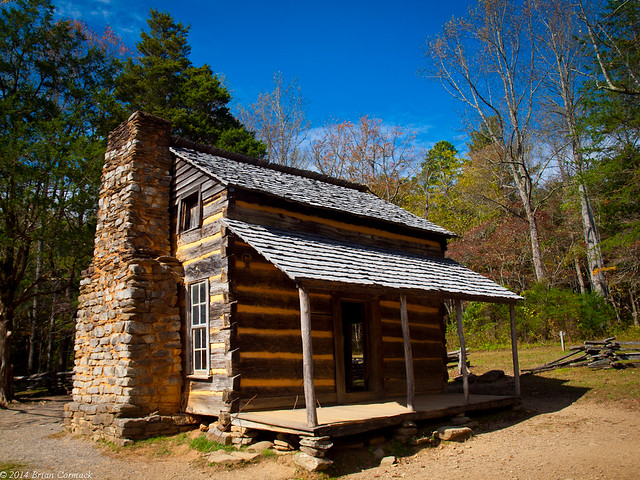
The first stop on the driving tour is a cabin built by John Oliver, the first permanent European settler in the Cove. The cabin was built in 1823, and sits away from the road in a small field.

PA204400-2

PA204371-2

Just down the road is the Cades Cove Methodist Church, which was built in 1902. A small cemetery sits behind the church.

PA204463-2

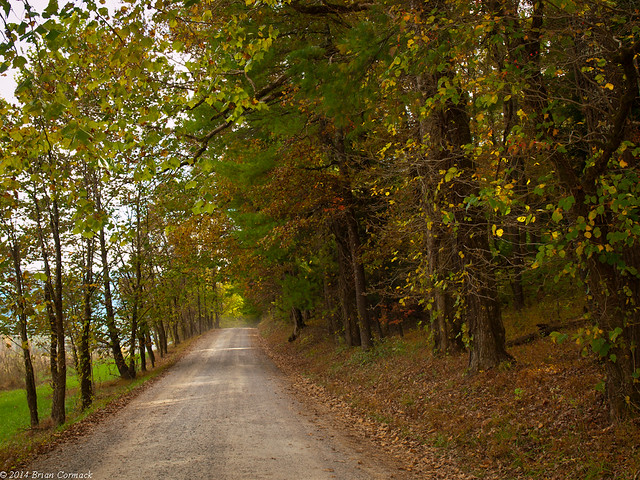
This is a view of Hyatt Lane, one of two roads that bisects the Cove. Cherokees lived in this area long before the white settlers arrived, although there aren’t many traces of their presence left. One of the only traces is this road, which follows an old Cherokee trail.

PA204475-2

PA204470

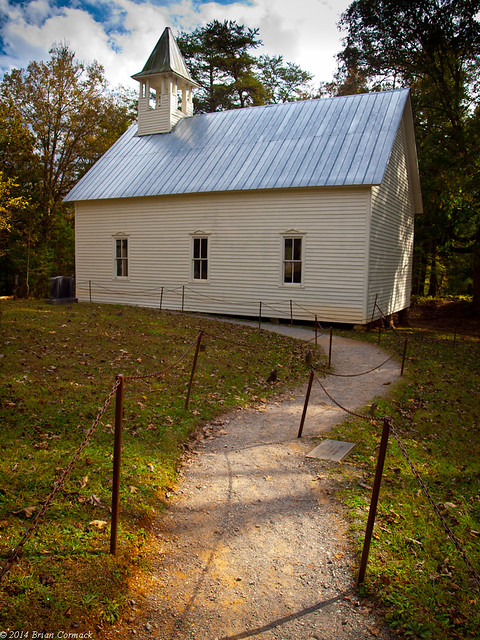
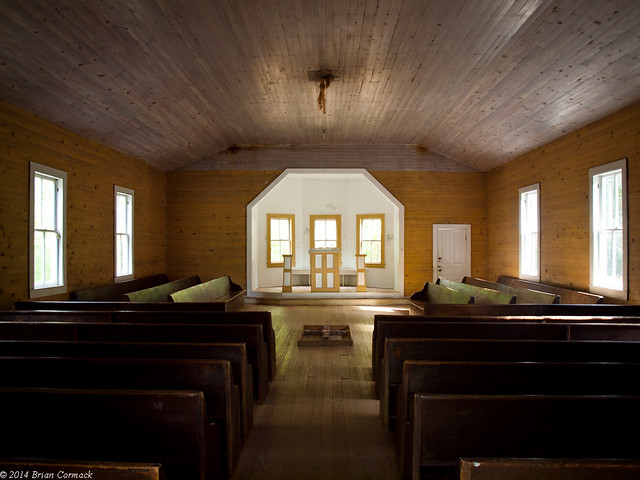
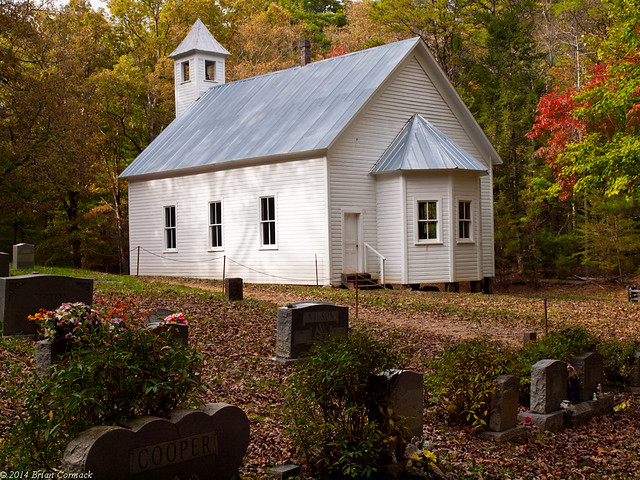
Our next stop was the Cades Cove Missionary Baptist Church, built in 1916. I thought this was the prettiest of the churches in Cades Cove. The interior has three windows behind the altar, which really brings in some nice light (unfortunately, a bunch of idiots thought it would be cool to add their graffiti to the altar). The stone cross on the floor in the middle, I think, marks the spot where an old stove used to sit.

PA204520-2

PA204539-2

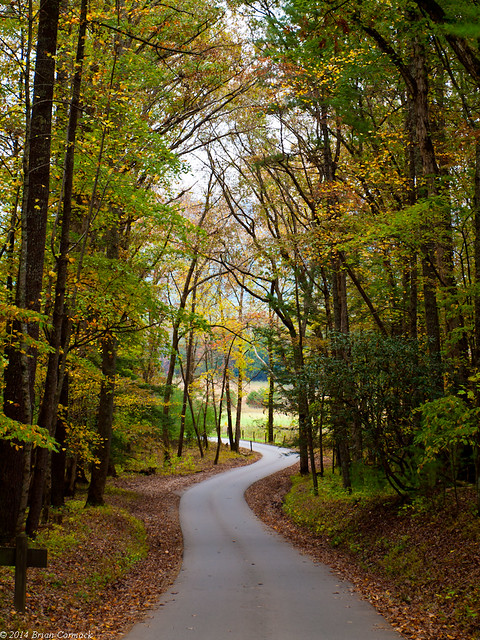
A view of the road, in one of the rare breaks when there weren’t any cars on it. I stood in this spot for probably 10 minutes and got five pictures that didn’t have a long line of cars moving along at a glacial pace.

PA204566-3

We joined the rest of the crowd and slowly made our way through the cove. There is a visitor center here, situated around an old mill and home. It was so busy, with cars idling in the road waiting for a parking space, that we sadly gave up on it and continued on.

Our next stop was the Tipton place, an old home with a collection of old buildings surrounding it. This was probably either an old smokehouse or a woodshed.

PA204593-2

And a view of the road as it passes by the Tipton place. Taken again during one of the very brief and miraculous breaks in traffic.

PA204610-2

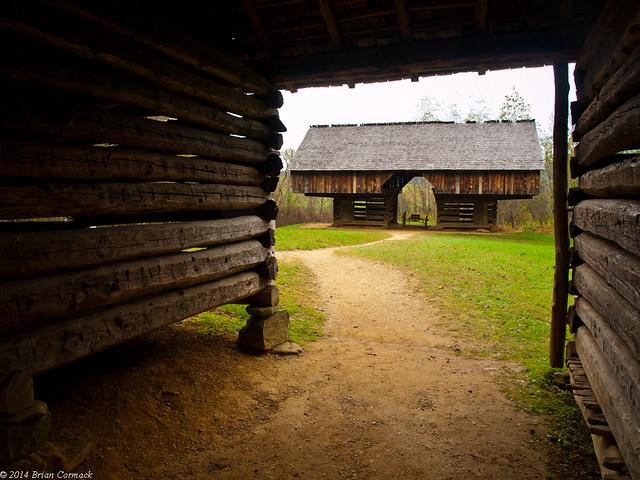
Across the road from the old house is the double-cantilever barn. The barn design, popular in the Smokies, had large overhanging eaves that would give protection to livestock and equipment.

PA204633-3

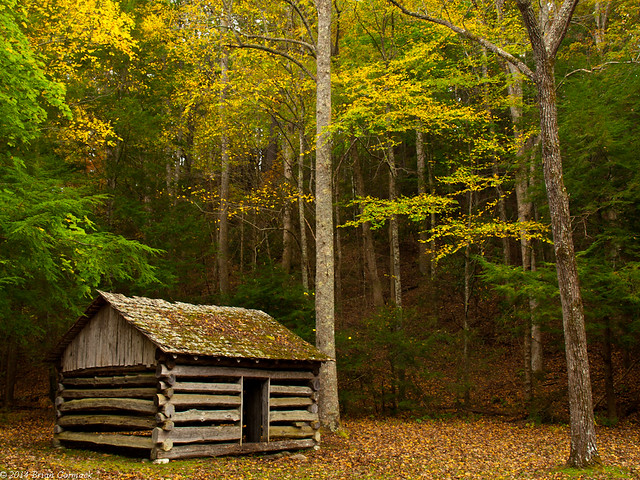
We made one last stop at the Carter Shields Cabin, built in the 1880s. Not very many other people were stopping here, however. Which may have been because it was getting late in the day. Or people were getting old building fatigue after sitting in agonizing traffic for hours. Who knows, but there was a stark difference in the number of people who stopped here compared to the first cabin on the loop.

PA204639-3

We joined the stream that was steadily inching its way towards the end of the drive. We finally reached the end of the loop, after two cars stopped in the middle of the road, backing everyone up behind them, so they could run out to take pictures of a deer. It was nice to get out of Cades Cove and onto a road where you could speed (by going over 10 mph!).

Cades Cove really is a beautiful spot with some neat scenery and architecture. The traffic there is frustratingly awful (and I do fully realize that we were contributing to it with our car as well), and it does take away some from the experience of visiting here. Luckily, other areas of the national park are much less crowded, and more serene.