Monday, March 19, 2018

Brookyln

Here’s the last post about the trip to New York! It only took a little over a month to edit and write up the posts, so that’s pretty good I guess.

But one day, we headed down to Midtown and had lunch and then went to the International Center of Photography. They had two exhibits, one of which was a large and interesting exhibit about the Japanese Internment Camps during World War II. It was nice to visit a museum that was dedicated solely to photography. It seems like most art museums have only a few token photographs laying around, or else they’re shoved in a dark corner of the basement.

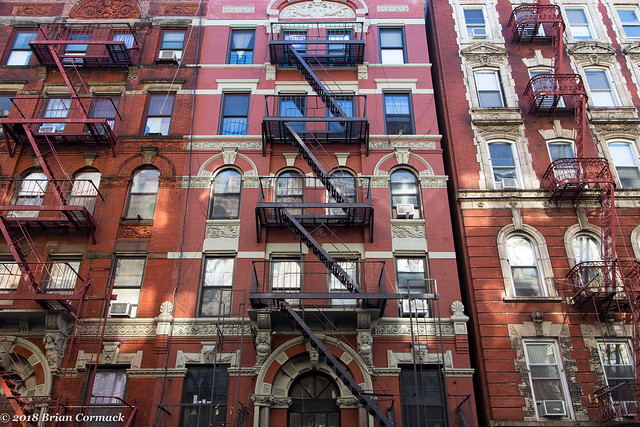
This row of buildings were in a neighborhood that we walked through, which was near the Tenement Museum.
IMG_3084-2

Then we headed across the river and into Brooklyn. Over 2.6 million people live in the borough of Brooklyn, the most populated of all the New York boroughs (even more than Manhattan). For a comparison, that 2.6 million people are squeezed into a city that takes up only 97 square miles, while I live in a city (Little Rock) with a population of 198,000 people spread out over 121 square miles.

We headed to the DUMBO neighborhood, which sits in-between the Brooklyn and the Manhattan bridges. The name DUMBO means Down Under the Manhattan Bridge Overpass, and is not about a Disney movie with flying elephants. It sounds a little silly, but I do admit that I live in a neighborhood called PINOCCHIO, which actually means Paris It's Not, Or Chicago. Cars Have Interstate Obviously.

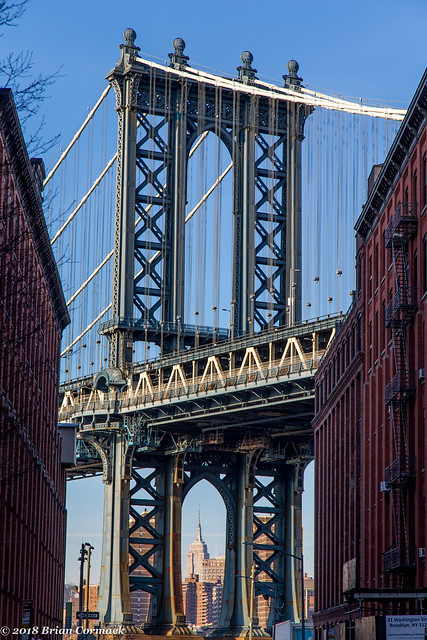
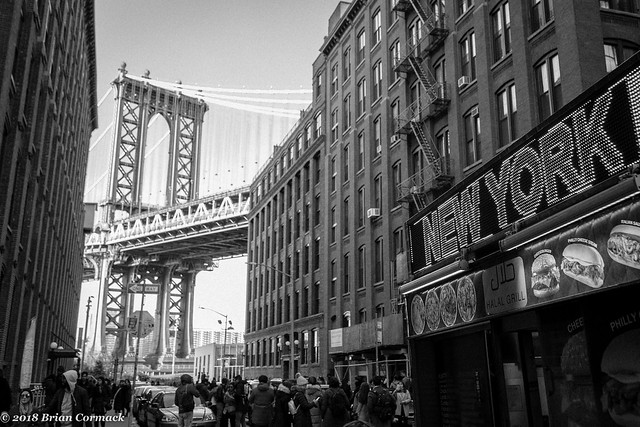
A famous place for photos here is a spot where the Manhattan Bridge is perfectly framed by two old buildings. And if you stand in the right spot, you can even catch the Empire State Building situated in the arch of the bridge. We went down there, but we weren't the only ones with that bright idea. The street was filled with people taking pictures and selfies, and also with cars with annoyed drivers trying to make their way through the throng of people.
IMG_3095-2

And you know a spot is popular with tourists if there is a hotdog cart there.
Brooklyn Brooklyn, take me in

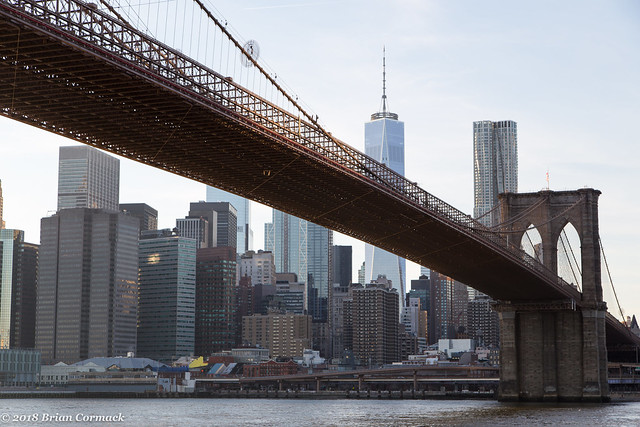
From there, we walked over to Brooklyn Bridge Park, which obviously offers up some pretty neat views of the Brooklyn Bridge.
IMG_3163-2

And also of the Manhattan Bridge, which is a little bit newer than the Brooklyn Bridge (construction on it was completed in 1912).
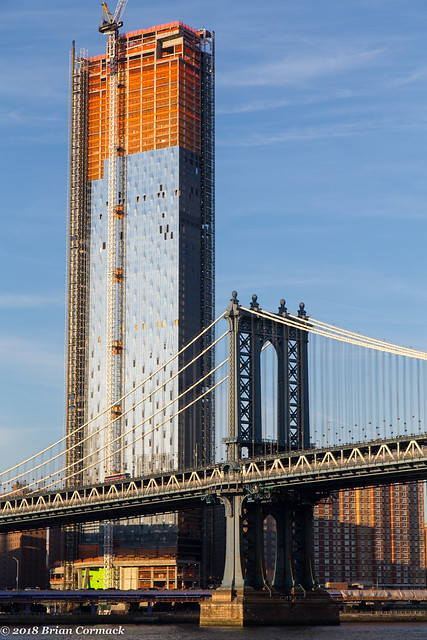
IMG_3168-2

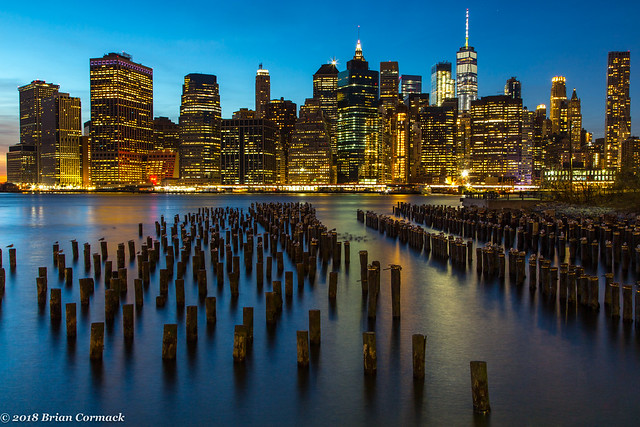
We headed over to this spot in the park, where the wooden remnants of old pier jut out into the river. It's another popular spot for pictures, and there were probably two dozen photographers already perched on the rocks and sidewalk by the river. I went just a bit further down the sidewalk, to a spot where no one had set up yet (which I thought was slightly better since you could see more of the skyline from here).
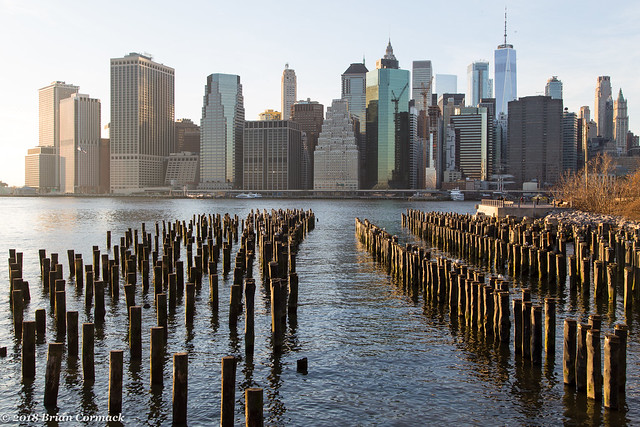
IMG_3171-2

Together we all waited for sunset, as other people walked by and asked what exactly all these people were taking pictures of. There was also a large flock of seagulls perched on the pieces of the old wooden pier, and all were indifferent to the crowds of photographers and tourists on the shore.
IMG_3245-2

After sunset, I walked through the park and got this shot looking back towards the Brooklyn Bridge with the One World Trade Building in the distance.
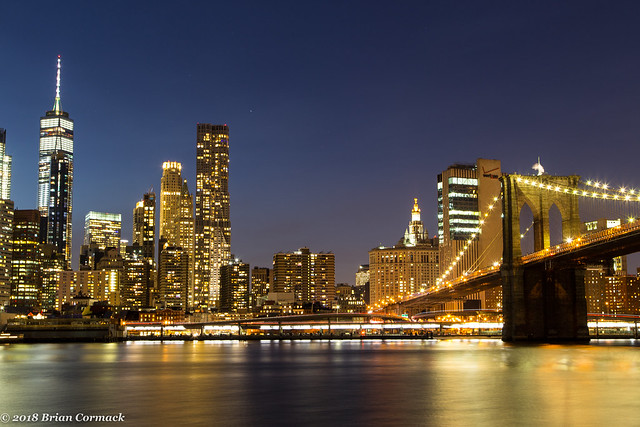
IMG_3252-3

From there I decided to actually go over and walk onto the Brooklyn Bridge, which I though would be a short walk. But the pedestrian ramp onto the bridge was a deceptively far walk from the park. But I eventually made it, and set up the tripod to get a few shots. It was a somewhat difficult spot for photography. The bridge was constantly moving with the rush of traffic passing below.
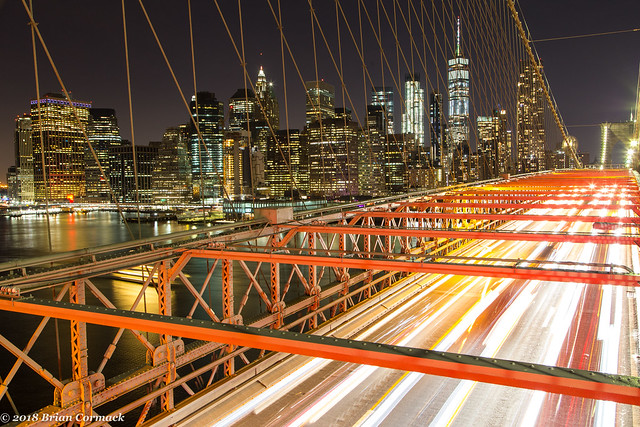
IMG_3271-4

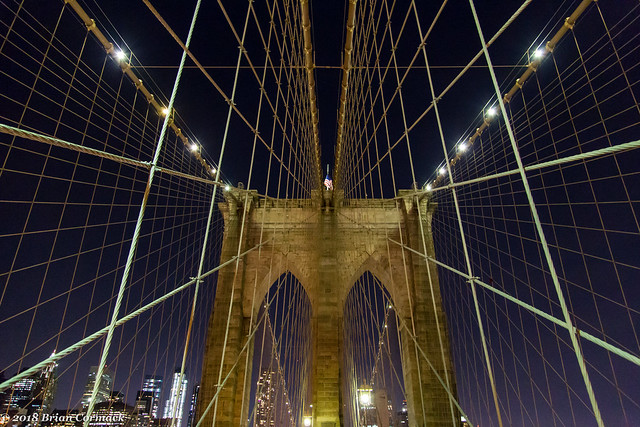
The Brooklyn Bridge is one of the oldest bridges in the United States. Construction on the bridge began in 1869 and was completed in 1883.
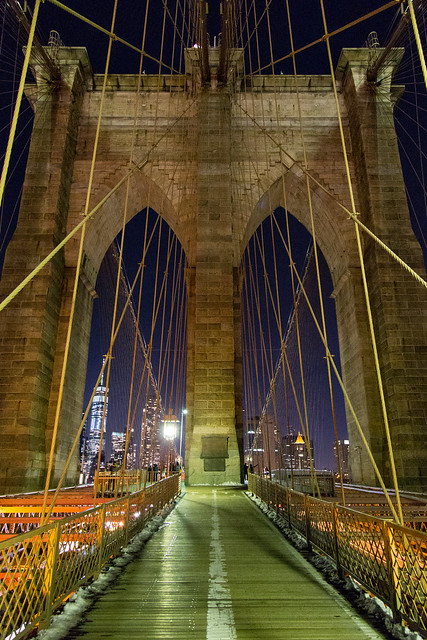
IMG_3298-4

I took a few more pictures, before making the long walk back into Brooklyn.
IMG_3341-2

And that's it for the New York pictures! We would fly back home, and thanks to a delay at the St. Louis airport we ended up arriving around midnight in Little Rock. We drove home on an interstate that was nearly empty of all other traffic, which was a bit of culture shock after being in such a busy and crowded megacity. But we were eager to get home, since there was a sleeping toddler waiting for us at the house.

Saturday, March 17, 2018

Lower Manhattan

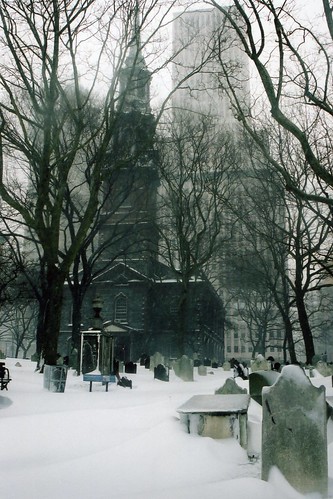
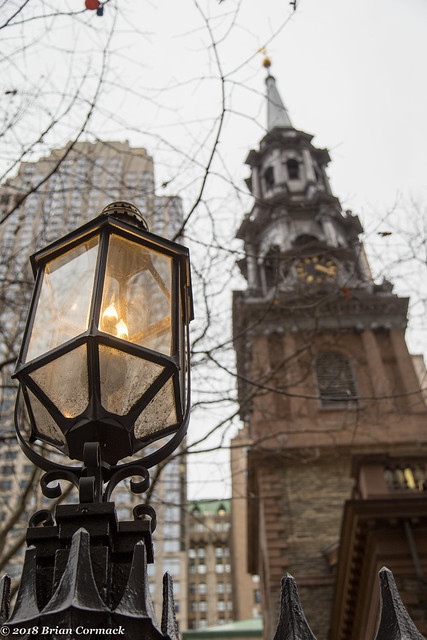
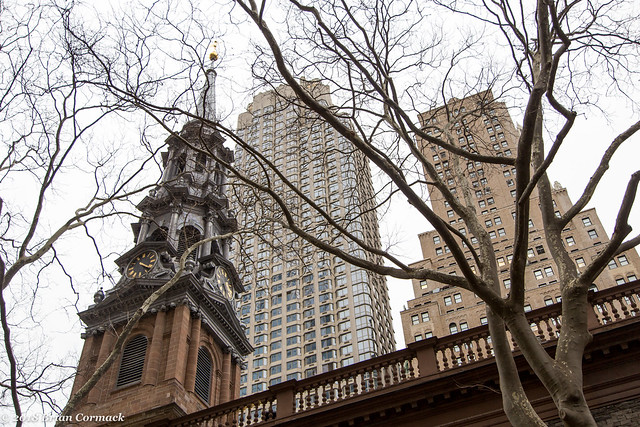
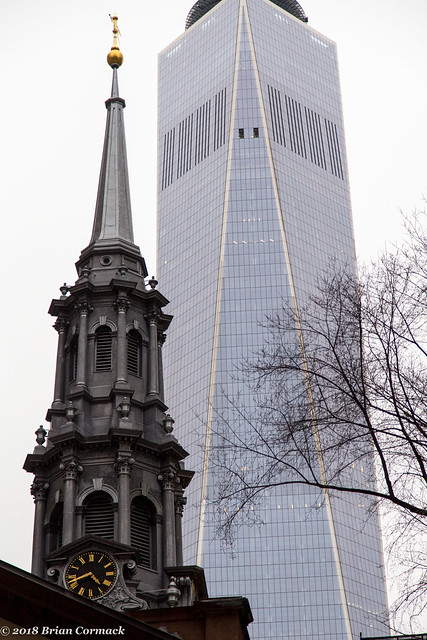
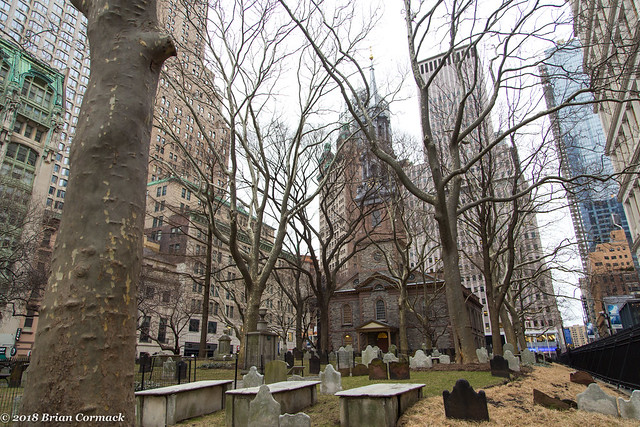
Lower Manhattan is the oldest part of New York City, and is the spot where the Dutch first established a trading post way back in 1626. There are a lot of historic buildings, and a lot of history has happened here. Just across the street from the World Trade Center is St. Paul's Chapel, which was built in 1766. The church is the oldest surviving church building in Manhattan and was even the tallest building in the city when it was built.

IMG_2859-2

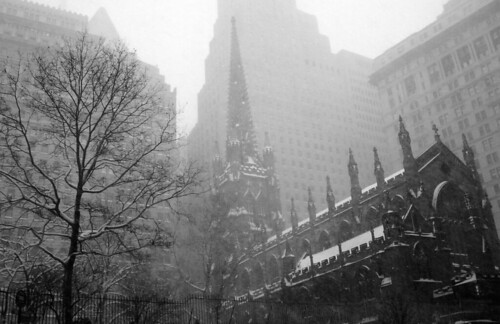
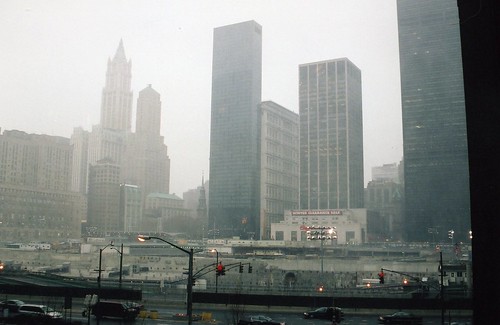
And a similar view, taken when I last visited here in 2006. A blizzard had just dumped a bunch of snow overnight.

Untitled

During the Revolutionary War, the church survived the Great Fire of 1776 because people formed a bucket brigade to protect the building. Later on George Washington, along with members of Congress, attended a church service here after his first inauguration in 1789. This was the church that Washington would attend during the two years that New York served as the U.S. capital.

IMG_2869-3

IMG_2872

Although the church sits directly across the street from the World Trade Center, it amazingly received no structural damage during the September 11 attacks (the only damage was to the organ, which had accumulated a lot of smoke and dirt). A large sycamore tree that sat in the graveyard had been knocked over, and many believe that the tree's branches had shielded the graveyard and the church building behind it from the wall of dust and debris that fell when the towers collapsed.

IMG_2899-2

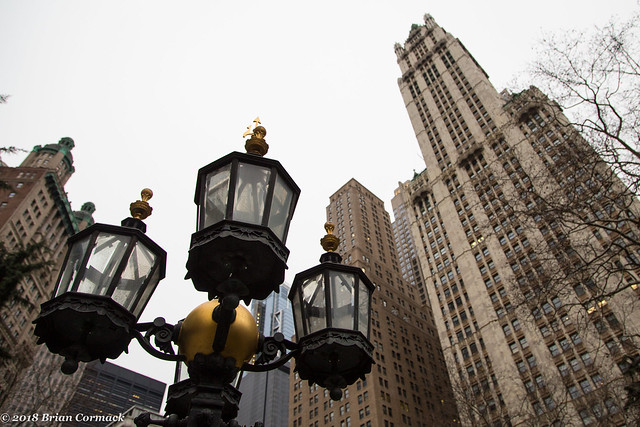
I hurried across the street and walked over to the Woolworth Building, which was built between 1910 and 1912. When the 60 story building was completed, it was the tallest building in the world. It held that distinction until 1930.

IMG_2891-3

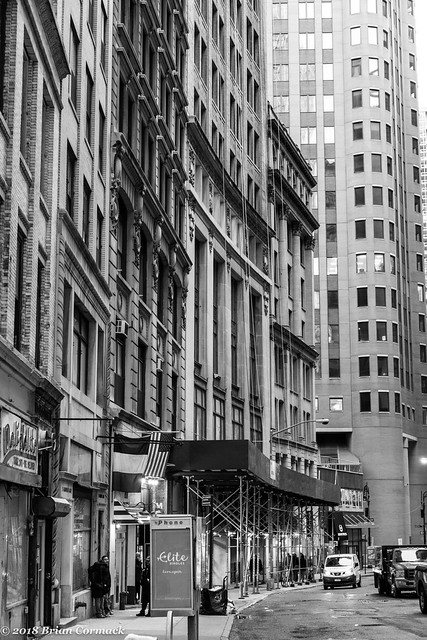
We started walking south, toward the tip of the island. We passed by this narrow street, which curved off and away behind some buildings. It would turn out that the curve in the street actually dates back to the old days when the Dutch controlled the city. The road curved alongside a small brook, which still flows but is underground now.

IMG_2914-3

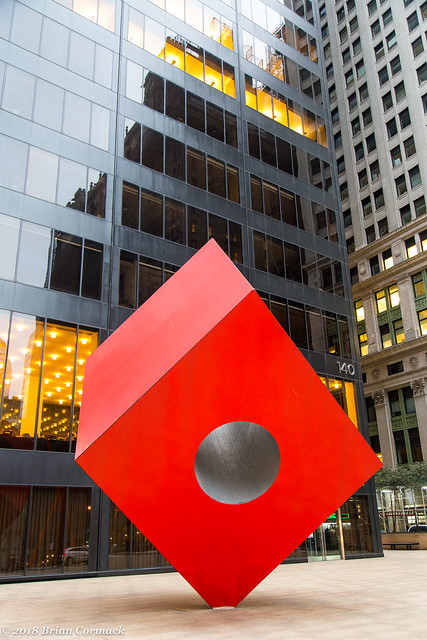
Just down the road is The Red Cube, which as the name suggests is a steel cube painted bright red. The sculpture by Isamu Noguchi was placed here in 1968.

IMG_2920-2

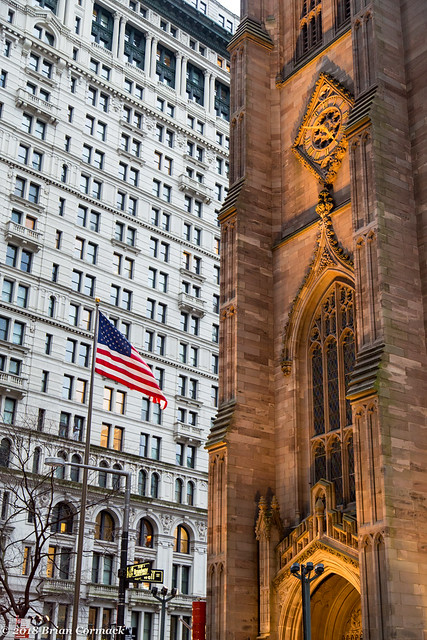
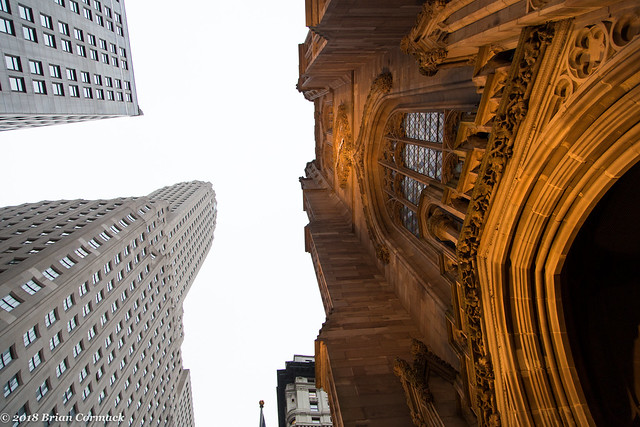
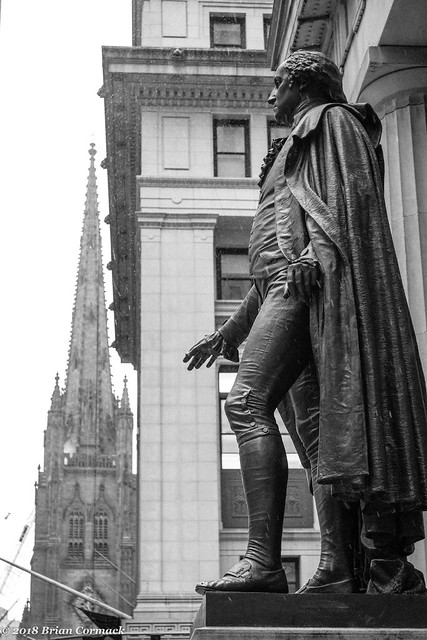
Further down is another historic old church, Trinty Church.

IMG_2929

Trinity Church was completed in 1846, and is the third church to be built on this site. The first Trinity Church was destroyed by the Great Fire in 1776, and the second was damaged by strong storms. When the third and current Trinity was completed, it was the tallest building in the country (a title it held until 1869, when a taller church was built in Chicago).

IMG_2942-2

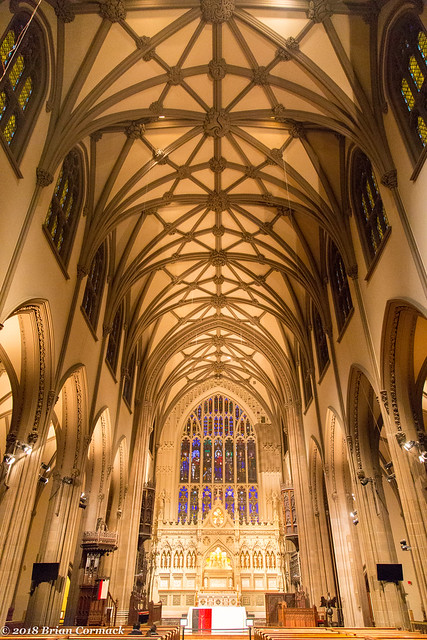
And a view of the inside of the church, which had a mix of tourists taking pictures and then people sitting solemnly in the pews.

IMG_2948-2

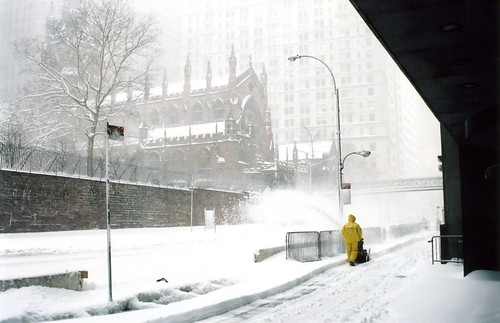
The Trinity Church Cemetery is the final resting place for several notable people, including Alexander Hamilton. It also includes several people who signed the Declaration of Independence or who served on the Continental Congress. Here's a shot of the back of the church, taken in 2006 during the big blizzard.

Trinity Church, New York City

And also a guy trying to clear the sidewalk:

Trinity

It actually started snowing on us when we were there last month, but it wasn't nearly that bad. A few snowflakes started falling while we were walking around the church.

IMG_2977-2

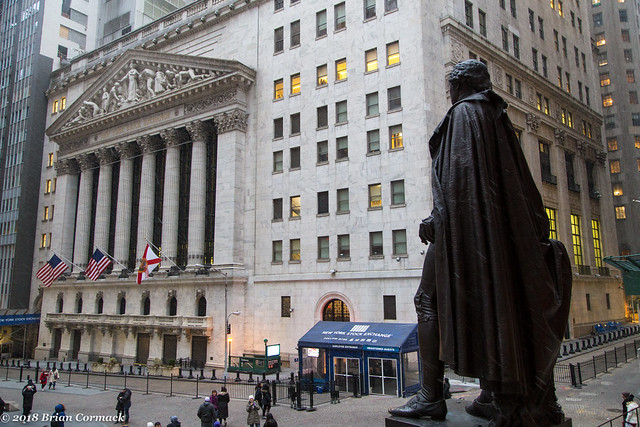
The statue here is of George Washington, and it stands at Federal Hall and marks the spot where Washington was sworn in as the first president in 1789. The building also served as the first capital building for the United States, and is the spot where the first Congress met. It was also in this spot where the Bill of Rights was ratified. In 1790, the capital was moved to Philadelphia, and Federal Hall reverted back to its original purpose as the City Hall for New York City. But when a new City Hall was built in 1812, the old Federal Hall was torn down. The current building here was built to be a US Custom's House, and is now a museum.

The George Washington statue and Federal Hall both sit along Wall Street, where they overlook the New York Stock Exchange. Wall Street is surprisingly very narrow, thank to the colonial era street plan. Wall Street got its name because in the 1600s, this was the edge of the city and there was a wall here to protect the city from attack.

IMG_2982-2

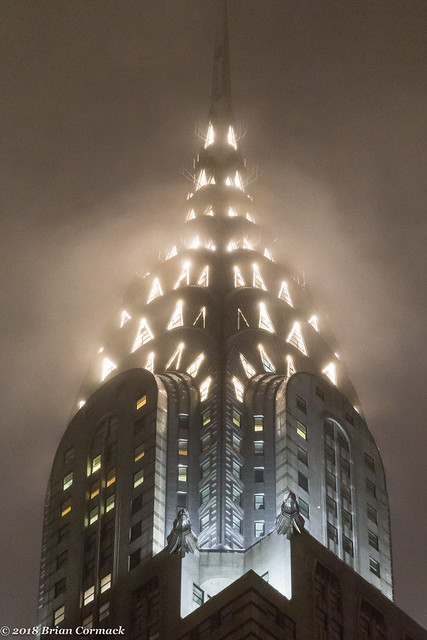
We didn't linger too much longer here, since the snow was starting to stickon the concrete. We headed back to the hotel, and got dinner at a nearby hotel where people were drinking and watching the Olympics. While walking back, I got this shot of the snow and low clouds around the spire of the Chrysler Building.

Chrysler

But after all that, the snow didn't really accumulate all that much in Manhattan (the suburbs got most of it). Which was nice, since it didn't really get in the way of our sightseeing. I'll conclude the posts about the trip next time, with some photos from a visit to Brooklyn.

Tuesday, March 13, 2018

World Trade Center

One afternoon, we headed to Lower Manhattan and visited the World Trade Center site to pay our respects. A lot had changed there, obviously, in the 12 years since I last was here. In 2006, there was still a huge hole in the ground at the WTC site, and it looked like a huge construction zone. Although it had been a few years since the attacks, there was still visible scars on some of the nearby buildings and a strong feeling of melancholy and grief that seemed to permeate the area.

World Trade Center

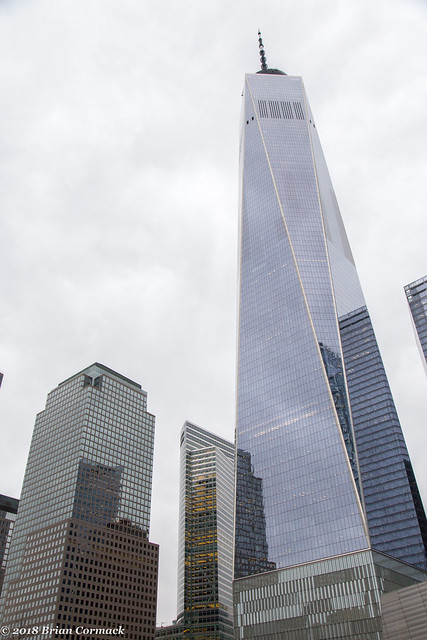
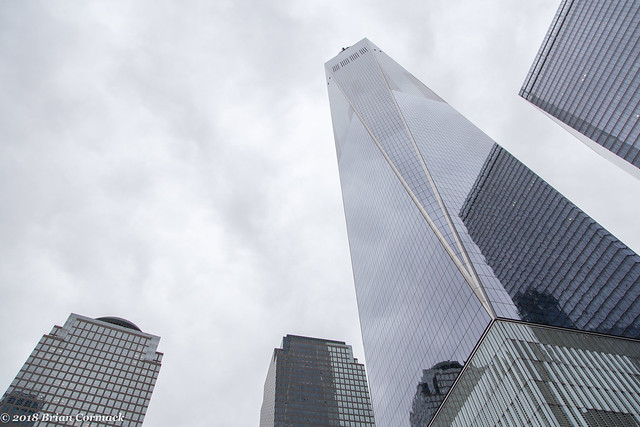
Since then, the One World Trade Center building and the 9/11 Memorial and Museum have been completed. There is still a cloak of sadness that seemed to hang over the memorial, but there was also something else there. A sense of resilience, and a pride at having endured the mourning. Lower Manhattan is again dominated by a towering skyscraper here, One World Trade Center. The 104 story building opened in 2014 and is the tallest building in the Western Hemisphere (and the sixth-tallest in the world).

IMG_2800-2

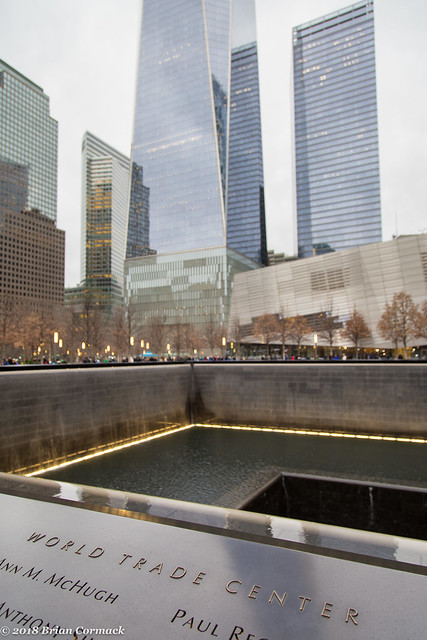
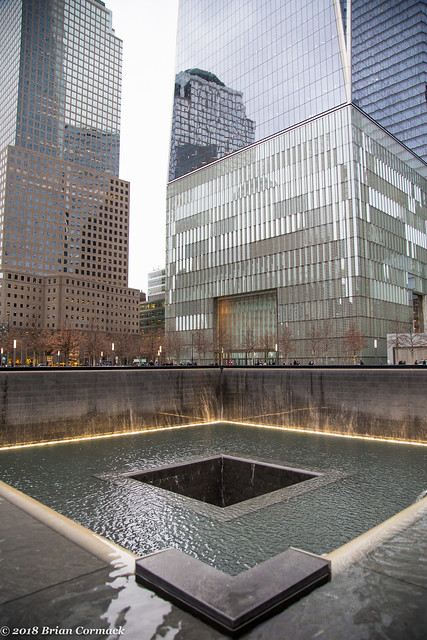
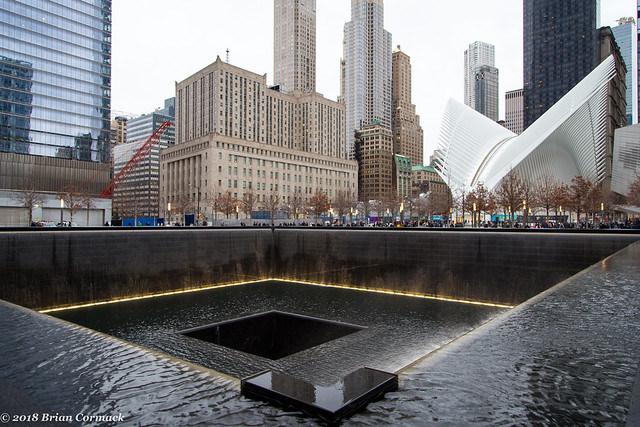
Below is the 9/11 Memorial, with two deep pools sitting in the footprints where the Twin Towers once stood. The waterfalls are the tallest man-made waterfalls in the country, and they are meant to symbolize the physical void left by the destruction caused by the attacks. Around both pools are bronze parapets that list the names of 2,983 people who were killed during the attacks in New York, Washington and Pennsylvania. Also included were the victims of the 1993 WTC bombing.

IMG_2801-2

It was heartbreaking to be there. And also a little frustrating, since people were taking goofy selfies in front of the memorial pools. It felt a little disrespectful. I was a little overwhelmed there, especially with my camera. Should you visit a place like this and be thinking about the most artsy views for photos? I know that the point of the memorial is for people to view and interact with it. But you couldn’t help shake the intense weight of what the memorial represented.

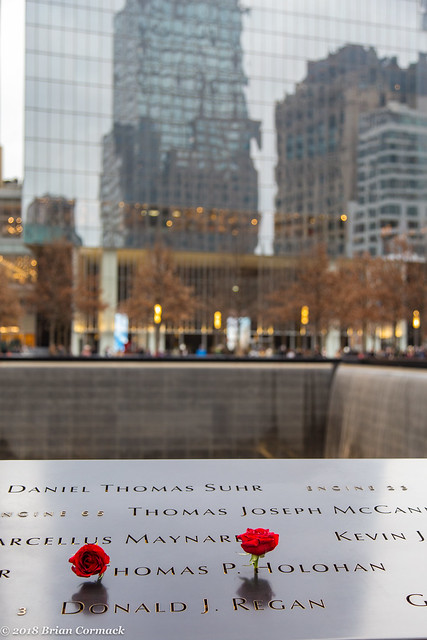
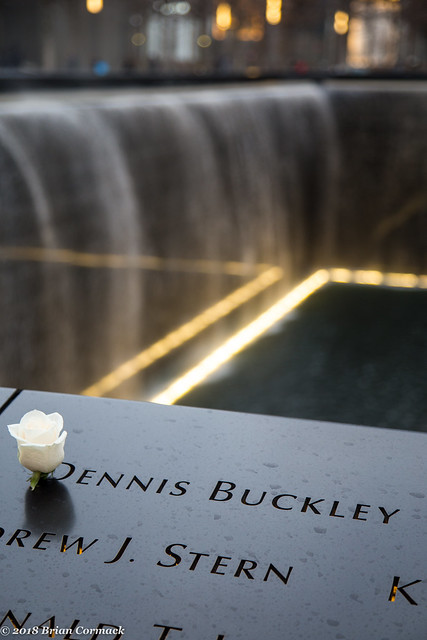
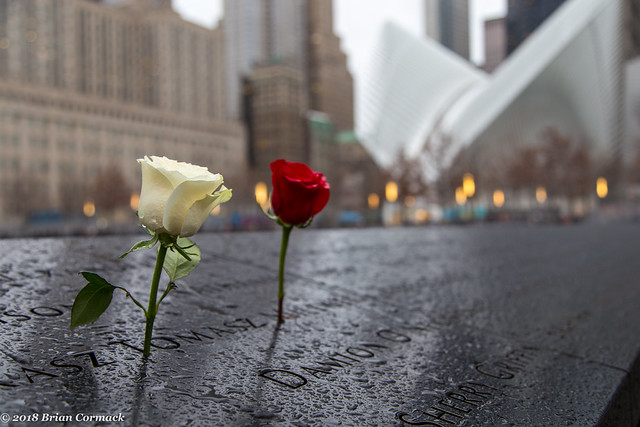
We walked by a few roses that were placed by some of the names on the parapet, and I saw a sign saying that the roses are placed there on the victim’s birthday. It was sad yet poignant reminder of the individual lives that were lost, and it brought a touching connection to the memorial. I ended up taking quite a few pictures of the roses, since it seemed to place a more human connection to the memorial.

IMG_2803-2

IMG_2812-2

And a view looking at the memorial where the North Tower once stood, with One World Trade Center in the background.

IMG_2806-2

And the view looking up at One World Trade Center from the Memorial.

IMG_2815-2

A storm was about to move in, it would actually begin snowing soon, and it got a little windy. The wind was strong enough that it would pick up water from the waterfalls and whip it up over the parapet and onto the sidewalk like rain.

IMG_2827-2

And one last shot of the Memorial pools, with the brand new PATH station in the background.

IMG_2824-2

We went inside the new station, which just opened in 2016. The first train station here opened in 1906 and was called the Hudson Terminal. It was an engineering marvel at the time, with the station also having two twin 22-story buildings built atop it. That station was mostly demolished to make way for a new station in 1971 when the original World Trade Center was built. That station was destroyed during the 9/11 attacks, and a temporary station served rail traffic for a few years until the new station could be built.

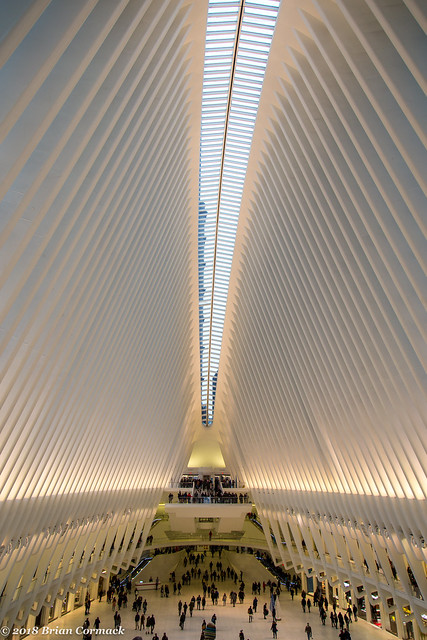
The new station cost about $4 billion dollars to construct, but it is a statement of a building. It features stark white columns, which are meant to evoke a bird taking flight. Inside, the concourse was meant to compete with Grand Central Station. It is definitely much prettier than Penn Station.

IMG_2837-2

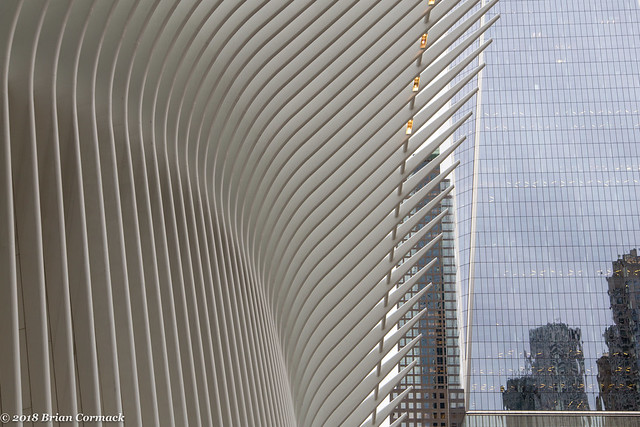
And a view of the exterior of the station, with the One World Trade Center Building in the background.

IMG_2848-2

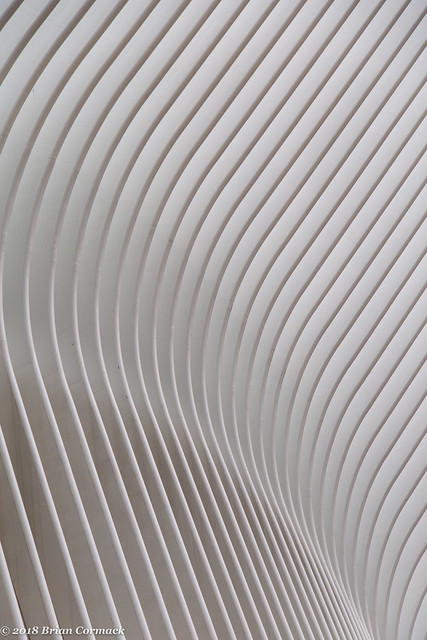
And one final shot of the station exterior, showing the curved steel columns.

IMG_2854-2

Monday, March 12, 2018

Greenwich Village

One of the mornings while we were in New York, we went to get a bagel at a place by Penn Station that got extremely good reviews. It was very busy, but we scored a table and sat down to eat. When we were nearly done, the place filled up and there weren't any other empty tables. An older man saw that there were some empty seats at our table, and asked if we would mind if he and his son sat at our table. We were about to leave anyways, so we said of course. They joined us, and quickly began talking away (and I work in a call center so I'm exposed to all the accents of people across the country. These two guys had that thick NEW YORK accent that almost sounds like a silly stereotype when it's used by characters in movies). But somehow, we all started to talking to each other and they spent a good twenty minutes talking to us about their favorite pizza places in New York.
The older man also began telling us his life story, about how he had worked overseeing construction jobs all over New York City. He claimed to have helped build Trump Tower and said he was close friends with Donald Trump. When he saw our negative reaction to that he quickly added "but I think he's an idiot!" He also said that he never had any problems with Trump not paying his bills to his company, since he was affiliated with the unions and Trump knew well enough to leave the unions alone. He added a few other things, about how he was a great photographer but unfortunately Hurricane Sandy brought the ocean into his house and the waves carried away all of his negatives.
We needed to leave, so he shook our hands and told us his name. And so of course, as soon as we left we googled him to see if any of his claims were actually true. We were a little shocked to see that they were, and that he was actually connected to the mob. He had actually been arrested for extortion, and also his brother had been brutally murdered by another mobster. Before we left, he told us: "There are a lot of good people in New York, and a lot of very bad people." We wondered where exactly he fit on that scale. On the plus side, he did give us some good recommendations for pizza.

We had lunch at one of the places that he recommended, Rubirosa Ristorante. It was really quite good, and not just because it was suggested by an actual mobster. After lunch, we walked over to Greenwich Village to have a look around. The village was once an actual old village, established separately from New York City way back in the 1600s. The city eventually grew up and around Greenwich Village, which would retain some of its charm and independence from the metropolis that surrounded it. In modern times, Greenwich Village became a haven for artists and Bohemians, and became the birthplace for the modern LGBTQ movement.

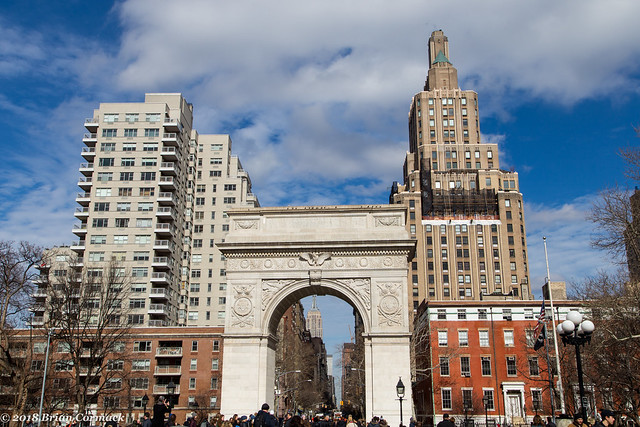
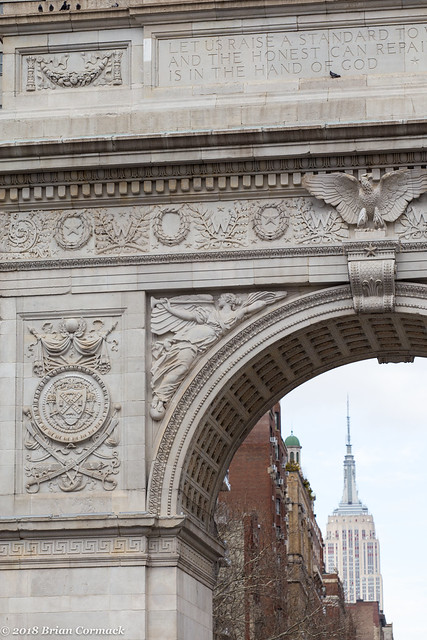
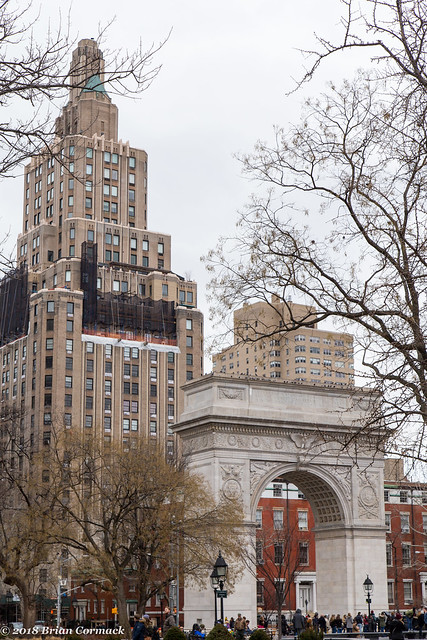
We first headed to Washington Square Park, which was crowded with people and tourists. The park dates back to 1871, on land that used to be a pauper's cemetery for unknown and indigent people and then for victims of a yellow fever epidemic. You could never guess that the park, with it's fountain and trees and memorial arch, sits atop the remains of about 20,000 people in graves dating back to 1799.

IMG_2711-2

The park is dominated by a large triumphal arch dedicated to George Washington. The arch was built in 1892 and commemorates the centennial of Washington's inauguration as the first President in 1789.

IMG_2748-2

The park was a perfect place for people watching. There was a film crew there, filming a woman in different places in the park. They had her walk through the crowds several times. Then she sat perched on a concrete bench reading a book, while a guy danced a few feet away for money. There were all sorts of people there, but the biggest crowd was congregated by the arch to watch a guy play the piano.

IMG_2773-2

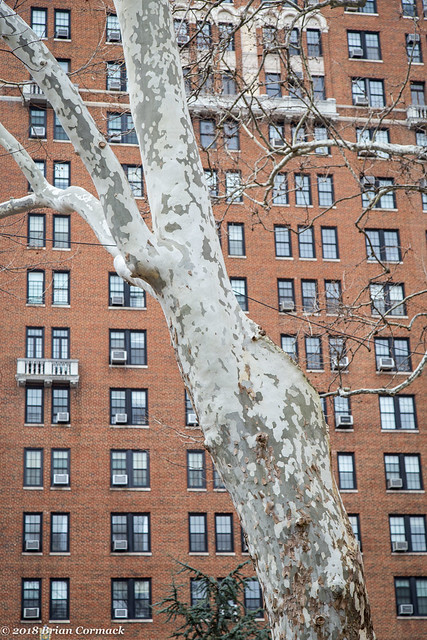
This tree was growing in the park, but was dwarfed by the tall buildings surrounding it. Real estate now in Greenwich Village is incredibly expensive. The four zip codes that encompass Greenwich Village were all ranked in the top ten zip codes with the most expensive housing prices in the country.

IMG_2782-2

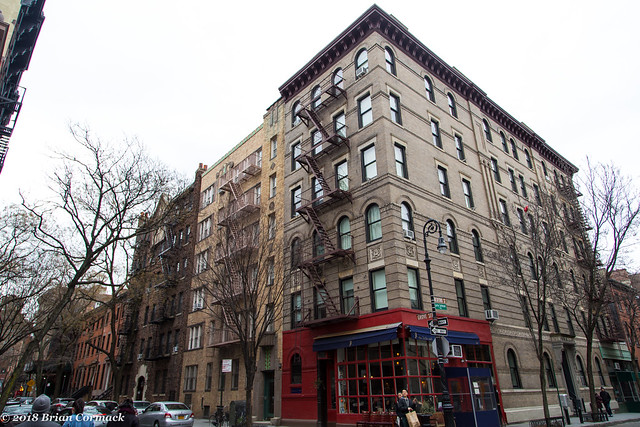
We walked by a few highlights in Greenwich Village, including The Stonewall Inn (which wasn't open yet, or else we would have gotten drinks there). We then walked a a few blocks over to see the apartment building that was used for the exterior shots for Friends. It looked a lot smaller in person. We took a few pictures before heading off to do some more sightseeing in Lower Manhattan.

IMG_2794-2

Sunday, March 11, 2018

Guggenheim Museum

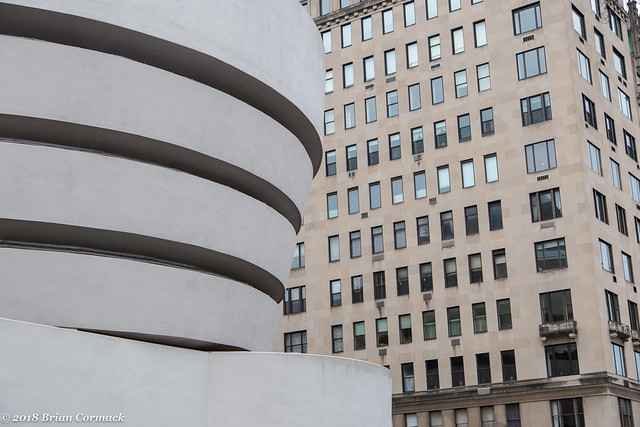
The Solomon R. Guggenheim Museum, along Fifth Avenue by Central Park, is one of the most popular museums in New York. The museum features a large collection of Impressionist, Post-Impressionist, early Modern and contemporary art. But it is also housed in a stunning building designed byFrank Lloyd Wright, which in itself is worth a visit to the museum.

IMG_2565-2

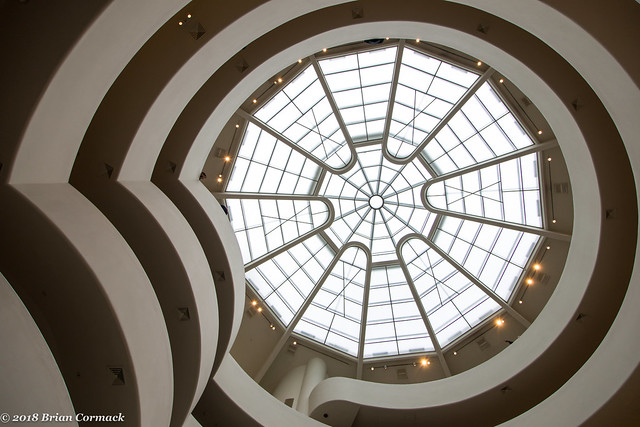
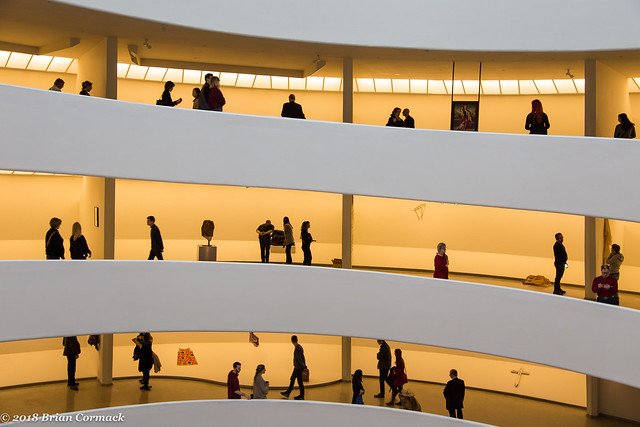
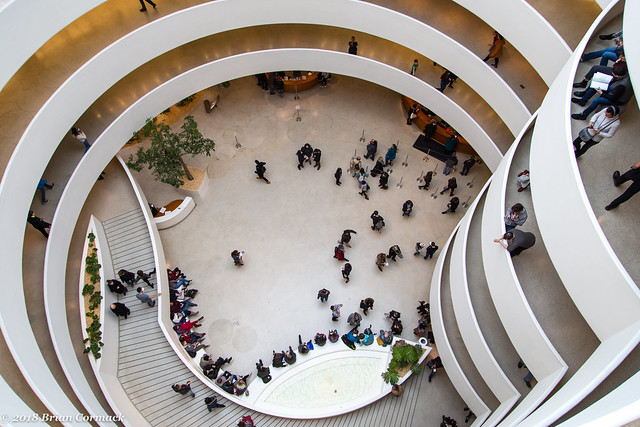
The current building opened in 1959 and was conceived as a "temple of the spirit." The building has a cylindrical ramp that spirals up from the ground floor and ends just beneath a broad skylight. The idea was for people to take the elevator up to the top and then slowly make their way down the spiral and enjoy the art along the way (the elevator was actually broken on our trip, so we had to start at the bottom).

IMG_2452-2

Here's a shot of people checking out the art exhibit that was strung out along the ramp.

IMG_2476-2

And then the view from the top, looking down at the lobby.

IMG_2502-2

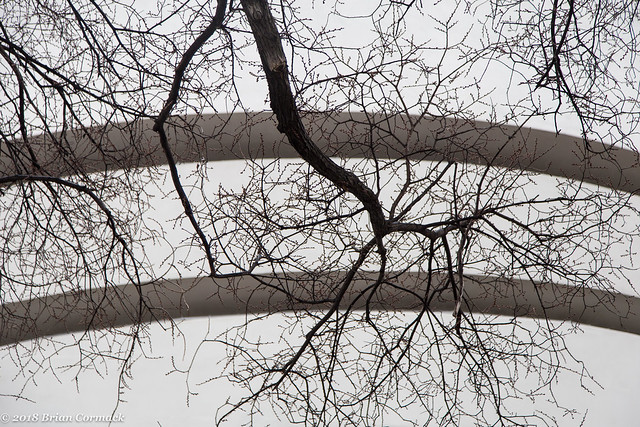
After leaving the museum, I hurried across the street into Central Park and got this shot of the exterior of the Guggenheim through some trees.

IMG_2573-2

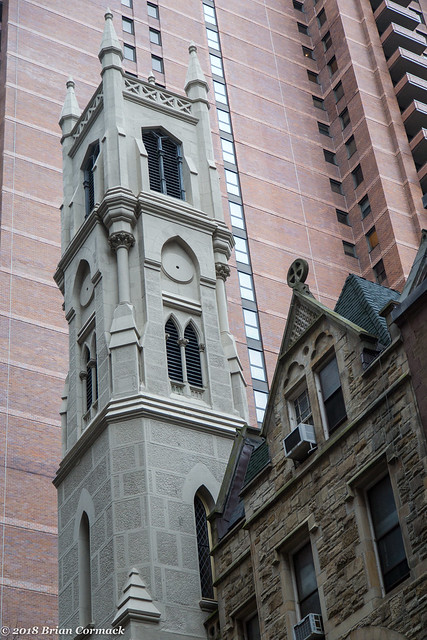
We went to grab some food at a place a few blocks away, and along the way we passed by this small church. The steeple was completely dwarfed by the tall buildings around it.

IMG_2591-2

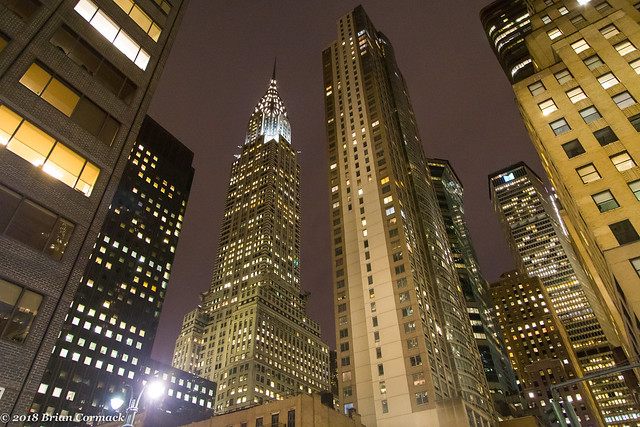
And one last shot, from later on that night when we headed back to our hotel which was located right by the Chrysler Building. Construction on the Chrysler Building was completed in 1930, and it was the tallest building in the world at the time. But it was only able to hold onto that title for eleven months, when the Empire State Building was completed. It's still the sixth tallest building in New York.

IMG_2597-2