Showing posts with label Black Lives Matter. Show all posts

Thursday, September 17, 2020

Helena

From Elaine, I headed north through the flat Delta lands and made it to the city of Helena-West Helena. Helena is another city that bears the burden of the modern Delta. It is an old city, but a place that most people in Arkansas seem to have forgotten about. Helena has a deep history: It was an important city during the Civil War (but is overshadowed by Vicksburg downriver), and it was one of the places that helped birth the Blues (but is overshadowed by Mississippi, which soaks up most of the attention dedicated to musical heritage).

There are lots of historic buildings here. But like so many other places in the Delta, Helena-West Helena has struggled economically. There are unfortunately many old buildings in downtown Helena that are empty, abandoned and crumbling. These buildings are fragile, and many of them were severely damaged by a storm earlier this year. One of the victims, tragically, was the old Centennial Baptist Church.

IMG_4823-2

The church was built in 1905 and is listed on the National Register of Historic Places. The Gothic Revival church had been a vital centerpiece to the African American culture of the city, and efforts had been made to renovate the church. It’s hard to imagine what could be savaged, but hopefully the old church can somehow be preserved. Here’s a view of the church from a few years ago...
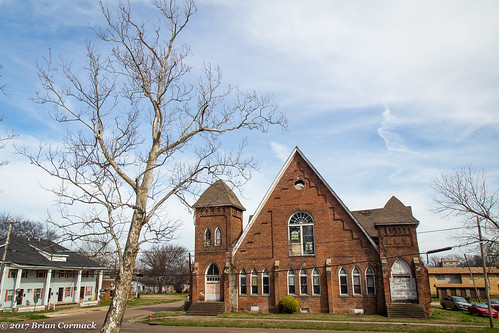
Centennial Baptist Church

From there I drove by through the old industrial section of the city, which is populated with some old factories and mills. Some of the buildings were abandoned, including this one sitting beneath a tower that stretched up like a skyscraper.

IMG_4840-2

The road passed between these two buildings, which probably aren’t being used anymore.
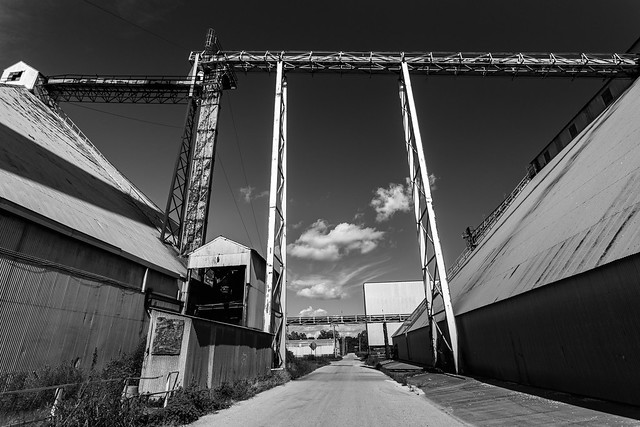
IMG_4847

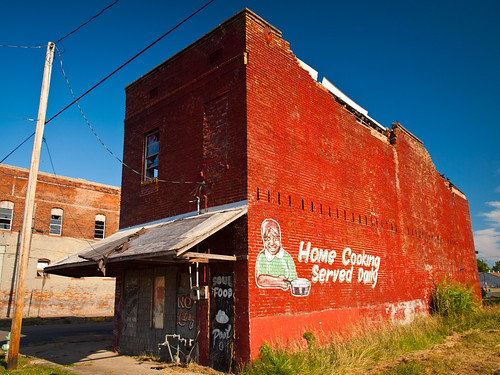
Closer to downtown was the old Bullock’s Soul Food Cafe, which is unfortunately closed and the building is abandoned. I wish the restaurant was open because it probably had some amazingly good food.

IMG_4860-2

Vines have covered most of the side of the building, which proclaims “Home Cooking Served Daily.”

IMG_4861

And a picture of the same building from a few years ago. The older buildings across the street that were in the background of this picture have been torn down (one of those buildings used to house an old blues joint called The Kit Kat Club that Robert Johnson played at in the olden days. It’s a vacant lot now).
Bullock's

The city of Helena was laid out in 1820, at a spot where the low hills of Crowley’s Ridge met the Mississippi River. The city was formally incorporated in 1833, and would grow to become an important spot for steamboats on the river since it sits between Memphis and Vicksburg. In his book “Life on the Mississippi,” Mark Twain would describe Helena as being “one of the prettiest situations on the Mississippi.”

By 1860, Helena was the largest city in Arkansas along the Mississippi River. As a river town, Helena was known as a wild town with its fair share of crime, gambling, prostitution and violence. During the Civil War, US troops quickly captured the city in 1862 because of its strategic location along the Mississippi River. In 1863, Confederate troops tried to retake the city but suffered significant losses. The city remained in Union control for the rest of the War, and it became home to significant numbers of freed and escaped slaves.

In the early days of the city, most of the commercial district was along Water Street. But the street lived up to its name - in 1867 a major flood washed away most of the buildings. The waters of the Mississippi eroded the riverbank until Water Street was itself underwater. By 1880, the core of the city’s commercial district moved to Cherry Street.

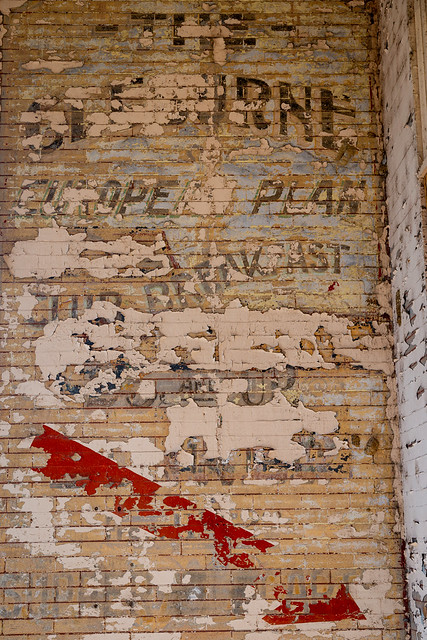
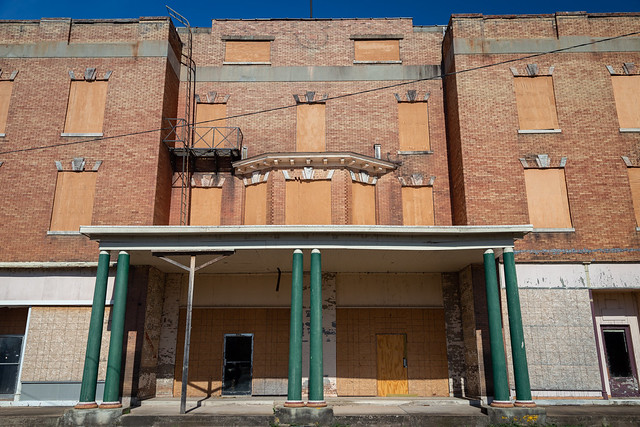
Today, old buildings line Cherry Street for several blocks. One of the most prominent is the old Cleburne Hotel, which was built in 1905. The hotel is empty now, and the windows are boarded up. But if you look close, you can still see an old sign promoting the hotel’s services (which includes a European Plan and even a breakfast for just 25 cents).

IMG_4865-2

IMG_4871-2

And a wider shot of the front of the hotel. I would love to be able to go inside to take pictures.
IMG_4875-2

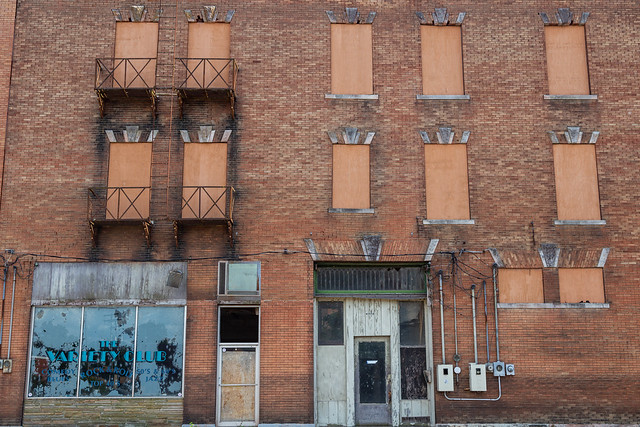
And the side of the hotel, where it looks like there used to be a space for a variety club.
IMG_4881-2

IMG_4898-2

IMG_4892-2

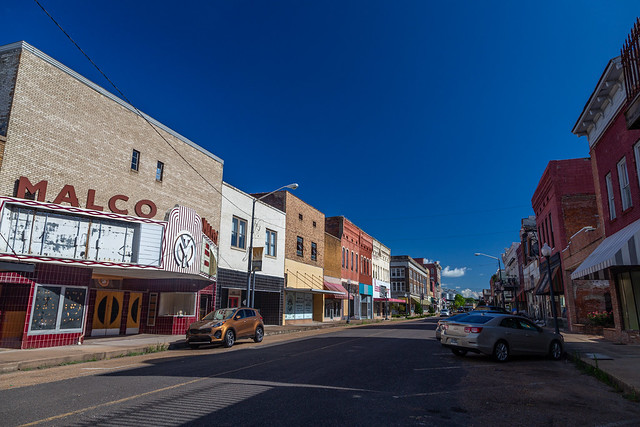
And the view looking down Cherry Street, where unfortunately a few of the older buildings were damaged in the storm a few months ago.
IMG_4906-2

Between Cherry Street and the Mississippi River levee is this old building, which looks to have been abandoned for several years. Vines have shrouded much of the exterior of the building.

IMG_4921-2

IMG_4930-2

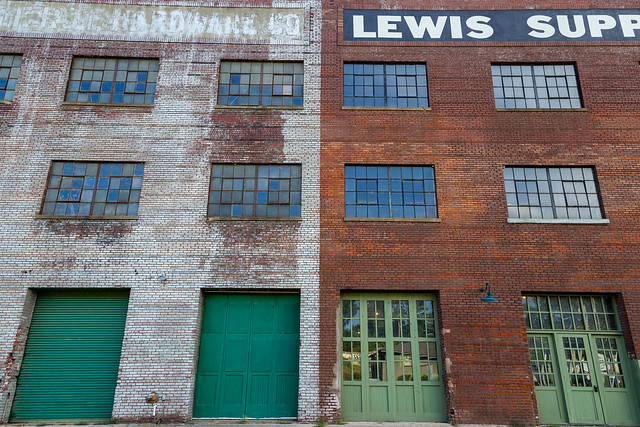
A few blocks away was this building, where it appears half of it is disused while the other half is used and open (for a quaint looking coffee-shop). The mix of the two kinda looks like a building version of Twoface from Batman.
IMG_4943-2

Further down the road is the intersection of Cherry and Missouri Streets. It was a quiet afternoon when I was there, with little traffic cruising through the summer heat. But that was not the case a century ago, when a tragic incident occurred here. The Encyclopedia of Arkansas History states: “On December 23, 1920, in what one newspaper called ‘One of the most dreadful tragedies that the Negroes of the City of Helena has [sic] ever been called on to witness,’ Professor J. W. Gibson was killed by a night watchman in Helena (Phillips County). Depending on how the word “lynching” is interpreted, this may have been an incident of police brutality, or Professor Gibson may in fact have been lynched.” For more on this, click HERE.

IMG_4950-2

If you travel down Cherry Street you will soon reach the historic Phillips County Courthouse. The courthouse was built in 1915.

IMG_4968

In the park across the street from the courthouse is a new memorial to the victims of the Elaine Massacre of 1919.

IMG_4962-2

There are also signs in the park commemorating the seven Confederate Civil War generals who were from Helena. What is not commemorated was another piece of history - a lynching that occurred in this park. In 1921, the body of a man was taken from an ambulance and burned in this park. The Encyclopedia of Arkansas again has all the gruesome details HERE.

A few blocks away was this sign, still promoting a store that seems to have shut down long ago.

IMG_4984-2

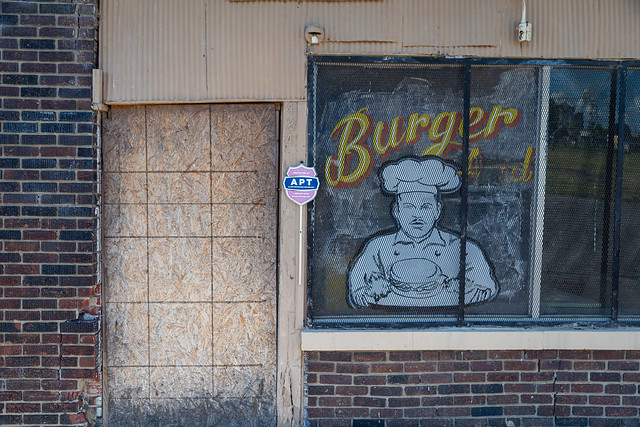
And a few last shots, before heading back home. I drove by this old restaurant, which was unfortunately closed. It made me really hungry for a burger.
IMG_4988-2

IMG_4995

Monday, September 7, 2020

Elaine

In a seemingly-forgotten corner of the state, sits the seemingly-forgotten town of Elaine. The town was established back in 1911 and was surrounded by large cotton plantations. In modern times, Elaine has suffered the same fate as many other Delta towns. Farm mechanization eliminated the need for most agricultural workers, and The Great Migration saw thousands of African Americans leave the Delta for better jobs and opportunities in the North. Elaine, with its dark history, was left behind. 

IMG_4706-2

IMG_4701-2

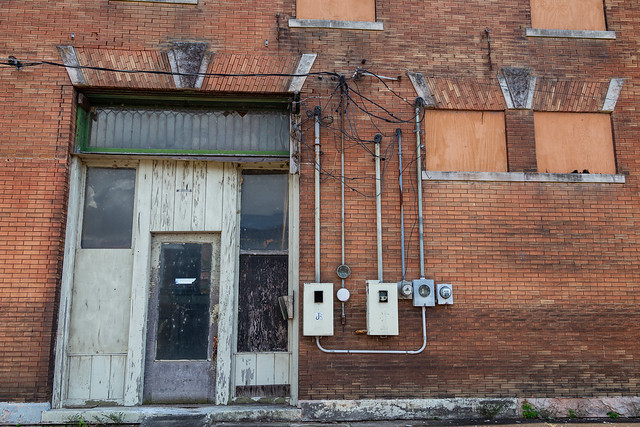
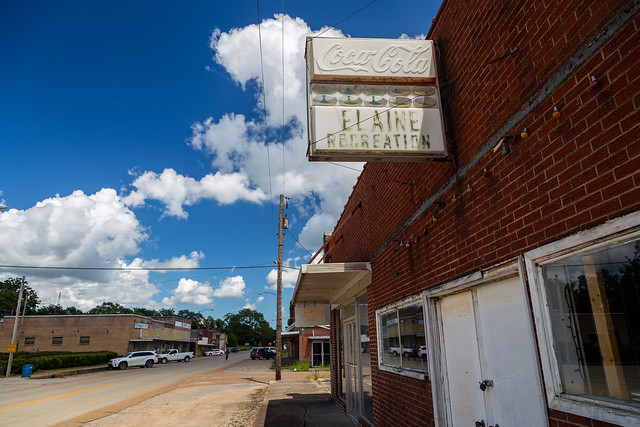
Most of the buidlings along Main Street in Elaine are empty, including the old Lee Grocery Store. Constructed in 1915, it served as a grocery store until 2010. There are plans to turn the old building into a visitor's center.

IMG_4660-2

Across the street is the shell of another old building, with just a few walls still standing.

IMG_4664

IMG_4685-2

Along an interior corner of the old building was this tree, defiantly growing up out of the concrete floor.

IMG_4688-2

If you look closely, there are a few birdhouses on the tree. Those are part of an effort to turn Elaine into the "Birdhouse Captiol of the US." There are hundreds of birdhouses scattered throughout the town (in fact there are more birdhouses than people here). They are on trees, along the side of buildings, and they occupy the storefronts of buildings along Main Street. That includes this window, with this ominous-sounding sign. 

IMG_4708

There is one major piece of history in Elaine, one that has also been mostly forgotten (or ignored) for decades. In 1919, this small town was the epicenter of one of the worst mass lynchings in US history. The exact number of people killed is unknown, but estimates are that several hundred people were murdered in and around Elaine. From the Encyclopedia of Arkansas History

The conflict began on the night of September 30, 1919, when approximately 100 African Americans, mostly sharecroppers on the plantations of white landowners, attended a meeting of the Progressive Farmers and Household Union of America at a church in Hoop Spur (Phillips County), three miles north of Elaine. The purpose of the meeting, one of several by black sharecroppers in the Elaine area during the previous months, was to obtain better payments for their cotton crops from the white plantation owners who dominated the area during the Jim Crow era. Black sharecroppers were often exploited in their efforts to collect payment for their cotton crops." 

Leaders of the Hoop Spur union had placed armed guards around the church to prevent disruption of their meeting and intelligence gathering by white opponents. Though accounts of who fired the first shots are in sharp conflict, a shootout in front of the church on the night of September 30, 1919, between the armed black guards around the church and three individuals whose vehicle was parked in front of the church resulted in the death of W. A. Adkins, a white security officer for the Missouri-Pacific Railroad, and the wounding of Charles Pratt, Phillips County’s white deputy sheriff. 

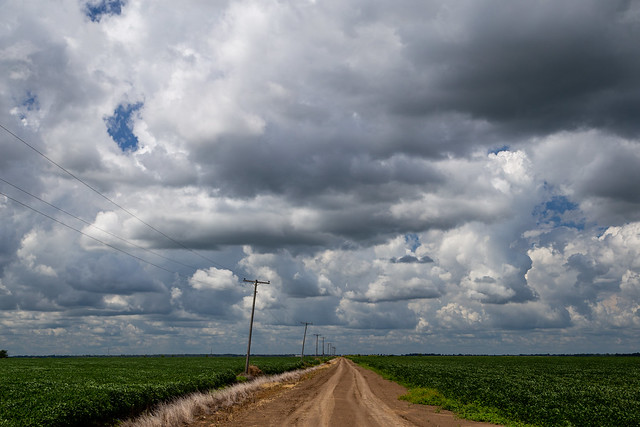
This is the stretch of road where the Hoop Spur church once stood. The church no longer exists, it was burned down shortly after the shooting. 

IMG_4714-2

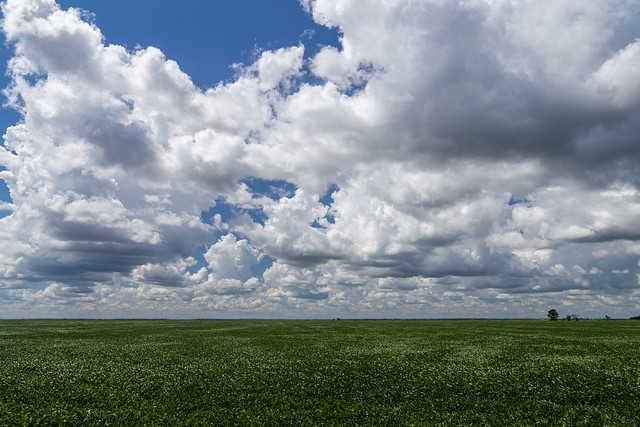
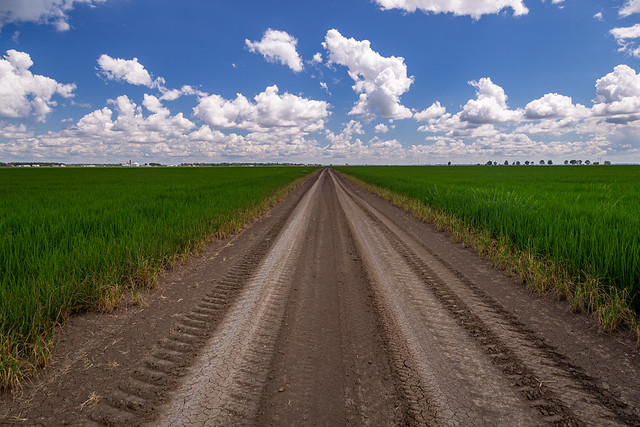
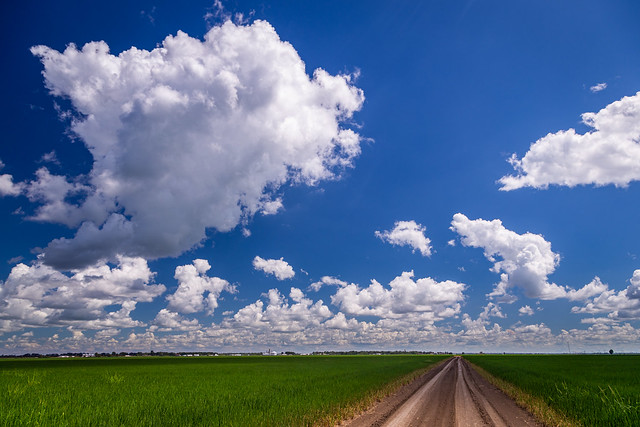
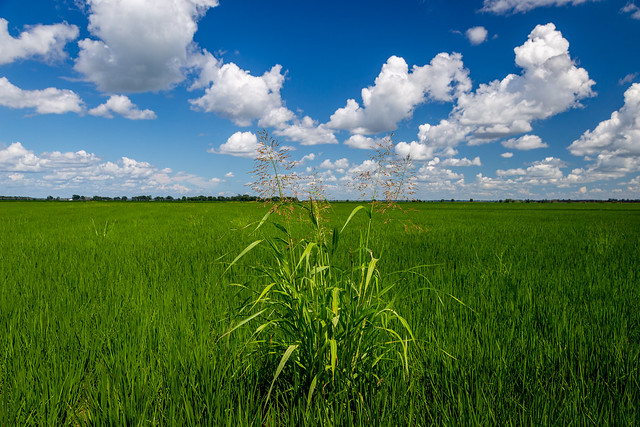
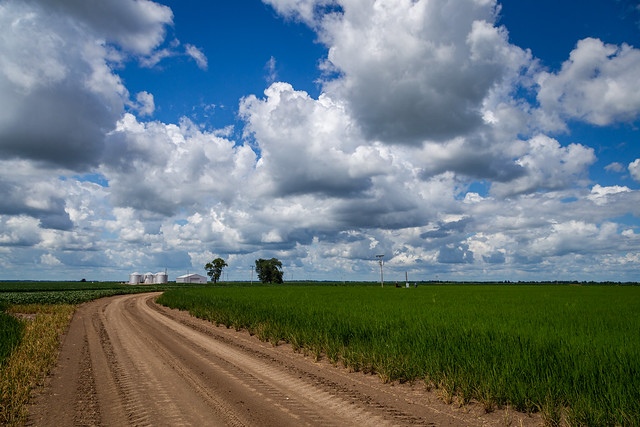
The massacre was one of many that occurred that year during the aptly named "Red Summer," which saw violence occur in cities across the country. Visiting the fields around Hoop Spur and Elaine now, it seems like the landscape has not changed all that much (except that the fields grow soybeans now instead of cotton). 

IMG_4717 

IMG_4723-2 

The fields and forests around Elaine and Hoop Spur would become the scenes of gruesome violence. More from the Encyclopedia of Arkansas History
The next morning, the Phillips County sheriff sent out a posse to arrest those suspected of being involved in the shooting. Although the posse encountered minimal resistance from the black residents of the area around Elaine, the fear of African Americans, who outnumbered whites in this area of Phillips County by a ratio of ten to one, led an estimated 500 to 1,000 armed white people—mostly from the surrounding Arkansas counties but also from across the river in Mississippi—to travel to Elaine to put down what was characterized by them as an “insurrection.” On October 1, Phillips County authorities sent three telegrams to Gov. Brough, requesting that U.S. troops be sent to Elaine. Brough responded by gaining permission from the Department of War to send more than 500 battle-tested troops from Camp Pike, outside of Little Rock (Pulaski County).

IMG_4747-3

After troops arrived in Elaine on the morning of October 2, 1919, the white mobs began to depart the area and return to their homes. The military placed several hundred African Americans in makeshift stockades until they could be questioned and vouched for by their white employers. (Union leader Robert Lee Hill was hidden by friends during the violence and later escaped to Kansas.) The violence even claimed those who had nothing to do with the union efforts, such as brothers David Augustine Elihue Johnston, Gibson Allen Johnston, Lewis Harrison (L. H.) Johnston, and Leroy Johnston, who were returning to Helena from a hunting trip when they were attacked and killed on October 2. 

Evidence shows that the mobs of whites slaughtered African Americans in and around Elaine. For example, H. F. Smiddy, one of the white witnesses to the massacre, swore in an eye-witness account in 1921 that “several hundred of them… began to hunt negroes and shotting [sic] them as they came to them.” Anecdotal evidence also suggests that the troops from Camp Pike engaged in indiscriminate killing of African Americans in the area, which, if true, was a replication of past militia activity to put down perceived black revolts. In 1925, Sharpe Dunaway, an employee of the Arkansas Gazette, alleged that soldiers in Elaine had “committed one murder after another with all the calm deliberation in the world, either too heartless to realize the enormity of their crimes, or too drunk on moonshine to give a continental darn.” 

IMG_4768-2

The extent of the violence isn't well known. Many African-Americans attempted to hide in the nearby swamps, while others were shot in the cotton fields while they worked. I don't know if it was my imagination, but there was definitely an uncomfortable and eerie feeling in the fields. An overwhelming sense that something bad had happened here seems to have seeped into the soil, and was as thick in the air as the summer humidity. 

IMG_4777-2 

IMG_4786-2

It does seem like history haunts these fields. It was eerily silent there, except for the buzzing of a crop-duster flying low above the crops. 

IMG_4736-2

Continuing from the Encyclopedia of Arkansas History, who explain it better than I can: 
From this point forward, two versions of what occurred at Elaine exist. The white leaders put forward their view that black residents had been about to revolt. E. M. Allen, a planter and real estate developer who became the spokesman for Phillips County’s white power structure, told the Helena World on October 7, “The present trouble with the Negroes in Phillips County is not a race riot. It is a deliberately planned insurrection of the Negroes against the whites directed by an organization known as the ‘Progressive Farmers and Household Union of America,’ established for the purpose of banding Negroes together for the killing of white people.” 

On the other hand, the National Association for the Advancement of Colored People (NAACP) in New York, which had sent Field Secretary Walter White to investigate the events in Elaine, contested such allegations from the outset. White wrote in the Chicago Daily News on October 19, 1919, that the belief there had been an insurrection was “only a figment of the imagination of Arkansas whites and not based on fact.” He said, “White men in Helena told me that more than one hundred Negroes were killed.” Famed journalist and anti-lynching activist Ida B. Wells-Barnett secretly interviewed some of the prisoners in Helena, from which she produced the pamphlet “The Arkansas Race Riot.” This work also challenged allegations of an insurrection and documented the torture and other depredations the prisoners had suffered.


IMG_4797

Within days of the initial shoot-out, 285 African Americans were taken from the temporary stockades to the jail in Helena, the county seat, although the jail had space for only forty-eight. Two white members of the Phillips County posse, T. K. Jones and H. F. Smiddy, stated in sworn affidavits in 1921 that they committed acts of torture at the Phillips County jail and named others who had also participated in the torture. On October 31, 1919, the Phillips County grand jury charged 122 African Americans with crimes stemming from the racial disturbances. The charges ranged from murder to nightriding, a charge akin to terroristic threatening (as defined by Act 112 of 1909). The trials began the next week, with John Elvis Miller leading the prosecution. White attorneys from Helena were appointed by Circuit Judge J. M. Jackson to represent the first twelve black men to go to trial. Attorney Jacob Fink, who was appointed to represent Frank Hicks, admitted to the jury that he had not interviewed any witnesses. He made no motion for a change of venue, nor did he challenge a single prospective juror, taking the first twelve called. By November 5, 1919, the first twelve black men given trials had been convicted of murder and sentenced to die in the electric chair. As a result, sixty-five others quickly entered plea-bargains and accepted sentences of up to twenty-one years for second-degree murder. Others had their charges dismissed or ultimately were not prosecuted. 

IMG_4789-2

An exhibit at UALR succintly summed up the trial, stating that: 
The massacre and the sharecroppers sentenced to death drew the attention of the National Association for the Advancement of Colored People (NAACP). Through grassroots efforts, the NAACP built support for the sharecroppers dubbed the “Elaine Twelve” and raised money for their legal counsel. It was in the defense of the Elaine Twelve that Scipio Jones, one of the lawyers for the twelve, rose to national acclaim. Scipio Jones and the NAACP’s defense team worked to free the twelve defendants, who were divided into the Moore v. Dempsey and Ware v. Dempsey cases. On February 19, 1923, the U.S. Supreme Court handed down a 6–2 decision in favor of the Moore defendants, maintaining the Twelve had been denied “due process” and noting the judicial proceedings had been influenced by a mob that had assembled outside of the courthouse before the men were sentenced. Despite the favorable ruling from the U.S. Supreme Court, the Moore defendants remained in jail facing a re-trial in district court. On November 3, 1923, Governor McRae commuted the death sentences of the sharecroppers to twelve-year terms in prison, making them immediately eligible for parole. On January 13, 1925, the six Moore defendants were granted indefinite furloughs from McRae and were released from jail.

IMG_4792-2

The events at Elaine were then largely forgotten in the decades since (except, of course, by the people who lived through it and their descendants). I grew up in Arkansas and never learned about it in any history class. The haunted landscape surrounding these fields in Phillips County still remains.

IMG_4805-2

IMG_4803-2

IMG_4814-2

For the massacre's 100th anniversary last year, a memorial was constructed by the courthouse in Helena-West Helena. But in Elaine, a tree that had been planted to memorialize the victims was cut down in the middle of the night. 
 
How do you even begin to memorialize something as traumatic and awful as this? How do you reconcile a century of animosity and anger, which sadly is still evident today? This is a state that is in many ways still fighting the Civil War, so it's no surprise that a massacre in 1919 is an unhealed wound. 
 
This was written in the late summer of 2020, a year that has been marked by months of protests for the idea of racial justice and equality. I look at my kids, and I wonder how we are going to fix all of this for the future generations. The difficulties we are experiencing will not be solved unless we deal with the unfortunate history of our past. We need to recognize the tragedies that have occurred before us, and strive to make sure that we are growing past them together.