Sunday, April 9, 2023

New Orleans - Jackson Square

For Spring Break this year we loaded up the kids and drove down to the Gulf, spending a few days in New Orleans and then Destin. I love visiting New Orleans - it has so much history and culture. It is one of the most unique and vibrant cities in the country, and the food there is always amazing. We were traveling with two kids, so we weren't able to fully partake in all of the city's charms (meaning we didn't take them down Bourbon Street). But we did stay in the French Quarter, and took them out to explore. One place where we spent a lot of time was Jackson Square, which was a place the kids could run around without having to worry about traffic or drunk tourists.

Jackson Square

Jackson Square has long been the historic heart of New Orleans. In 1721, French engineers laid out the plans for what would be the capitol of the La Louisiane colony. They designed the new town to have a grid of streets that surrounded a central square, which overlooked the Mississippi River. The square was called the Place d’Armes, and the most important buildings in the city would be built alongside it.
Untitled

P3180037

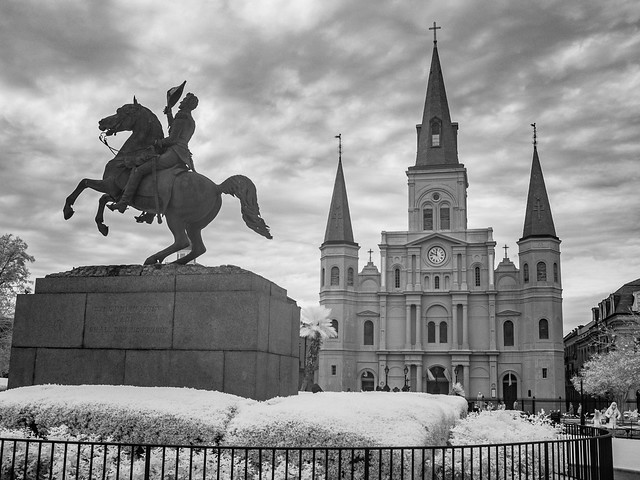
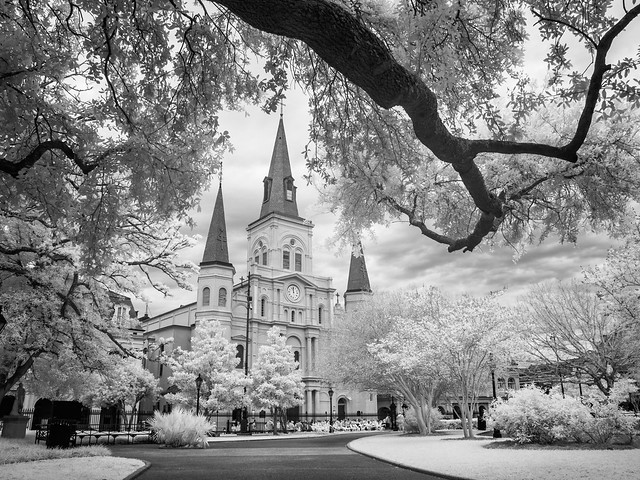
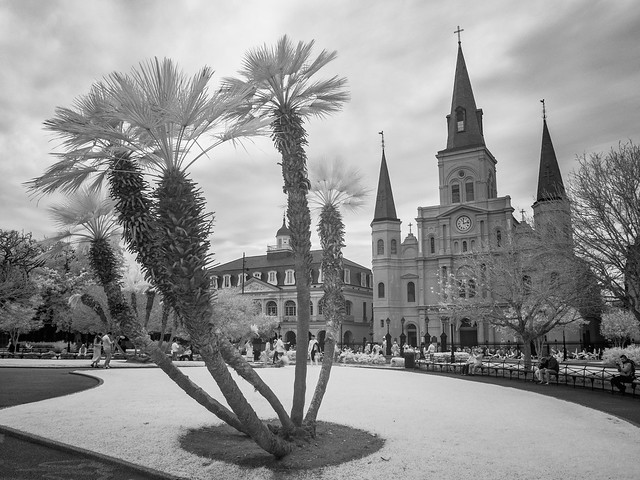
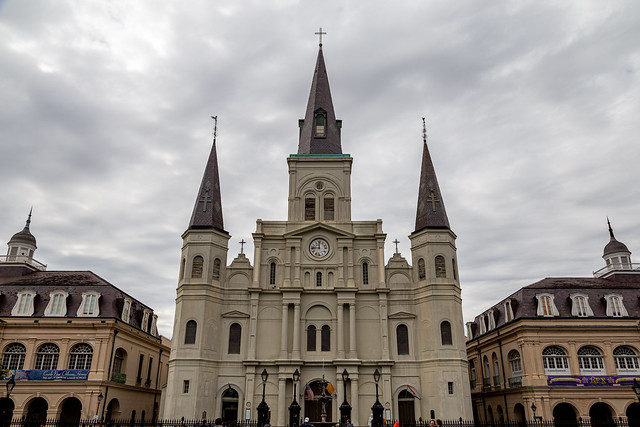
One of the most prominent landmarks at Jackson Square is the St. Louis Cathedral.

Untitled

The current church was built in 1850. The very first church here was a crude wooden structure that was built in 1718 when the city was founded. That church would be replaced with a larger church in 1727, but it would be destroyed by a fire in 1788. The church was rebuilt in 1794, but that structure was torn down as the church expanded and was redesigned to meet a growing congregation.
P3180070

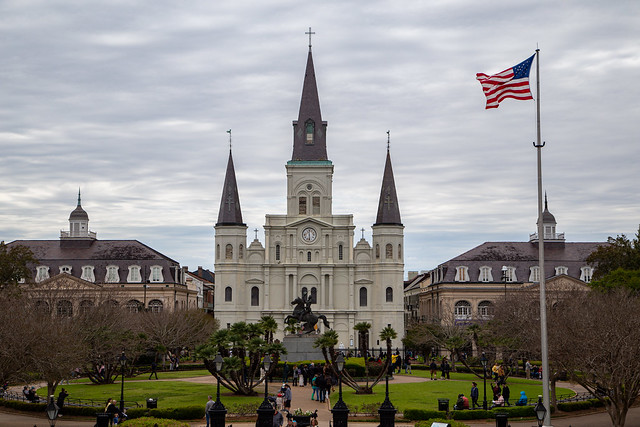
To the left of the St. Louis Cathedral is The Cabildo, which was built in 1799 and served as the seat of government when New Orleans was a Spanish colony. The building would later be used as a courthouse for the Louisiana Supreme Court, and is now used as a museum. To the right of the cathedral is the The Presbytère, which was built in 1813 and is also now used as a museum.
IMG_3954-2

The Cabildo was also the spot where the final version of the Louisiana Purchase was signed in 1803.

P3180090

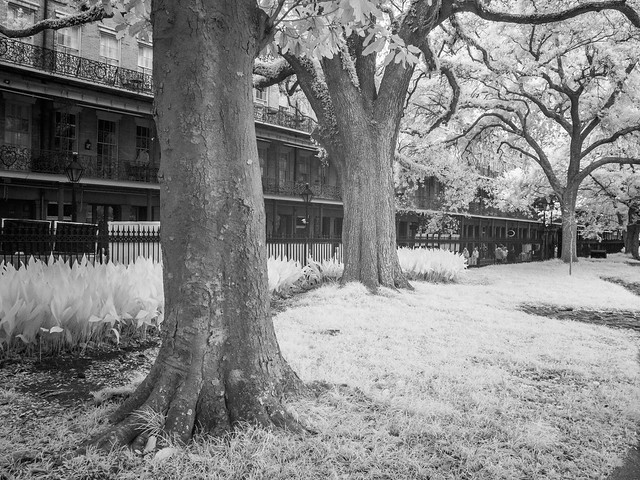
In the 1840s, the Baroness Micaëla Almonester Pontalba visited the city to check on her real estate holdings and found the Place d’Armes to be a muddy and neglected mess. She personally financed and redesigned the square, adding cast-iron fences, walkways and formal gardens. A statue of Andrew Jackson was built in the center of the park, in honor of the general's role in saving the city from British invasion during the War of 1812. In 1851, the Place d’Armes was renamed Jackson Square.

P3180030

P3180099

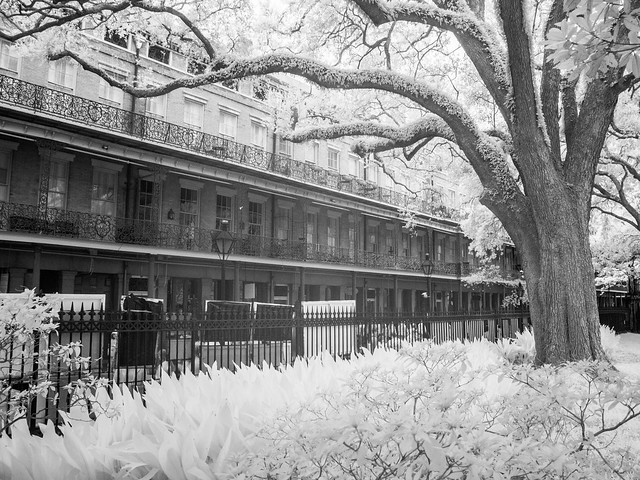
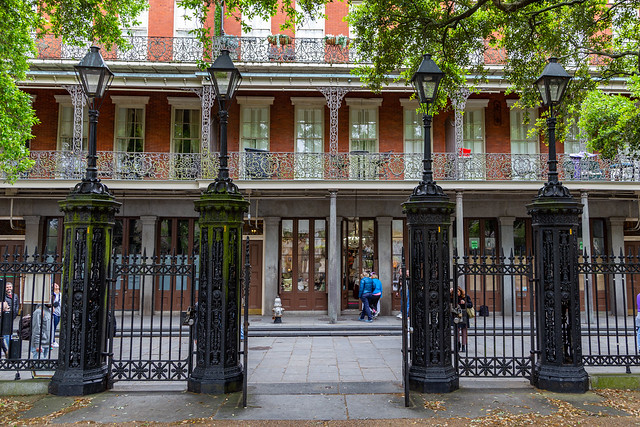
The Baroness Pontalba also built two Parisian-style row-houses on the sides of Jackson Square, at a cost of $300,000. The Pontalba buildings were the first buildings to feature iron balconies in the city, which would become a prominent architectural style. The first floor of the buildings are shops, and the upper floors have since been converted into apartments. Truman Capote wrote that the Pontalba buildings were "the oldest, in some ways most somberly elegant, apartment houses in America."

IMG_3989-3

Jackson Square

P3180100

P3180114

P3180119

P3180095

NOLA

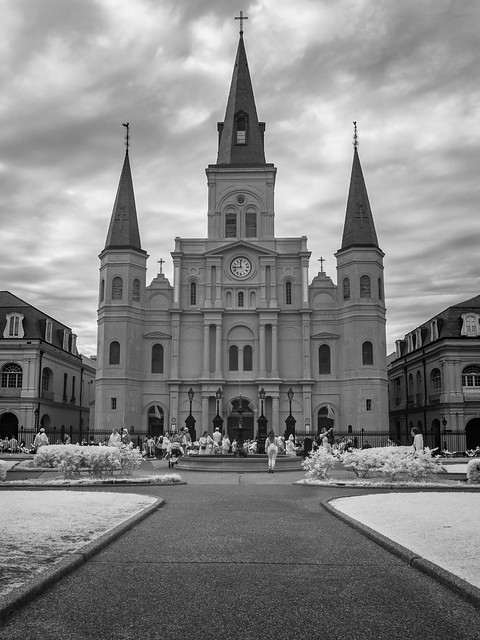
From there I walked back over to the St. Louis Cathedral, which was surrounded by a crowd of people. We were there on a busy Saturday afternoon, and the park and streets around it were filled with people.
P3180123-3

Directly in front of the cathedral, dozens of people stood and watched a street-performer. But off to the side, with no crowd around him, was a street preacher yelling into a microphone. They were joined by other tourists trying to pass by and several pigeons looking for a meal.
IMG_4006-2

The doors to the church were open, and I ducked inside. The heavy wooden doors, along with a recording of choir music, helped to dampen the sounds from the street outside.

IMG_4019

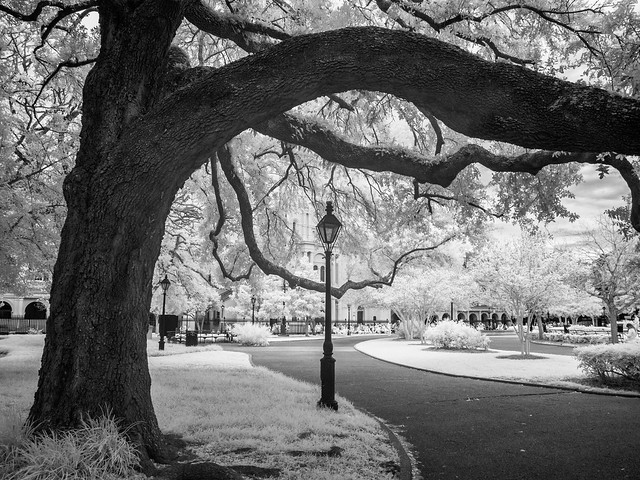
Jackson Square sits on the highest ground in the city, so the park and the cathedral did not see any flooding during Hurricane Katrina. The hurricane did cause some damage to the cathedral - the high winds punctured a hole in the roof, resulting in some water damage to the pipe organ. And two large oak trees behind the church were toppled.

IMG_4022

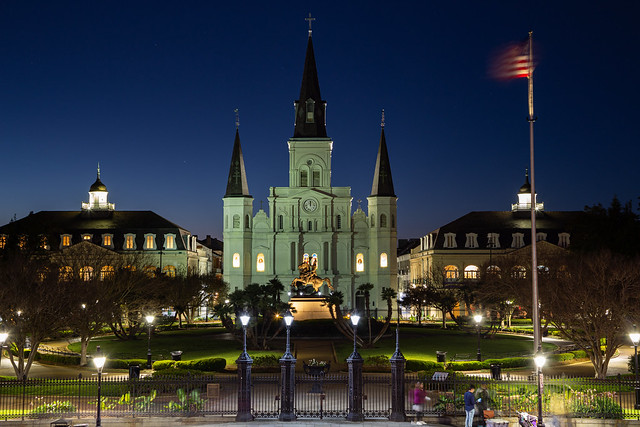
The next night I headed back out to Jackson Square after sunset to try to get a few pictures. I headed over to the walkway across from the square that provides a nice overlook to the mighty Mississippi River. In the distance are the twin spans of the Crescent City Connection.

IMG_4142

This was on a Sunday evening, and it was much quieter when compared to the night before. For awhile, I was the only person at the overlook. Occasionally I'd be joined by some tour groups or people stopping to eat beignets that they just got from Cafe Du Monde.
IMG_4167-3

IMG_4176

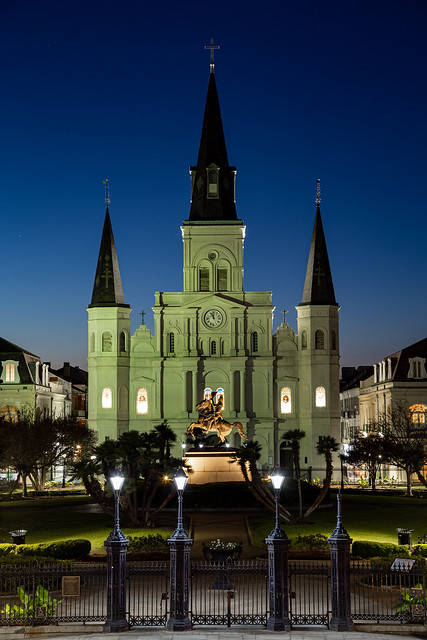
And the view from the front of the cathedral, after the street performers, preachers, tarot card readers, artists and voodoo doll sellers had gone home for the night.
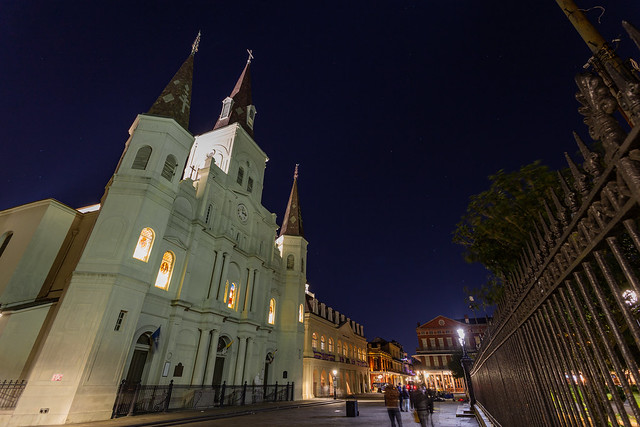
IMG_4190-2

And one last shot, of the Pontalba Building. This was taken in a quiet moment between two separate ghost tours walking by.
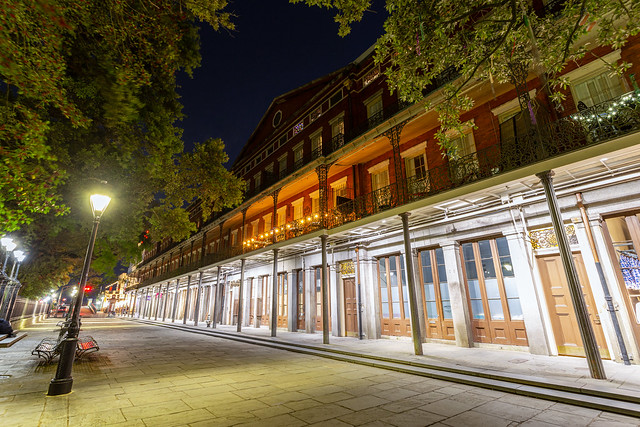
IMG_4198-Edit

Thursday, April 6, 2023

The Tornado Down The Street

Last Friday started out as just another normal Friday. I was working from home, while my wife and our two kids were at their respective schools/daycare. It had been a fairly quiet day, apart from the snoring of our dogs as I sat by the work computer. But the weather forecast had predicted there might be severe weather, and this time they were 100% correct.

Around 2:00 the tornado sirens started going off. So of course, I went outside to have a look. But I was also listening to a live broadcast from KTHV on my phone, and they were talking about a possible large tornado that was moving through the far-western reaches of Little Rock. I headed inside and gathered the dogs, and then hurried into our safe spot. It was there that I received a scary notification on my phone, that stated: "Emergency Alert. National Weather Service: TORNADO EMERGENCY until 3:15 PM CDT. Tornado spotted in this area. This is a life-threatening situation. Take shelter now in a basement or interior room on the lowest floor of a sturdy building. If you are outdoors, in a mobile home, or in a vehicle move to the closest substantial shelter and protect yourself from flying debris."

The dogs and I sat in the closet as the lights flickered a few times, and then we sat in darkness as the electricity went out. The live broadcast I was watching on my phone stopped, and I couldn't get it to restart. I guess because the oncoming tornado took out the cell phone towers.

As we sat in the dark, the storm outside raged on. I heard nothing but heavy rain hitting the house, and tried to get any updates. My phone would still get texts, and what I got was disturbing. In a panic, my Sister-In-Law wrote that the meteorologists on KATV said that the storms had passed over both Baptist Hospital (which is right next to Elliott's daycare) and through our neighborhood.

The tornado turned out to be an EF-3 rated tornado with winds over 165 miles an hour, which touched down in Little Rock and left a 32 mile-wide path of destruction that stretched across the city and then into North Little Rock, Sherwood and Jacksonville. Our neighborhood was indeed hit hard by the storm. But when I stepped outside I was shocked. Somehow, our house was fine. Somehow, there was no damage. The storm didn't even knock limbs from the trees. The storm didn't even budge Jonah's trampoline in our backyard.

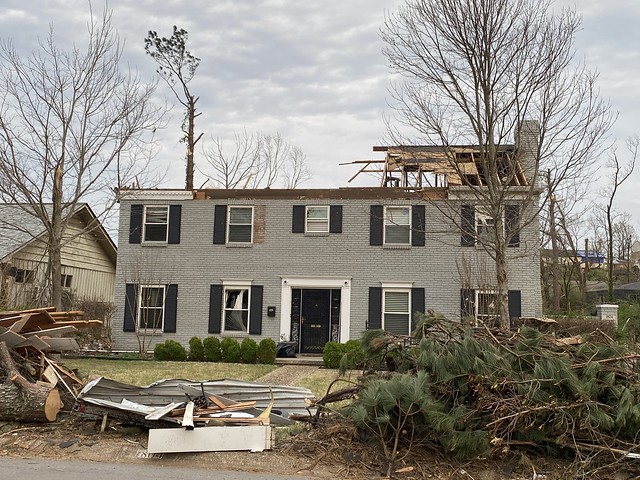
But just down the road, things were tragically different. The rampaging tornado ripped the roof off of houses, toppled trees and demolished buildings. There was so much destruction. In an instant, so many people's lives were changed. I stood outside, and listened as the tornado siren was replaced by the wail of ambulance, fire and police sirens that lasted for hours.

Caroline picked up the kids, who were both OK. The tornado knocked out power at Elliott's daycare but they didn't get any damage. Jonah's school wasn't in the path of the storm, but they had everyone shelter in place. Caroline works at a school, and she was on tornado duty while the sirens were going off. She had to keep the kids calm, and then had to remain calm herself while receiving texts saying that our neighborhood was in the path of the storm. It took her almost three hours to make it home, because so many of the streets around us were blocked by debris or rescue vehicles. Since the power here was going to be out for awhile, we packed up the kids and some supplies and drove off to Searcy to stay with family.

On Sunday, I drove back to Little Rock to check on the house and to get a few things. Along the way I passed by the area that was damaged by the tornado, and it was emotionally devastating to see the damage in person. The grocery store by our house had significant damage. The great little hibachi restaurant next door to it was gone. Our bank took damage. People we know in our neighborhood lost their houses. Others had severe roof damage. I feel guilty still that we were ok while others lost so much. The tornado took a path with little concern or care for the people or places in its way.

I took a few pictures with my phone, but they don't really convey the damage caused by the tornado.

Untitled

Untitled

Untitled

It took several days, but our power has been restored. It's the first step in things getting back to normal, although that path will be long one for so many people.

Untitled

I was hesitant to take these photos, and especially to post them. I'm heartbroken for those who lost their homes, especially since ours was spared the wrath of the storm. Since Friday I've lost sleep while thinking about what could have been. What if the tornado had hit Elliott's daycare? Or Jonah's school? What it the tornado hit our house? My sympathies go out to all the people who are currently living through everyone else's worst case scenarios.

Wednesday, March 15, 2023

Idlewild

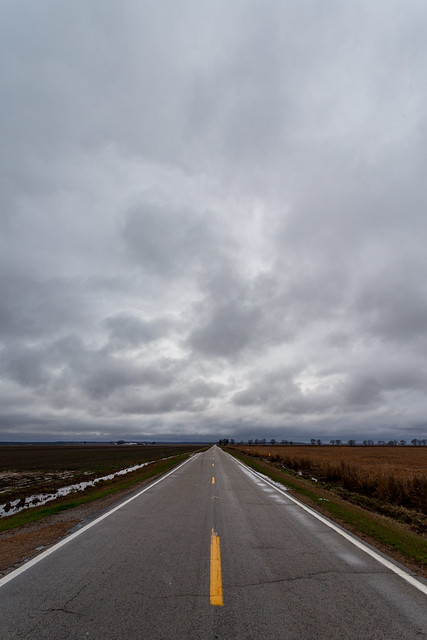
After taking pictures in Clarendon (as seen in the previous post in this little blog), I needed to head on towards home. I hurried along, which meant driving too slow while keeping an eye out for things to take picture of. Luckily there wasn't too much traffic when I pulled over to get this show of the low storm clouds streaming above the lonely Delta roads.

IMG_3678

And then I drove by the old Idlewild School and slammed on the breaks. I wasn't expecting to stop here, since I had just taken a few pictures of this old building a few weeks ago. But the recent heavy rains had formed a giant puddle, which made a perfect reflection of the old school that was built in 1921.

IMG_3722-2

Monday, March 13, 2023

Clarendon

The White River starts out in the Ozarks, near the same spot that the Buffalo River begins. The White flows through the mountains into Missouri, then curves and drops back down into Arkansas. From there it flow about 300 miles until it finally empties into the Mississippi River. Several prominent cities sit along the banks of the White, including the old town of Clarendon.

French settlers moved into the area that would become Clarendon in 1799, building cabins near the spot where the Cache River flows into the White. The town grew in the 1820s when the Military Road (which was built to connect Little Rock and Memphis) was built through Clarendon. In 1828 a ferry crossing was established, along with the first post office. The town was officially incorporated in 1859, just in time for it to be an important location during the Civil War. The White River was a significant transportation artery during the war, and there were several fights and skirmishes that took place around the town. The fighting ultimately resulted in most of the town being burned in 1864, destroying most the buildings in the city.

After the war, Clarendon became a stop on the St. Louis Southwestern Railway (a rail bridge built in 1931 still sees rail traffic over the White River). The town became prosperous, seeing construction of a baseball factory, a box factory, and a button factory that produced buttons made from mussel shells that were found in the river. But Clarendon's location along the White River was costly, as it was the victim of several large floods. The Great Flood of 1927 broke through the levee in Clarendon, inundating the town under several feet of water.

The modern Delta economy hasn't been too kind on the town as well. In recent years, Clarendon has lost many of its historical buildings and structures. It was sad to drive into Clarendon to see the changes. Gone was the old Hwy. 79, which was built in 1931. It was replaced by a new and boring span. The old bridge was blown up in a blast of dynamite, and there is no trace that it was once there.

Clarendon

Also gone is the old Bondi Brothers Building, which stood by the courthouse and was built in 1904.

IMG_8956-3

But there are still lots of historic buildings that are still standing in Clarendon. Including the old Midland Station, a rail depot that was built in 1912 for the Arkansas Midland Railroad (which once ran between Little Rock and Helena). The station has been added to the National Register of Historic Places, although it looks like it's mostly abandoned now.

IMG_3585

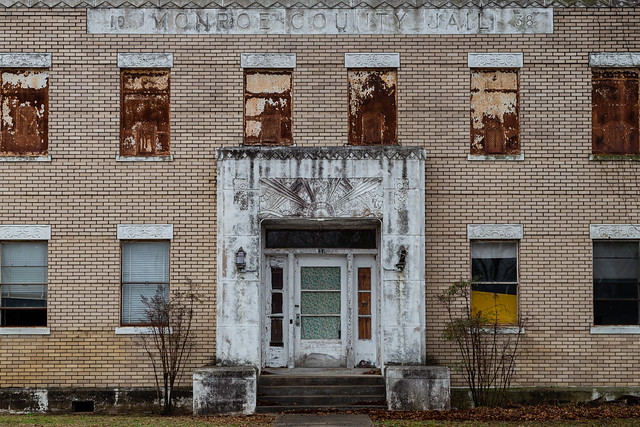
Next to the courthouse is the old Monroe County Jail, which was built in 1938. It also looks like its abandoned, or maybe just used for storage. I'd love to be able to get inside to take pictures.

IMG_3593

One of the most prominent buildings in Clarendon is the Monroe County Courthouse. It was built in 1911 in the Italian Renaissance Revival style, and it easily ranks as one of the prettiest courthouses in Arkansas. During the Great Flood of 1927, the citizens of Clarendon took shelter in the upper floors of the courthouse. The flood waters were so deep that rescue workers floated boats through the hallways on the first floor.

IMG_3625-2

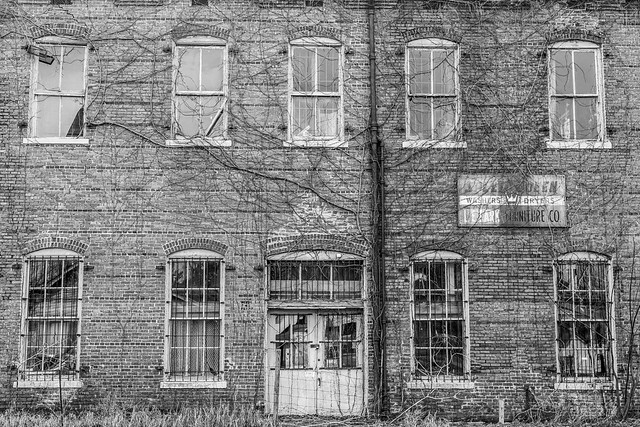
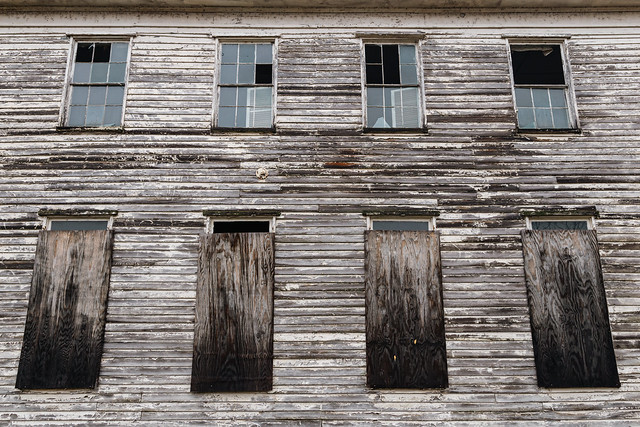
The buildings across the street from the courthouse are all mostly abandoned, and unfortunately seem to be in rough shape.

IMG_3633-3

IMG_3639

IMG_3598

IMG_3601

Just a few blocks away is the old Cumberland Presbyterian Church, which was built in 1869 and was one of the first churches to rebuild in Clarendon after the town was burned during the Civil War. The church was in use until the 1920s, when it was taken over by the Masonic Lodge. It was used for meetings and as a community meeting center and as a library. In the 1960s it was almost demolished, but ended up being donated to the Boy Scouts. Not sure if the Boy Scouts are taking care of it still, since it doesn't seem like it's been looked after in awhile. 

IMG_3661

IMG_3649

Tuesday, March 7, 2023

Back To The Delta

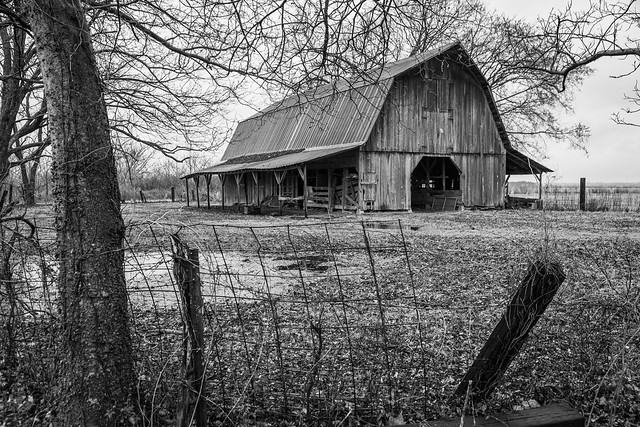
It was a cold and rainy Saturday when I drove off towards the Arkansas Delta. It probably wasn't the most ideal traveling conditions, but I hoped that it would make for some moody photographs. I first drove through the small town of Scott, and pulled over by this old barn. My shoes sank into the wet and muddy ground with an audible squelch as I walked over to take this picture:

IMG_3441

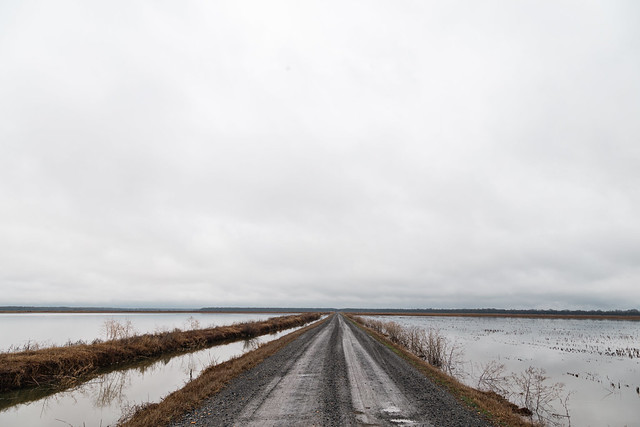
It had been pouring rain all day, and there was water everywhere. The ditches and fields were flooded in places, including this pecan tree orchard near Keo.

IMG_3461

And the fields on the right were flooded in this shot, the waters home to several ducks.

IMG_3478

Heading up the road I tried to get a view of a bunch of different silos, reflected in the murky waters as the heavy and forlorn clouds drifted above.

IMG_3525-2

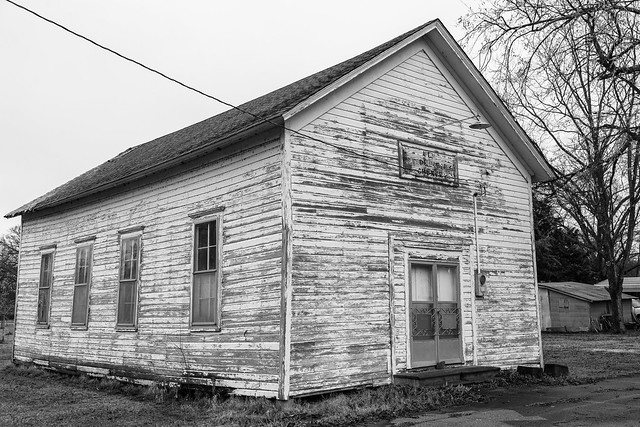
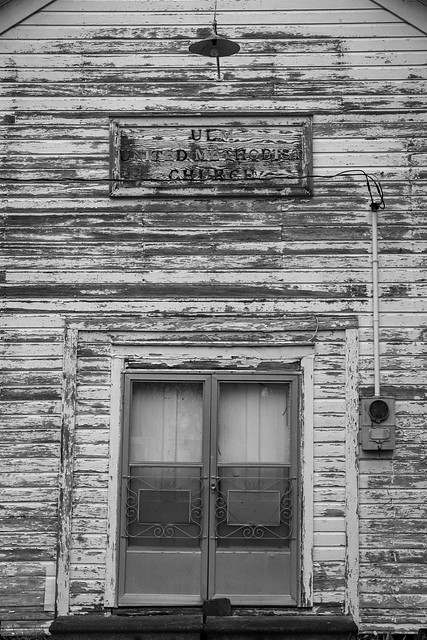
I headed further east, and drove through the small town of Ulm. The town was first settled in the 1880s by German immigrants, who named it after their former home city of Ulm in Bavaria. The town became a stop along the St. Louis Southwestern Railway, which ran across the state from Texarkana to St. Francis. The town now has a population of about 200 people, and has some interesting old buildings. This is the old Ulm Methodist Church:

IMG_3552

IMG_3548-2

There were a few abandoned homes here as well.

IMG_3541

IMG_3562

And this one kinda breaks my heart. If you look at the Google Street View of Ulm, you'll find this house as it was in 2014. The house is well-maintained, with an American flag flying on the porch. The yard is filled with a happy and vibrant selection of plants, and decorated with various knickknacks and bird baths. But on this rainy day in 2023 the house was abandoned. The yard was overgrown with brown weeds, with a crooked "Price Reduced" sign nearly hidden by a bush. I don't know what happened here, but we can guess. I can easily imagine a scenario, where the original owners were elderly, but they loved and dedicated their lives to this house and its yard. But when they sadly passed on, and there was no one to take care of the house or the property. It was put up for sale, but there were no takers. And then time passed along, as it always does.

IMG_3546

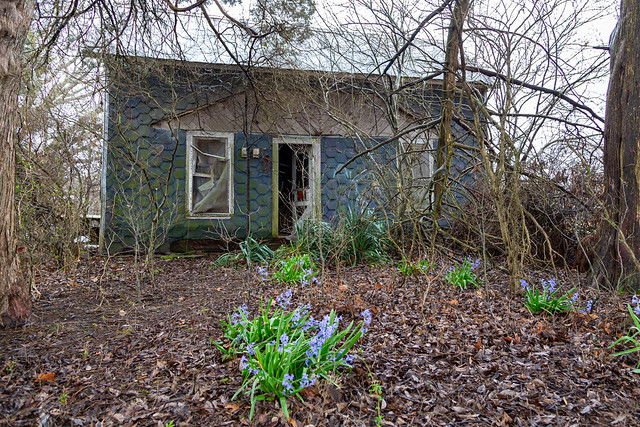
Just north of Ulm, along a bumpy gravel road, was this abandoned home. It was interesting find thanks to the combination of blue stone siding, and the selection of purple flowers growing in what used to be the front yard.

IMG_3569

From there I got back on the main road and drove towards Clarendon. Pictures from there coming soon....