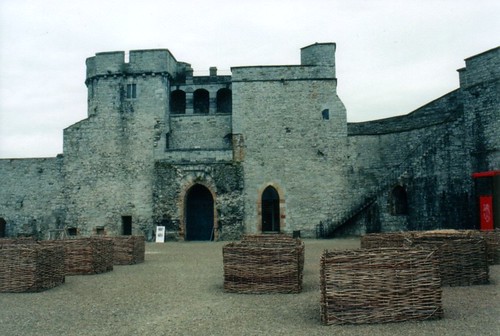
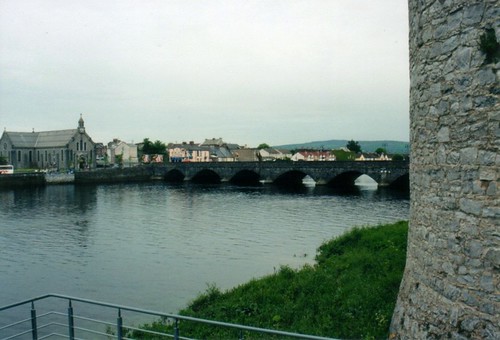
Wednesday, May 27, 2009

Rainy Sunday (and a partly cloudy Wednesday)

On Sunday it poured down rain again, a massive storm came through and it was rainy all day. This must have been annoying to the people organizing Riverfest - the big outdoor festival that runs every Memorial Day weekend in downtown Little Rock. I didn't go to any of the concerts this year, but I always look forward to getting a shot of the fireworks that go off at the end of the festival. But it was raining so hard, it looked like they might get rained out.

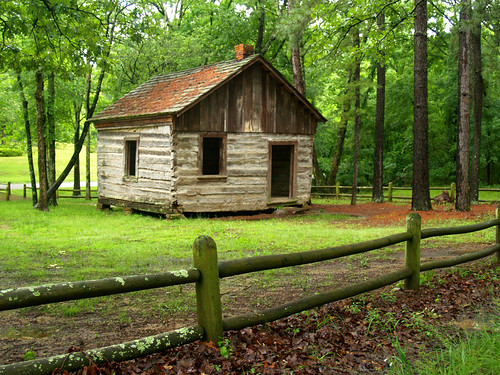
With some time to kill before the fireworks would go off, I drove around town looking for something to get pictures of. I stopped at Burns Park, and got out in the rain for a few pictures. Here's another shot of the old cabin in the park, which was part of an old homesite built back before the Civil War.
P5245492

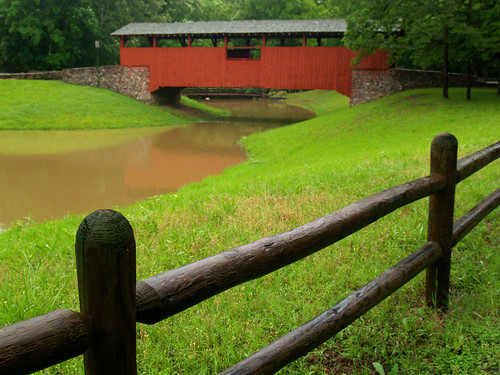
And the nearby covered bridge:
P5245497

There was angle of the bridge that I saw and tried to get a decent shot of, but it just didn't look right in the rainy weather. I filed it away as something I'd have to try again soon.

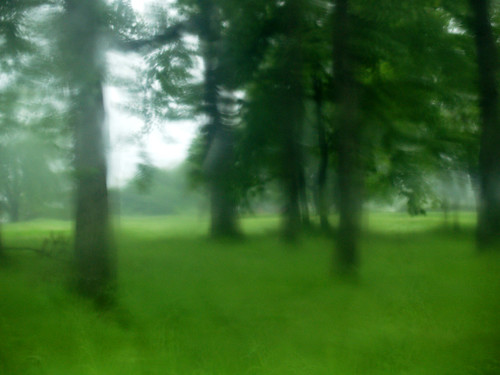
I drove around other parts of Burns Park, and it was amazed that several places along the river were under water. Wow, we had a lot of rain that day This was taken looking out the window of the car - trying to be all artsy.
P5245508

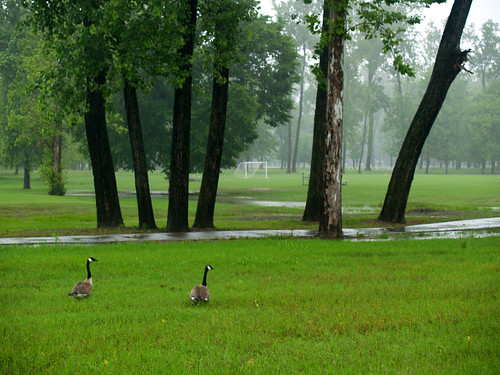
That shot was taken while driving around the soccer fields in the park. Not surprisingly, there wasn't anyone out playing. There were a few geese out and about.
P5245511

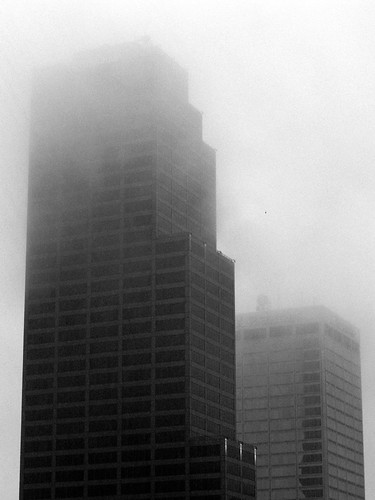
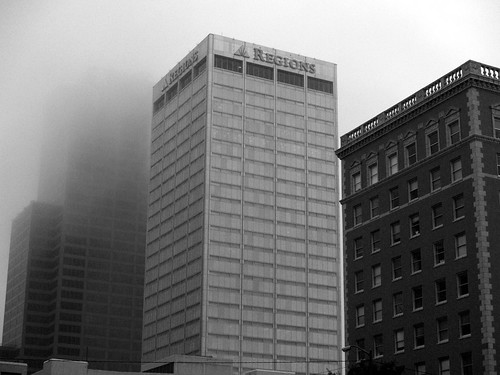
From there I drove into downtown Little Rock, which would normally be packed with thousands of people for Riverfest. But the rain seemed to have kept most people at home. The top of the buildings were shrouded in fog, and I again wondered if they would bother shooting off the fireworks in the rain.
P5245513 copy

P5245514 copy

I drove back home and checked the internet to see what the fireworks plan was. Most of the concerts scheduled for that day were postponed, but the fireworks were still set to go off - although an hour earlier than normal. So again I drove to downtown, and set up at the spot I've used the past few years for fireworks pictures. It's a good vantage point, where the fireworks pop right in between the buildings. But with the fog and rainy weather, it didn't look like it would work that night. I wasn't sure if the fireworks would even show through the fog, and began to realize that it was mistake to set up there. It didn't help that it was pouring down rain and very windy.

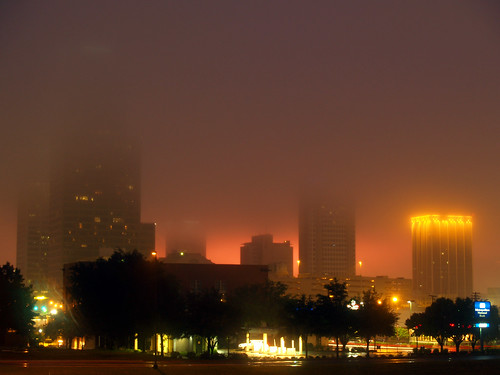
At 8:30 the fireworks began, and I never saw them. Sure enough I could hear them, but the fog was so thick that all I saw was just colored clouds from the fireworks. This is the best shot I got of the fireworks - and you can't even tell they were shooting off fireworks.
P5245529

I should have found a vantage point closer to the river, where you could actually see the fireworks. But I gave up and drove home, while the fireworks were still going on. I saw that even right at the river, the fireworks would shoot up and then disappear into the low clouds. The Riverfest people should have really postponed the fireworks until Monday night.

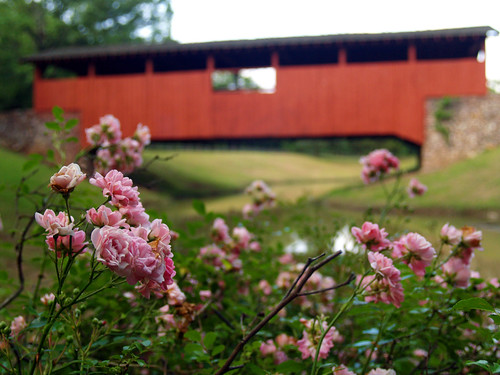
But earlier today I drove back out to Burns Park for another try at getting a few shots at the covered bridge. On Sunday I saw a neat rose bush growing near the bridge, but the rain was weighing the flowers down. I wanted to try it in some drier weather, and with maybe some better skies in the background. It rained again earlier today, but I drove on out there anyways. I had hoped for a bit of a blue sky in the background, but it was still a bit cloudy in the background and it turned out just as another white sky. Oh well.
P5275614

Monday, May 25, 2009

Ireland (10 years ago) Part 2

Monday, May 24, 1999:
We left Dublin in the morning and headed south to County Wicklow. Our destination that day was Glendalough, which would be one of my favorite stops on the trip.

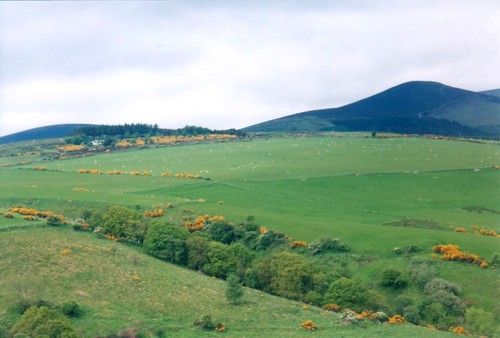
This was taken from the bus window, showing some of the scenery we were driving through. The little white dots here are sheep.
County Wicklow

Glendalough is an "Early Medieval monastic settlement founded in the 6th century by St Kevin, a hermit priest." The location here was sought after by St. Kelvin because of its remoteness, but the site grew in such popularity that it soon became one of the main religious universities in Ireland. It was sacked several times by Vikings, but began to decline after it was partially destroyed by English troops in 1398. Now, a collection of old ruins lays in the valley, nestled by the shores of two lakes. The buildings here are thought to have been built between the 8th and 12th centuries, and were restored in the 1870s.

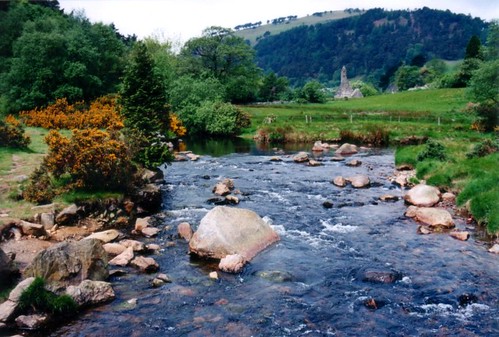
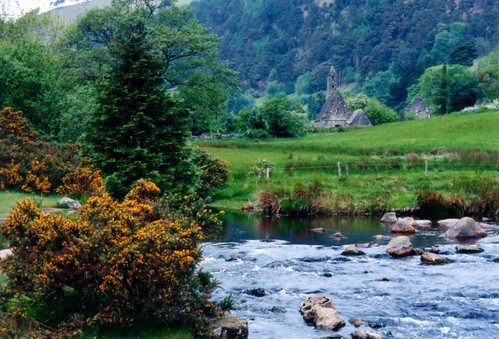
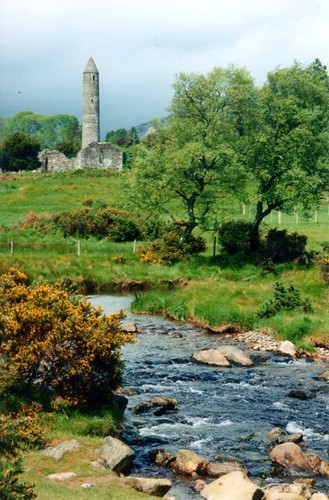
Here is the view of the creek, with the ruins popping up in the distance.
Glendalough

The name comes from the Irish Gleann Dá Loch, meaning "Glen of Two Lakes."
Glendalough

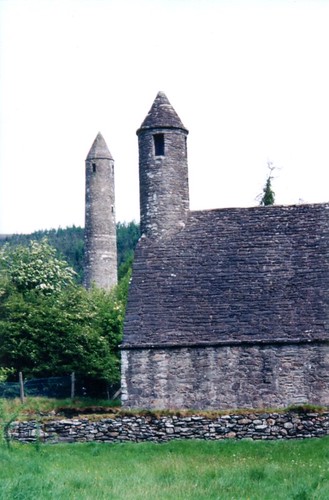
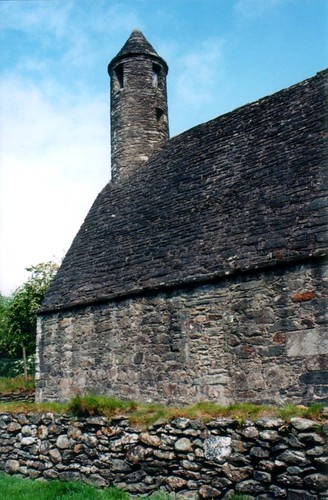
A closer view, with St. Kevin's Kitchen (built in the 11th century or earlier) and the round tower.
Glendalough

St. Kevin's Kitchen is actually an old church, but the belfry here looks like a chimney and it was nicknamed as the kitchen.
St. Kevin's Kitchen

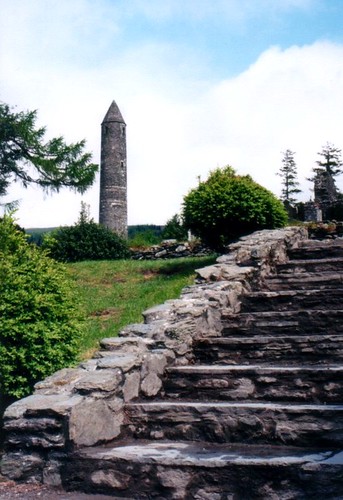
And a view of some old steps leading up towards the round tower. There are several towers like this across Ireland, and this one has been called one of the finest in the country. It was thought the round towers served as a defensive measure. A lookout would sit at the top of the tower and warn of any invading attackers (like the Vikings). Then all the valuables nearby would be stashed in the tower, with the ladder to the door pulled away (the door sat way above ground). That theory has been questioned, and the new explanation was that these towers were built as a belltower.
Glendaough round tower

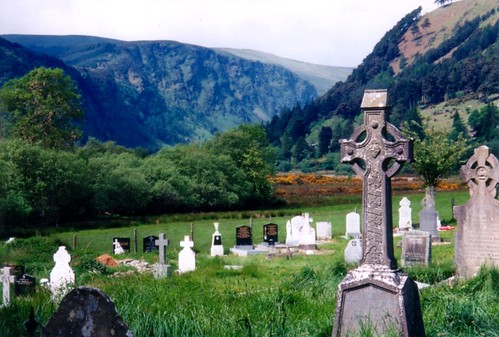
The cemetery at Glendalough is situated with a scenic view over the valley.
Glendalough cemetery

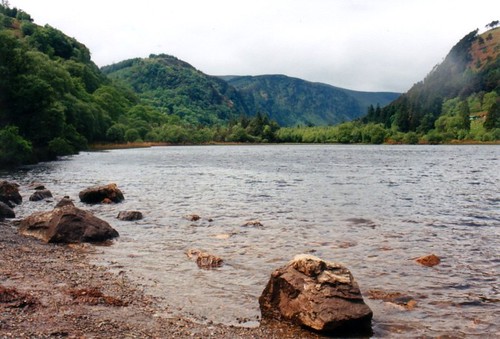
The ruins sit near the edge of two sparkling lakes. With some free time to explore the area, we had two options - look around the visitor center, or take the path that went deep into the thick forest by the lakes. Of course I chose to take the walk, along with only one other person from our group.

Ireland is quite famous for its rain, and it had been lightly drizzling just about every day we were out there. The weather was nice this day and decided to wait until we were walking way out in the woods before it sent down buckets of rain. We were quickly soaked, along with scores of other people caught out along the trail. We all stood under some trees, trying to get some shelter from the storm. We were next to a group of Irish school kids, who were running around. Two girls walked by us and let out a polite “hello” in a neat little Irish accent. Me and the other Arkansas student responded with a “Hi,” which with our southern accents seemed to stretch out into something like “hiiiiiiiiiiii.” They both looked at us oddly, and one of them asked where were from. “No!” The other yelled, “can we guess?” “Um, ok sure.” So we stood there while they tried to determine the location of our wacky accent. “South Africa?” said the first girl. Her friend turned to her with a dumbfounded look. “South Africa? You idiot that’s an American accent!” We told her she was right, and they ran off.

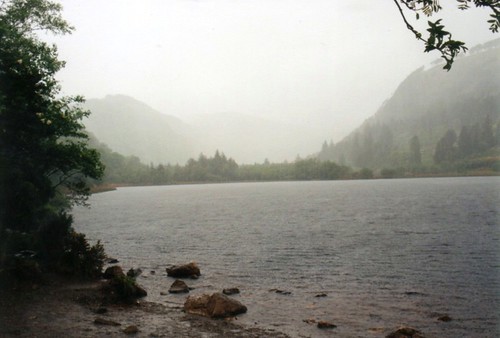
This is the view of one of the lakes, during the heavy downpour.
Glendalough

The storm didn’t stick around long, and the views along the lakes were great in the clearing weather. Sorry these pictures aren’t great quality, they’re old scans of 10 year old prints. This is the same lake, after the storm cleared:
Glendalough

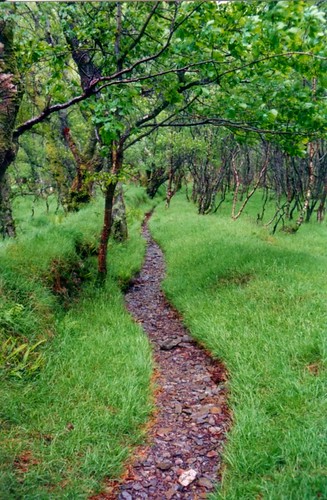
After the rain stopped, the forest along the trail took on an even more beautiful shade of green. The trees there lived with a certain sense of history, and it was amazing to think of how many people have followed this trail throughout the centuries. This small path took off from the main trail, heading off into the woods. This is one of my favorite shots from the trip:
Glendalough path
I like to think that this path was built by a Saint, and has been in use for centuries. Of course it probably leads to something like a maintenance shed, but we didn't have time to see where it went.

We were drenched when we made it back to the visitor center, but we had taken too long on the trail and the rest of our group was waiting for us at the bus. I stopped to get one last shot of Glendalough:
Glendalough

On the way out we stopped at this place called “The Meeting of the Waters,” and ate at a little pub perched right at the spot where the rivers Avonmore and Avonbeg converge to form the River Avoca. It was nice enough spot, and is where the Irish poet Thomas Moore composed a poem called “the meeting of the waters.” Here is the poem:
THERE is not in the wide world a valley so sweet
As that vale in whose bosom the bright waters meet;
Oh! the last rays of feeling and life must depart,
Ere the bloom of that valley shall fade from my heart.

Yet it was not that nature had shed o’er the scene
Her purest of crystal and brightest of green;
’Twas not her soft magic of streamlet or hill,
Oh! no—it was something more exquisite still.

’Twas that friends, the beloved of my bosom, were near,
Who made every dear scene of enchantment more dear,
And who felt how the best charms of nature improve,
When we see them reflected from looks that we love.

Sweet vale of Avoca! how calm could I rest
In thy bosom of shade, with the friends I love best,
Where the storms that we feel in this cold world should cease,
And our hearts, like thy waters, be mingled in peace.


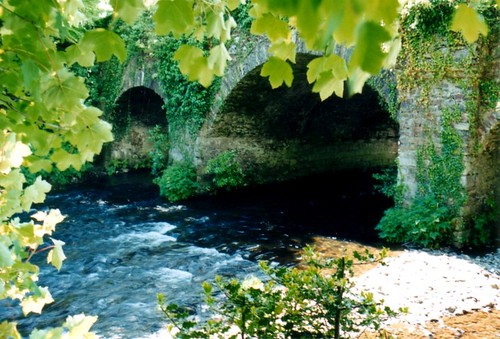
It's a nice poem, and awesome that he mentioned the word "bosom" a lot in it. This is the view from the Meeting of the Waters, of the River Avonbeg flowing under a bridge just before it meets the other waters.
Meeting of the Waters

We stayed with host families all but two nights while we were in Ireland. This night we got to stay in a fancy hotel that was also a castle - Kinnity Castle, near the town of Birr. We were supposed to have a lot more time to stay there, but our delay in reaching Ireland ate up the time that could have been spent horseback riding, hiking or sitting at the castle bar. We got there in the evening, and nearly just had enough time to check into our rooms (which were huge – the bed in my room was probably the size of the entire bedroom at our host family’s place in Dublin). We were treated to a fine dinner that night – I had something with salmon in it. And then we retreated to the comforts of the bar, and I don’t remember much else of the night after that. Part of that night came back to haunt me when I got home though. I ended up drunk dialing my brother, who was in law school in Fayetteville at the time. I left an embarrassingly intoxicated message on his answering machine, which he was all too happy to replay to the family and all his friends. He still has it, and will gladly play it on request.

Tuesday, May 25, 1999:
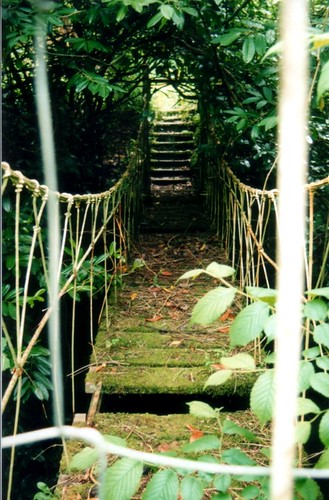
It was rough the next morning, along with the hangover I was also catching a cold. To help clear the cobwebs from my head, I took a nice walk around the castle. It was located next to a creek, that was surrounded by a thick forest. It did just about look like someplace you would expect a leprechaun to jump out of it. I walked by this old bridge, which unfortunately was gated shut:
Near Kinnitty Castle

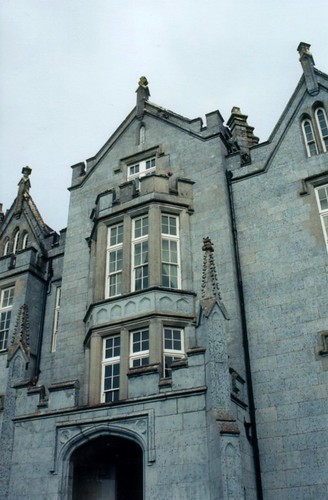
This is the front of the Kinnity Castle:
Kinnity Castle

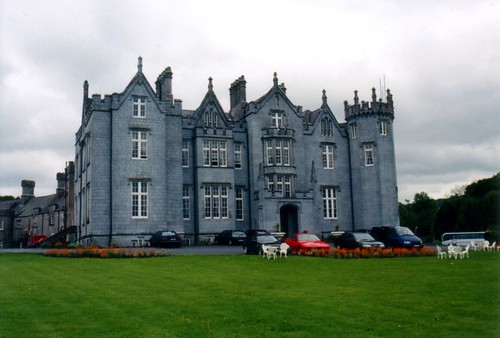
And a wide shot of the castle. To the far right of the shot you can see the tour bus that took us across Ireland.
Kinnitty Castle
Before I get any farther I want to mention our bus driver. He was extremely patient, and didn't seem to mind driving around a bunch of wacky Americans. But right above the driver's seat in the bus was a huge bottle of whiskey. We noticed that the amount of whiskey in the bottle got lower and lower each day of the trip. He was a nice enough guy, I talked to him a few times about photography. He said that he would go out of his way to show some cool spots that would make for some neat pictures - thanks!

And back to the story - my head was still a bit stuffy, so on the bus I took some cold medicine that one of my friends let me have. It was strong stuff, and it made me loopy. I don’t remember much of our stop in Limerick, or the tour of the castle.
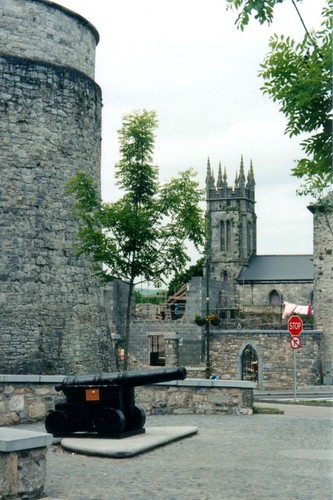
This is the view outside of King John's Castle, with the tower of St. Mary's Cathedral looming overhead.
Limerick

And a shot taken during the tour, from inside the castle. King John's Castle was founded sometime around 1200.
Inside King John's Castle

I do remember being in the castle gift shop looking at some cheesy postcards, thinking that they were the most hilarious things in the world. I would take them off the rack and go and show them to people, giggling the entire time. Then, quite suddenly, the medicine wore off and I sobered up out of the loony state. I embarrassingly put the post cards back on the rack.

This is the view of the River Shannon, flowing past the castle and Limerick.
Limerick

We drove on to our next destination, the city of Tralee along the western coast of Ireland. We met up with a new host family, who were disappointed with our choice of evening activities. We had plans (or well the professors made the plans), to attend a local play that night. The host family thought that we would have a much better time at the pub with them watching the big soccer game that night (Manchester United vs. some team I can't remember now). We didn’t really have a choice, sadly, we still hadn’t gotten our final grades for the class. The host family was absolutely correct though. The play was all in Gaelic, so none of us understood a single word that was spoken. I'm sure that the play had fine performances by gifted actors and had outstanding theatrical production. But it was hard to follow what was going on since none of us understood Gaelic. I ended up sleeping through most of it. The football game would have been a lot more fun.

In Part 3, a tour of the Dingle Peninsula, one of the most beautiful places in Ireland.

Thursday, May 21, 2009

Ireland (10 years ago) Part 1

Exactly ten years ago to the day, I was standing in Dublin, enjoying the start of what would prove to be one of the best trips I have ever taken in my life. I had just finished my sophomore year of college and was on a study abroad trip to Ireland, a country that I fell in love with the second I walked out of the airport. The trip was great, although I am still paying for it - I financed it through student loans, which means I'll be paying it off for the next twenty years or so.

The trip did start off quite disastrously. We met early in the morning on May 19th at the Little Rock airport, luggage and passports in hand. I also brought along the camera and a ton of film. We sat and waited to board the plane, but there was a delay. And then we waited and waited some more. It turned out that one of the engines wasn't working, and the delay meant that we missed our connecting flight in Dallas. The delay stretched on longer, and the airline tried to find a way to move us on. After considering splitting apart our travel party, having one half fly to St. Louis, and the other to Dallas, they finally announced that the plane was fixed and we were ready to go.

Of course the delay totally screwed up the flight plans, putting us hours behind. Our new schedule had us fly to Dallas, and then to New York LaGuardia. There we would take a bus to New York JFK, and then have a long eight hour layover. From there we flew to London, where we had another eight hour layover. Finally, we were able to make the short flight over to Dublin. The double eight hour layovers, along with the hours spent waiting in Little Rock, meant that we arrived in Dublin in the early evening. We were supposed to arrive in the early morning, and our first day of seeing Ireland was gone and wasted.

We met our bus driver, who would be escorting us across the country for the next week or so. He dropped us off in a suburb in northern Dublin, where we would meet our host families. Instead of hotels, we were staying with host families, I guess so we could get better acquainted with the local culture (or to save money). But our host family in Dublin was awesome, the best ones on the trip. It was an old couple (someone's grandparents), who lived in a little flat that looked like it hadn't been updated since the 1970's.

The Grandmother picked us up in her tiny car and whisked us off to their place. They were funny, although a little nervous at first. They said they had never hosted Americans before, and weren't sure what to expect. They said the worst students they hosted were two Italians, who had gotten drunk on red wine and proceeded to throw up all over the house. Luckily for us, and them, neither of us did any throwing up.

Besides providing a place to sleep, the host families had to provide breakfast and dinner. For the several nights that we were in Dublin, our host family prided themselves on serving up what they said was American food - hamburgers and pizza. It was good, but they did give us a big Irish breakfast everyday.

After dinner on the first night, our host family hinted that we should go out and hit some pubs. We were already planning on it, of course, but they wanted us out of the house so they could go to a pub as well. We asked where they were going, and they said we wouldn't like it, since it was an old person's pub. They told us of a few other places, all within walking distance. Then the old grandpa got down on and started to crawl across the kitchen floor, saying this is how we would be making it back home that night! We met up with some of the other students from the trip, and went to one of the pubs. I walked inside, and the pub was playing a U2 song - I really felt like I was in Ireland. Guinness tastes so much better when you have it in Ireland, too.

The next morning we were up and met the bus for the drive to some cool places north of Dublin. The first stop was Newgrange, a Megalithic Passage Tomb that was built around 3200 BC (this makes it older than the Pyramids). Newgrange is famous for what happens every year at the winter solstice. The light from the rising sun passes through a narrow box over the door to the tombs, carrying sunlight into the deep chamber within. This lasts for a whole 17 minutes, each year.
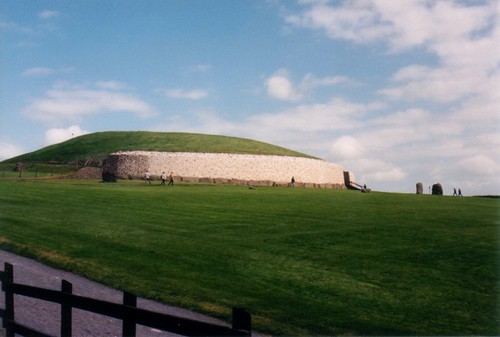
Newgrange

Newgrange overlooks the River Boyne, which was the site of the Battle of the Boyne between King William II and King James II in 1690.
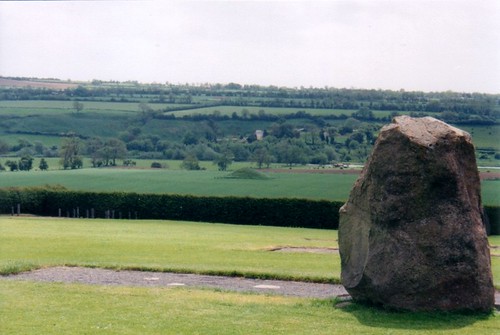
View of the Boyne Valley

We walked past the intricately carved stones that lined the entrance and went into the back of the chamber, deep within Newgrange. It was an awesome place. I have lived in Arkansas my entire life, and it was amazing to see a place that had been around for so long, and had so much history happen right outside of it.

From there we passed through the town of Drogheda, which was founded by the Danes in the year 911.
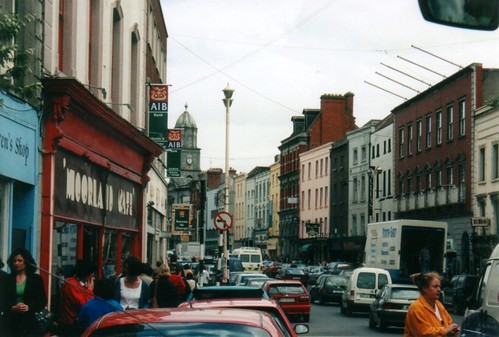
Drogheda

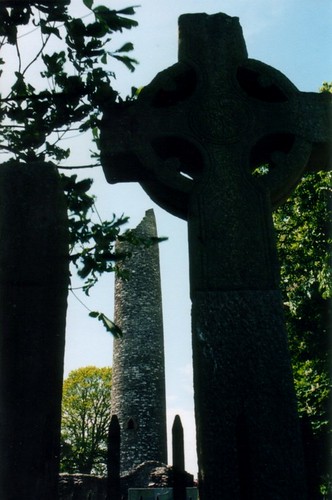
From there we drove up to Monasterboice, the ruins of an old Christian settlement. It was founded in the late 5th century by St. Buite, who died around the year 521. Monasterboice was once an important center for religion and learning, and is dominated by a 35 meter tall high tower.
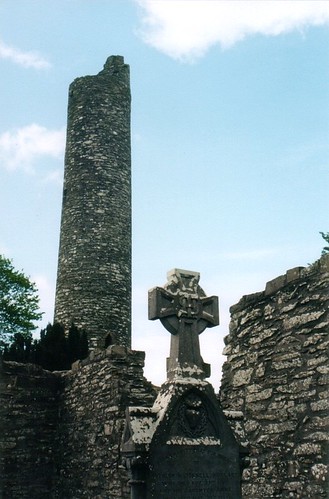
Monasterboice

One of the popular attractions at Monasterboice is Muiredach's High Cross, which is regarded as the finest high cross in all of Ireland. It is named after an abbot, Muiredach mac Domhnaill, who died in 923 and features carvings with scenes from both the Old and New Testaments of the Bible.
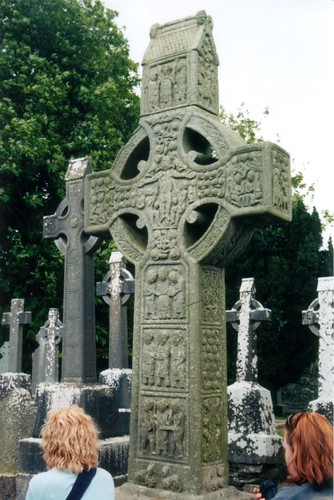
Muiredach's High Cross

One more view from Monasterboice:
Monasterboice

The next stop on our tour of the area was the Hill of Tara, in County Meath. This is a description of the Hill of Tara that I borrowed from the internet:
The Hill of Tara was the seat of the Kings of Ireland until the 6th century. The Hill is also thought to be capital of the Tuatha Dé Danann, pre-Celtic dwellers of Ireland. When the Celts established a seat in the hill, the hill became the place from which the kings of Meath ruled Ireland with godly status. Both the Hill of Tara as a hill and as a capital seems to have political and religious influence, which diminished since St. Patrick's time. A grave was found near the hill that is supposedly that of King Lóegaire, who was said to be the last pagan king of Ireland.
In recent news, a highway may be built within a mile of the Hill, although there is a huge fight for that to happen.

This old church sits near the hill, and now serves as a visitor center.
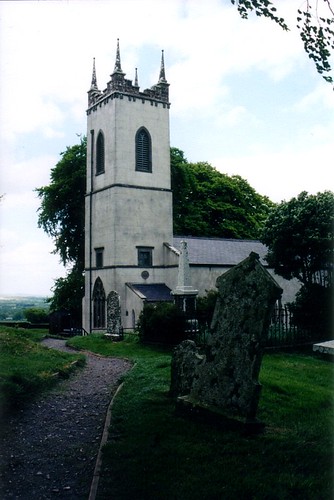
Hill of Tara

There isn't much to the Hill of Tara now, just hints as to what this area must have been like in Celtic times.
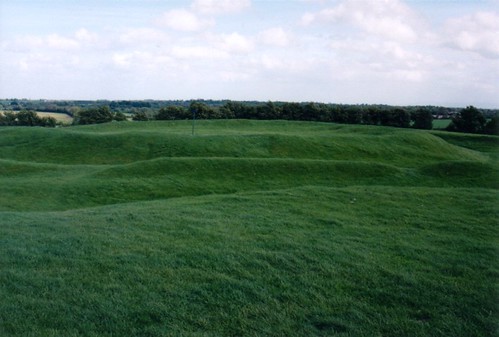
Hill of Tara

At the top of the Hill of Tara sits a circular Iron Age hill fort, known as Ráith na Rig. The most prominent earthworks within are the two linked ringforts known as Teach Chormaic (or Cormac's House). The tour guide asked if any of us were familiar with the "legend of Cormac?," and the class laughed a little and said that there was a Cormack here in the group with them. Well, it turns out that the legend is about a Cormac mac Airt, who was the High King of Ireland. According to wikipedia, "He is probably the most famous of the ancient High Kings, and may have been an authentic historical figure, although many legends have attached themselves to him, and his reign is variously dated as early as the 2nd century and as late as the 4th. He is said to have ruled from Tara, the seat of the High Kings of Ireland, for forty years, and under his rule Tara flourished."

Cormac ruled in Tara for 40 years until he was blinded by a spear in the eye (typical Cormack family luck). A disfigured king wasn't able to rule in Tara, so Cormac stepped down and would later choke to death on a salmon bone. Of course, some histories say this was caused by a curse from a druid after Cormac had converted to Christianity. But I am able to trace back my family history to Ireland, so perhaps I am a long lost descendant to King Cormac?

This is the view of Teach Chormaic, or Cormac's House. Notice the sheep grazing peacefully along the historic hills and fields.
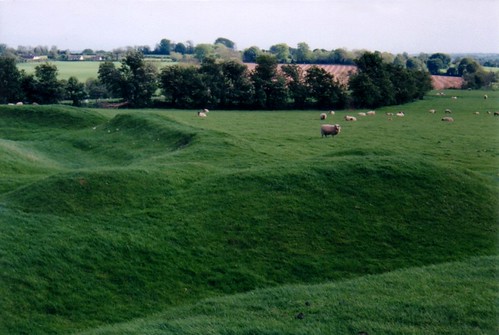
Cormac's Hill

This sign was standing near the Hill of Tara:
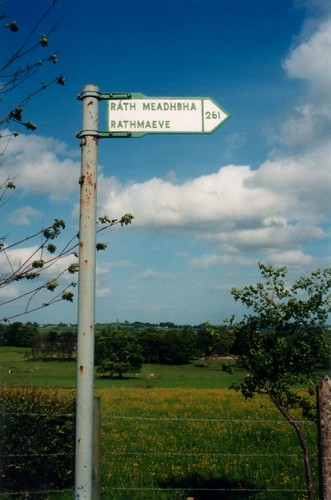
Near the Hill of Tara

From there we traveled back to Dublin, and back to our host family's house. This was the view from in front of their house, in the cozy Dublin suburbs.
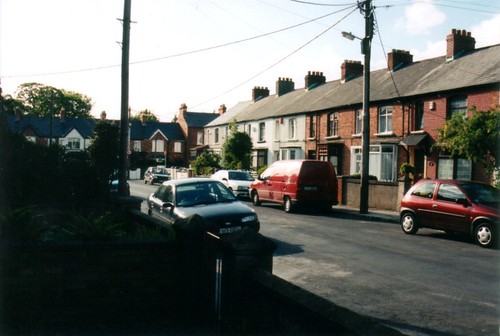
Host family's street, Dublin

After dinner that night we went to a different pub, which we would go back to every night we were in Dublin - Graingers.
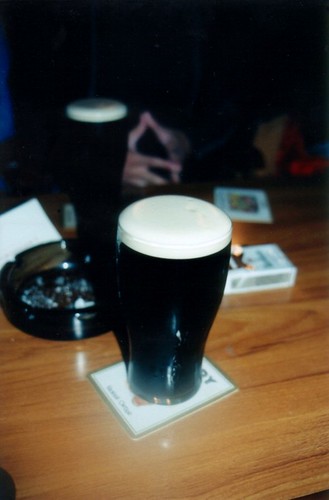
Guinness

The next day we did a tour of Dublin, a beautiful city where I felt right at home. The tour bus cruised through the narrow streets, passing by several historic sights:
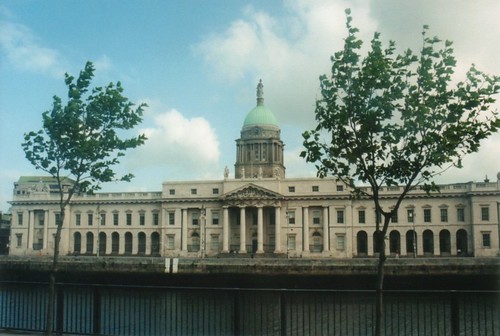
Custom House, Dublin
The Custom House, built in 1791.

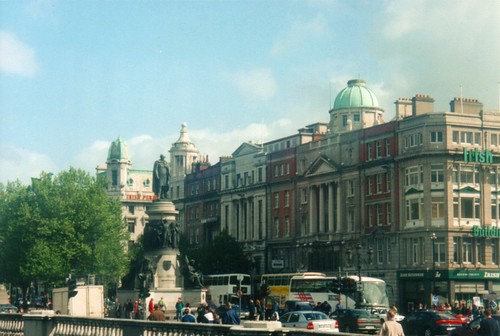
O'Connell Street, Dublin
O'Connell Street.

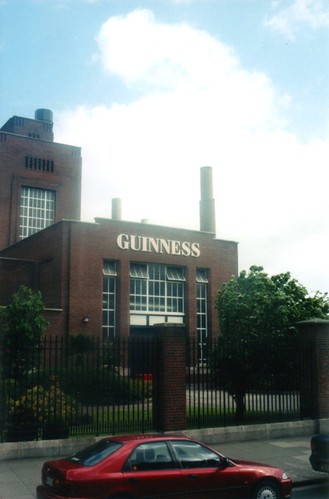
Guinness Brewery
Of course, the Guinness brewery.

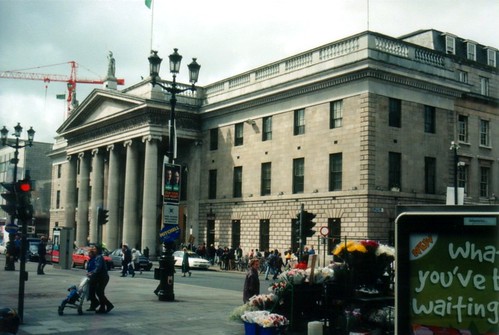
General Post Office, Dublin
The General Post Office, along O'Connell Street. This was the site of the 1916 Easter Rising.

The tourbus let us out at Trinity College, where we went to see the ancient Book of Kells. I was impressed with the amazing Long Room in the Trinity College Library, with walls covered in old books. No photography allowed, however.

From there we had some free time to get lunch, so we explored the area around Trinity College.
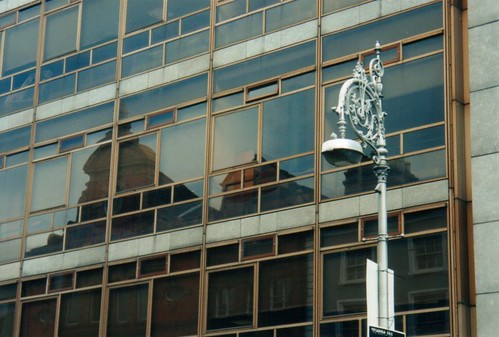
Dublin, near Trinity College

We passed by a few markers set in the concrete that followed the steps of Leopold Bloom in James Joyce's book Ulysses. After the trip I did sit down to read the book, and well, thank goodness for Cliffs Notes or else I would have no idea what was going on! I need to read it again. But this marker shows a point in the book. It says: You're in Dawson Street, Mr. Bloom said. Molesworth Street is opposite. Do you want to cross? There's nothing in the way.
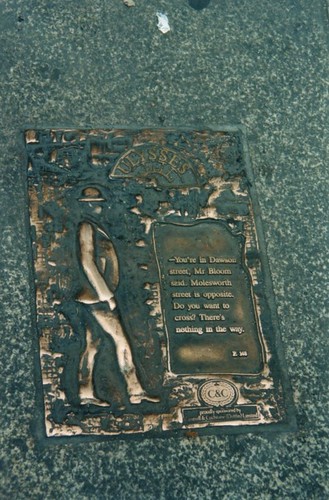
UIysses marker, Dublin

Dublin has some great architecture, it is a great old city to explore.
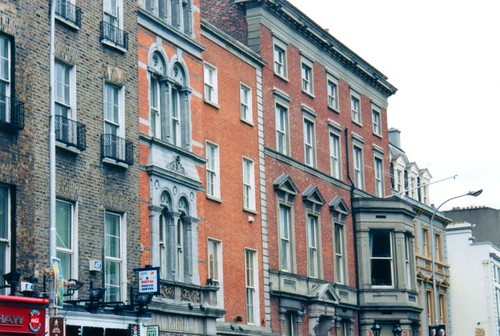
Dublin, near St. Stephen's Green

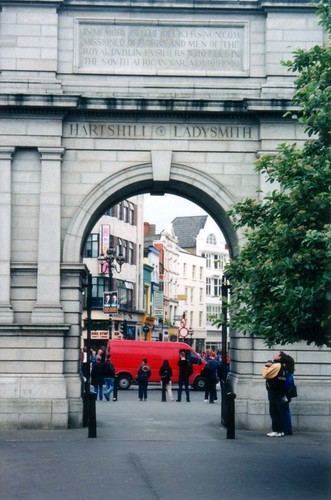
Our next stop was St. Stephen's Green, a neat park. The arch here was built in 1907.
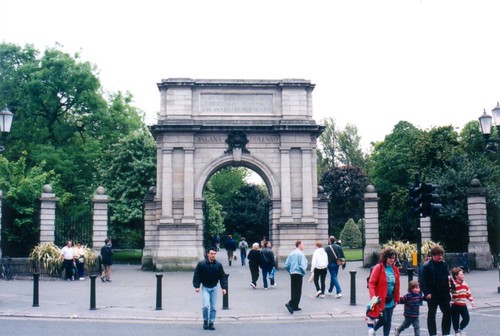
St. Stephen's Green, Dublin

St. Stephen's Green

Our next stop was a visit to the National Museum, located right next to Leinster House, the parliament building for the Republic of Ireland.
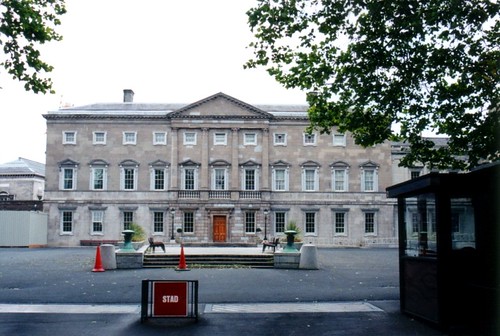
Leinster House, Dublin

After a nice tour of the museum, it was back the host family's house for another home cooked American dinner.

The next day we took the bus on a trip to Kilkenny, and the first stop was Kilkenny Castle, built in the 12th century.
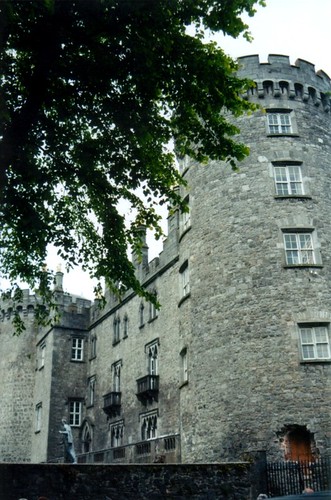
Kilkenny Castle

There wasn't any photography allowed in the castle, and my camera was actually taken away at the front entrance. The inside of the castle was great, especially the Long Gallery that was filled with old tapestries. I got a postcard of it, at least.

After the tour I reunited with the camera and got this view from the castle grounds, looking over the River Nore - with St. Canice's Cathedral and the Kilkenny brewery in the distance.
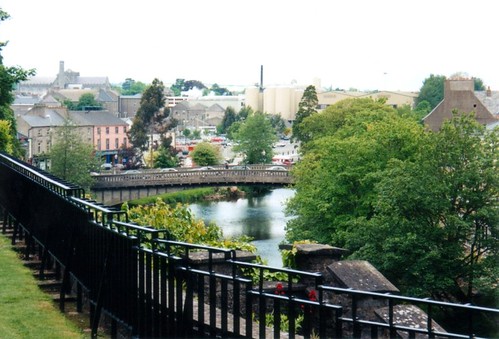
View of Kilkenny from the Castle

This is the view of the formal gardens at the front of the castle:
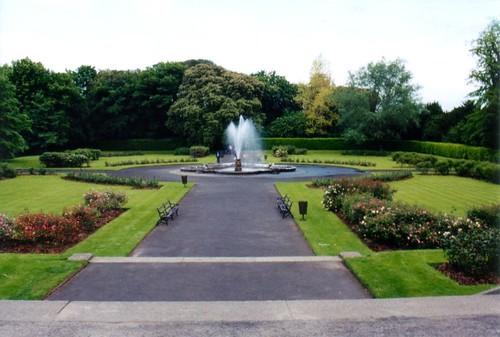
Kilkenny Castle gardens

After the castle we had time to take a lunch and then make our way to St. Canice's Cathedral. After a quick bite to eat, we sat out and explored some of the city. It was a great town, with compact medieval streets.
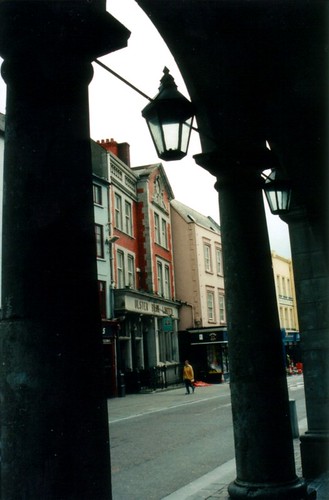
Kilkenny

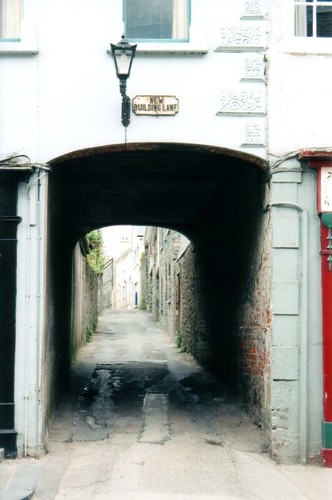
New Building Lane:
New Building Lane

We soon made our way up these old steps to St. Canice's Cathedral.
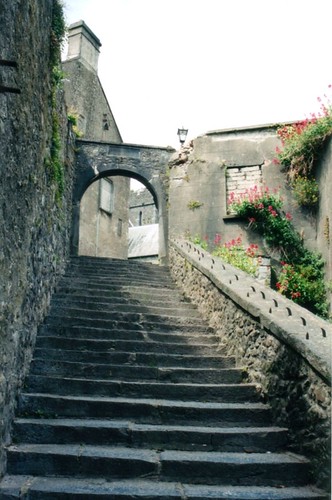
Kilkenny

St. Canice's Cathedral is the second longest medieval cathedral in Ireland. The building was begun in 1197 on the site of an earlier church of St. Canice, Kilkenny's patron saint. The Cathedral suffered during Cromwell's siege when he broke many of its windows and stabled his horses inside. The round tower beside the main building was built in 847 A.D. by O'Carroll, king of Ossory, for the defense and protection of church persons and valuables.
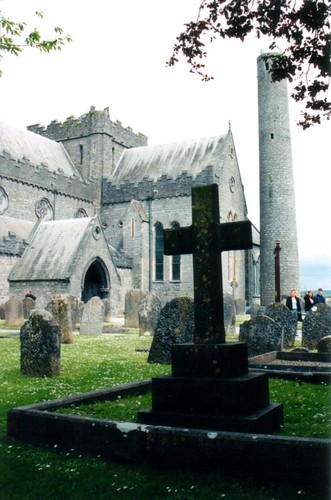
St Canice's Cathedral, Kilkenny

Usually you can climb up to the top of the round tower, but it was closed that day.
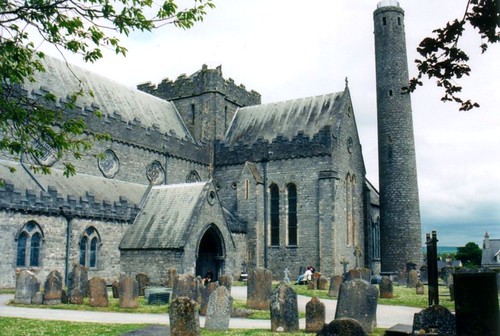
St Canice's Cathedral

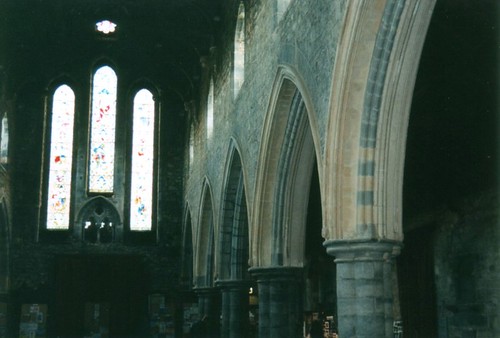
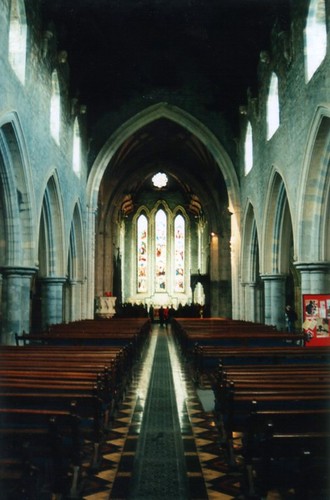
And the inside of the cathedral:
St Canince's Cathedral

St Canice's Cathedral

From there we got back on the bus and headed back to Dublin. The next day would take us to one of my favorite places in Ireland - Glendalough.